
Crypto Market Structure Legislation Faces August Deadline or Risks Failure, NYDIG Warns
According to Greg Cipolaro from NYDIG, the cryptocurrency market structure legislation currently in the Senate faces potential collapse unless it secures a floor vote before August arrives.
Greg Cipolaro, who leads research efforts at NYDIG, a financial services company, has indicated that the cryptocurrency market structure legislation pending in the US Senate may require until August to successfully pass, and faces the possibility of complete failure if lawmakers are unable to approve it prior to midterm elections.
Earlier this month, Patrick Witt, holding the position of senior White House crypto adviser, indicated that July 4 was his target date for Senate passage of the crypto bill, claiming sufficient time existed for completing a Senate markup, conducting a floor vote, and securing a House vote.
"This may represent an aspirational benchmark rather than a fixed legislative deadline," Cipolaro said in a note on Friday. "The realistic window, however, is June through early August."
The legislation addressing crypto market structure is designed to establish the framework for how US regulatory agencies would oversee cryptocurrency, and many consider it among the year's most significant pieces of crypto-related legislation. Nevertheless, the bill has experienced numerous delays as both lawmakers and lobbyists have attempted to incorporate or modify provisions concerning stablecoins and the utilization of crypto by government officials, alongside various other matters.
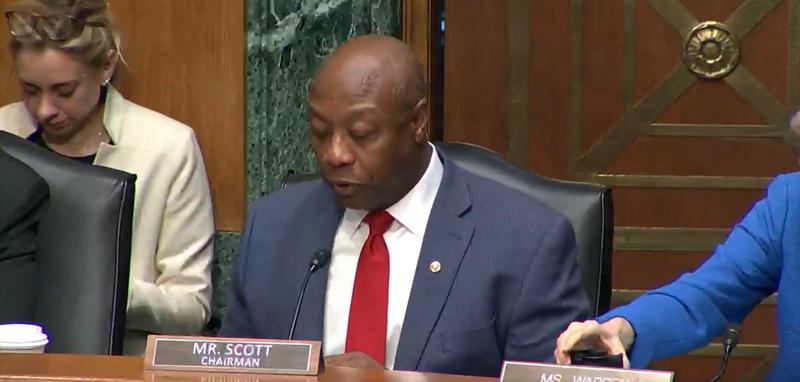
Following a lengthy delay, the bill successfully passed through markup in the Senate Banking Committee on Thursday, with committee members voting predominantly along party affiliations to move it forward to the Senate floor, where securing 60 votes will be necessary to bypass extended debate and achieve passage.
With Republicans commanding a 53-seat majority in the Senate, they will require a minimum of seven Democrats to support the legislation for swift passage, though certain Democratic members have expressed concerns that the bill falls short in adequately preventing criminal activity and circumvention of sanctions.
According to Cipolaro, Congress enters a recess period extending from late July through early September, after which they will return during the timeframe preceding the November midterm elections, when Senate leadership "is unlikely to schedule a contested 60-vote floor fight."
"If the bill misses that window, the highest-probability remaining pathway becomes a post-election lame-duck session, available only if Republicans hold the Senate and Majority Leader [John] Thune prioritizes it over government funding deadlines," he added.
Present polling data and electoral predictions indicate a closely contested battle for Senate control, with certain forecasts giving Republicans a narrow advantage, while alternative projections categorize crucial seats as tossups that could potentially deliver Democrats control of the legislative chamber.
According to Cipolaro's analysis, should Democrats succeed in gaining Senate control, the existing Republican-supported crypto market structure bill would face unlikely prospects for advancement in the subsequent Congress convening in January.
"Congressional negotiators face a tradeoff between accepting an imperfect bipartisan framework in 2026 versus risking a substantially different legislative environment after the midterms."
Cipolaro indicated that successful passage and presidential signing of the bill would provide a significant boost to cryptocurrency markets, as major financial institutions would possess sufficient confidence to invest in the sector due to the enhanced legal clarity.
Additionally, the legislation would establish regulatory certainty for Bitcoin, designating it as a commodity falling under Commodity Futures Trading Commission jurisdiction and eliminating "the last significant regulatory overhang for Bitcoin as an institutional asset class," he added.
Nevertheless, Cipolaro warned the bill could encounter failure stemming from stagnated negotiations over provisions related to ethics or enforcement mechanisms for decentralized finance, or due to scheduling complications, which would result in the crypto industry continuing to function under "permanent jurisdictional ambiguity."