
Iran Reportedly Planning Bitcoin-Based Maritime Insurance for Strait of Hormuz Transit
Sources indicate that Iranian officials are exploring the development of a shipping insurance system for vessels navigating the Strait of Hormuz, potentially accepting Bitcoin as payment.

According to emerging reports, Iran is exploring a strategic approach to assert authority over the Strait of Hormuz using what has been described as an "insurance-based model," with speculation mounting, driven by an unconfirmed website, that Bitcoin could serve as the payment method.
This past Saturday, the Fars News Agency, a media organization with strong ties to the Islamic Revolutionary Guard Corps, published information indicating that Iran's Ministry of Economic Affairs intends to implement insurance-based management of the Strait of Hormuz, referencing an official state document the agency claims to have accessed.
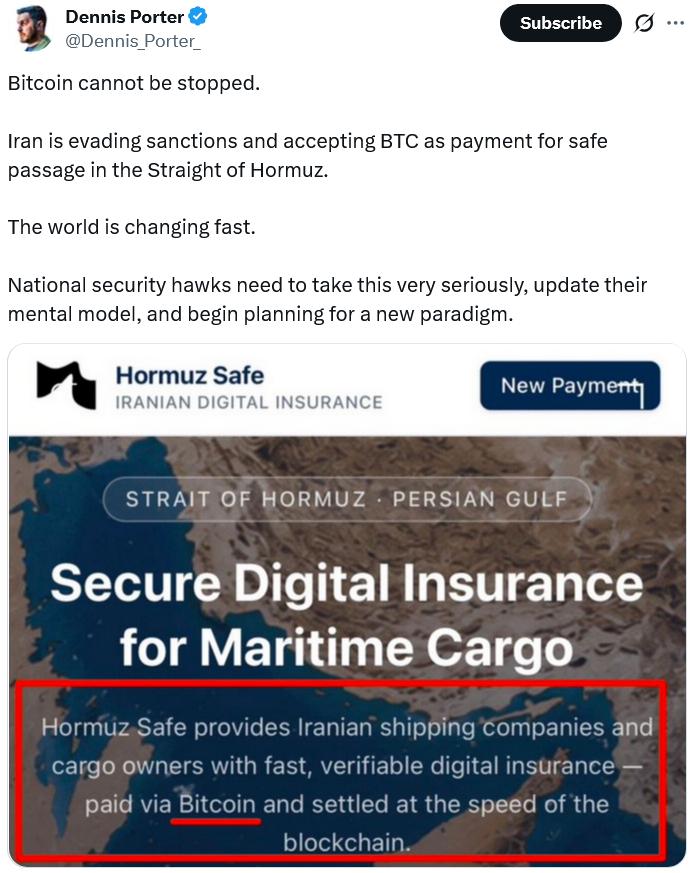
Nevertheless, alternative reports indicate that Iran may be seeking to collect payments for this "insurance" service using Bitcoin via a platform named "Hormuz Safe," with a screenshot of the alleged website circulating extensively online, advertising "Secure Digital Insurance for Maritime Cargo."
The strategic importance of controlling the Strait of Hormuz has emerged as the central issue in the ongoing US-Iran conflict. This critical shipping lane is responsible for transporting approximately one-fifth of the world's oil trade. Numerous vessels have been blocked from passing through the strait following the commencement of US airstrikes against Iran in late February.
According to media accounts, Iran successfully collected its initial revenue from toll charges levied on ships passing through the Strait during the previous month. Such measures did not exist before the outbreak of the US-Iran war.
According to Fars News, the proposed insurance platform is designed to differentiate between transit vessels based on their countries of origin.
Under the Economy Ministry's plan, managing the Strait through an insurance framework would enable the issuance of various marine insurance policies as well as certificates of financial responsibility
Fars News
Fars News further stated that the initiative has the potential to generate revenue exceeding $10 billion for the country.
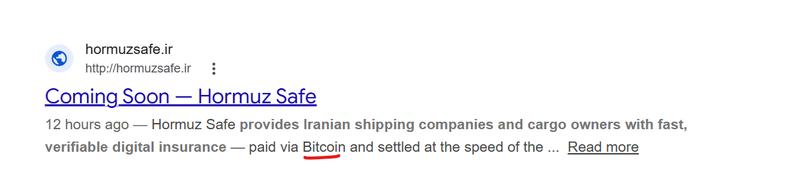
It remains uncertain whether Iran will proceed with implementing the insurance proposal, and the website claiming to provide "Iranian Digital Insurance" may not be legitimate. At the time this article was written, the website was inaccessible.
In previous instances, fraudsters have successfully deceived shipping companies conducting operations in the Strait of Hormuz by making demands for cryptocurrency payments in exchange for guaranteed safe passage.
US authorities recently seized Iranian USDT
The decision to demand insurance payments in Bitcoin would be logical considering that US authorities confiscated $344 million worth of USDT connected to Iran during the previous month.
Previous reports have indicated that Iran had been collecting oil tolls using US dollar-pegged stablecoins like Tether USDt (USDT), in addition to Bitcoin and traditional fiat currencies including the Chinese yuan, with USDT being identified as the cryptocurrency of choice.
Prominent industry figures have promoted Bitcoin as a more suitable cryptocurrency option for nations facing sanctions because of its sufficiently decentralized nature and the absence of any central issuer with the authority to freeze assets.
In the early days of April, a representative from Iran's Oil, Gas and Petrochemical Products Exporters' Union announced that specific vessels would be permitted to transit through the strait on the condition that they submit a tariff payment of $1 per barrel of oil using Bitcoin.
Once the email arrives and Iran completes its assessment, vessels are given a few seconds to pay in Bitcoin, ensuring they can't be traced or confiscated due to sanctions