
How a Staged Law Enforcement Operation Led to a $1 Million Bitcoin Heist
Criminals disguised as police officers orchestrated a violent $1 million Bitcoin theft, highlighting the growing trend of physical coercion attacks targeting cryptocurrency holders.
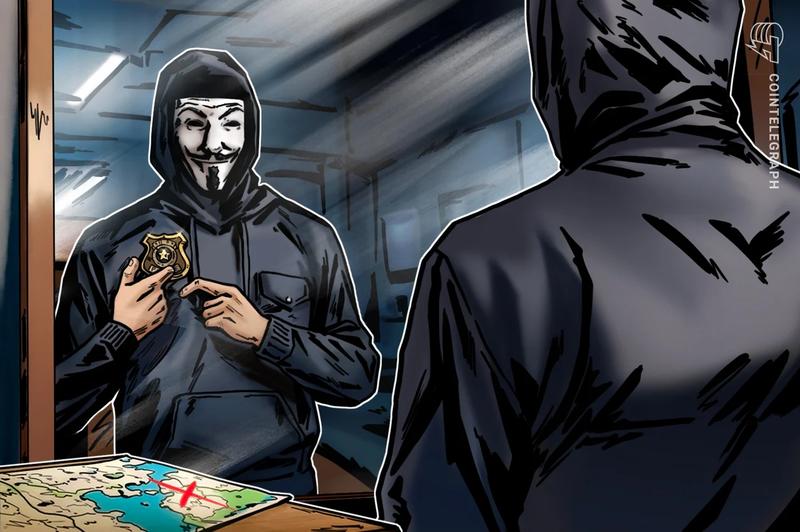
Critical insights
- The landscape of cryptocurrency security now extends far beyond purely digital vulnerabilities, as criminals progressively focus on direct confrontation with holders through physical intimidation instead of attempting to breach blockchain protocols or compromise digital wallets.
- A recent French incident demonstrates how perpetrators employed a fraudulent law enforcement operation combined with physical violence to compel a victim to transfer Bitcoin valued at $1 million, completely circumventing encryption by forcing the victim to personally authorize the transaction.
- So-called wrench attacks are on an upward trajectory, with perpetrators relying on intimidation or physical force rather than sophisticated technical exploits. This trend underscores how human weaknesses can completely neutralize even the most robust cryptographic protections.
- Disguising oneself as law enforcement personnel proves remarkably effective as it merges fear, a sense of immediate urgency, and deeply ingrained social obedience, increasing the likelihood that victims will follow instructions without critically evaluating the circumstances.
The digital realm is no longer the exclusive battlefield in cryptocurrency security. Although phishing schemes and compromised exchanges have historically represented significant dangers, an increasing proportion of thefts now completely sidestep technological vulnerabilities and directly confront cryptocurrency owners.
A contemporary French case exemplifies this evolution. Criminals impersonating law enforcement officers orchestrated a fabricated "raid" and employed physical intimidation to force a couple into transferring approximately $1 million worth of Bitcoin (BTC). This incident did not result from any technological vulnerability, but rather constituted a brazen robbery executed through direct physical coercion.
When the holder, rather than the security system, is compromised
The attack took place in Le Chesnay-Rocquencourt, a municipality situated near Paris, where a couple in their late 50s was allegedly attacked within their own residence.
The following sequence outlines the attack:
- Three perpetrators dressed as law enforcement officers entered the residence.
- The victims were intimidated using knives as weapons.
- The male victim was compelled to transmit Bitcoin to addresses controlled by the attackers.
- Both individuals suffered physical harm, and the husband was forcibly restrained using bindings.
- The perpetrators departed in a waiting vehicle.
Authorities in France are presently conducting an investigation into the incident, with potential charges encompassing armed theft and participation in organized criminal activity.
What makes this case particularly notable is not merely the employment of violence, but the deliberate tactical approach utilized.
Instead of seeking to defeat cryptographic security measures, the criminals completely avoided them by forcing the asset owner to personally execute the transfer.
The effectiveness of law enforcement impersonation
Masquerading as police personnel proves remarkably successful because it activates multiple psychological mechanisms:
- Authority: Individuals are culturally programmed to follow instructions from law enforcement.
- Urgency: The simulation of an official operation generates the perception that instant cooperation is required.
- Fear: Opposition may appear to carry potential legal ramifications.
When perpetrators disguise themselves as law enforcement, victims frequently neglect to question:
- The justification for the intervention.
- Whether the demands being made are legitimate.
- The overall credibility of the circumstances.
During high-stress situations, the natural response to comply typically overwhelms the rational impulse to authenticate or challenge the scenario.
Within the cryptocurrency context, this vulnerability is amplified because a single authenticated transaction can relocate substantial wealth within seconds.
Did you know? The phrase "wrench attack" gained widespread usage in cryptocurrency circles following a web comic that humorously suggested physically threatening someone is simpler than defeating encryption. It represents an actual evolution where attackers circumvent sophisticated infrastructure by focusing on individuals instead of technology.
From fabricated law enforcement intervention to forced Bitcoin transmission
In contrast to traditional theft operations that pursue cash, precious metals or physical valuables, this assault was expressly designed to target digital cryptocurrency assets.
The perpetrators' goal was clear-cut: compel the victim to execute an instantaneous cryptocurrency transfer.
This category of theft presents unique containment challenges for multiple reasons:
- Misappropriated assets can be transmitted to any global destination within moments.
- Blockchain-based transactions are typically permanent and non-reversible.
- Following transfer, funds can be rapidly relocated, complicating investigation and asset recovery efforts.
In situations where the victim maintains direct custody over their digital wallet, perpetrators need not physically steal equipment or compromise security infrastructure. They merely need to force the victim to personally approve and transmit the transaction.
Examining wrench attacks within the digital currency ecosystem
It is frequently substantially simpler to physically threaten an individual with a blunt instrument than to attempt breaching their cryptographic protections.
Instead of pursuing technical wallet compromises, criminals may employ:
- Intimidation tactics
- Direct physical harm
- Various forms of psychological or physical pressure
These methodologies are deployed to compel victims into disclosing private cryptographic keys or personally authorizing asset transfers. Such approaches completely circumvent even the most sophisticated technical safeguards.
Regardless of encryption strength, human susceptibility under duress can render all technological security completely ineffective.
Did you know? Certain wealthy cryptocurrency holders now maintain "decoy wallets" containing minimal balances. When confronted with a coercive threat, they can surrender access to these diversionary wallets rather than their primary holdings, creating an additional defensive layer combining psychological misdirection with financial protection.
Factors driving the increase in these attack methods
Multiple contributing elements are fueling this upward trend:
- Expansion of self-custody practices: An expanding population of users currently maintains personal control over private keys and directly administers their digital assets, transforming them into more accessible and immediate targets.
- Public exposure of wealthy targets: Numerous cryptocurrency investors, enterprise founders and industry leaders maintain visible public personas that render their financial status and personal identity comparatively straightforward to ascertain.
- Enhanced cybersecurity measures: As digital wallet protection strengthens and remote intrusion becomes increasingly challenging, criminals are progressively shifting focus toward the more vulnerable element—the human user.
- Immediate global transferability: Cryptocurrency facilitates nearly instantaneous value transmission to any worldwide location without traditional banking institutions or intermediary oversight acting as control mechanisms.
Throughout 2025 alone, confirmed instances of authenticated wrench attacks allegedly increased dramatically, climbing 75% compared to 2024. Europe, with France particularly noteworthy, emerged as an escalating concentration point for such criminal activities. Financial damages reached $40.9 million in 2025, representing a 44% year-over-year escalation. Although kidnapping persisted as the predominant threat methodology, physical assault incidents surged by 250%.
Factors behind France's escalating incident rate
France has recently documented numerous high-visibility violent crimes connected to cryptocurrency:
- Abductions executed to extort cryptocurrency ransom payments.
- Residential invasions deliberately targeting prominent personalities within the crypto sector.
- Strategically planned operations conducted by organized criminal syndicates focused on misappropriating digital assets.
These recurrent events indicate an evolution in criminal methodology:
- Increasingly systematic efforts to identify individuals possessing cryptocurrency.
- Enhanced monitoring of their residential addresses and habitual movements.
- An expanding tendency toward direct physical confrontation over exclusively digital approaches.
As cryptocurrency acceptance continues its global expansion, public knowledge regarding ownership is simultaneously increasing. Regrettably, the physical dangers corresponding to that exposure are escalating proportionally.
The criminal preference for intimidation over technical exploitation
Cryptocurrency security infrastructure has achieved remarkable sophistication. Hardware wallet devices, multisignature authentication protocols and offline storage methodologies render remote intrusion considerably more challenging.
Coercion-based attacks, however, fundamentally alter the security landscape.
Even the most impenetrable technical defenses become irrelevant when a victim faces physical threats compelling them to unlock their hardware device, surrender their authentication credentials or personally authorize a transaction.
Intimidation-based attacks completely bypass cryptographic security measures, focus on exploiting human access points and capitalize on instinctive human responses to threats.
From the perpetrator's perspective, this tactical approach frequently proves more efficient and dependable than attempting to overcome sophisticated technological barriers.
Bitcoin's structural vulnerability in coercion scenarios
Bitcoin's foundational design provides it with substantial technological resilience, yet simultaneously creates profound weakness when the owner confronts physical threats.
Its defining characteristics comprise:
- The capability to transmit value instantaneously
- The complete absence of any centralized authority with transaction reversal capabilities
- Unrestricted, borderless global accessibility
In circumstances where the owner is physically forced to release funds, these attributes can produce:
- Assets being relocated almost immediately
- Essentially zero probability of successful recovery
- Criminals quickly dispersing funds across numerous addresses
The identical properties that provide Bitcoin with its decentralization and economic value simultaneously render stolen assets extraordinarily difficult to retrieve once they have been transferred under physical duress.
Did you know? Specialized private security companies have begun providing customized protective services designed specifically for cryptocurrency investors, encompassing travel threat evaluations, residential security assessments and digital presence minimization tactics designed to prevent becoming a targeted victim.
French law enforcement response measures
Law enforcement organizations in France are vigorously investigating the case, with specialized units focused on organized crime spearheading the investigative effort.
Criminal charges currently under consideration encompass:
- Armed theft perpetrated by an organized criminal organization
- Illegal confinement and restraint
- Criminal coordination and conspiracy
Despite authorities intensifying enforcement actions in response to these incidents, such cases continue to pose substantial investigative obstacles due to:
- The swift international movement of misappropriated digital assets
- The pseudonymous and permanent characteristics of cryptocurrency transactions
- The participation of sophisticated and coordinated criminal organizations
Essential security recommendations for digital currency holders
This incident emphasizes a fundamental transformation in the character of cryptocurrency security challenges.
Securing technological infrastructure alone proves insufficient. Protection of wallets, private cryptographic keys and physical hardware must now be integrated with comprehensive personal safety protocols.
Critical defensive measures comprise:
- Avoid publicly disclosing or discussing the magnitude of your cryptocurrency portfolio.
- Maintain strict separation between your personal identity and your wallet addresses and asset ownership.
- Implement multisignature wallet configurations ensuring that no individual person or compromised key can independently authorize asset transfers.
- Distribute signature authorization and key custody across separate geographic regions or among multiple trusted entities.