
Tokenization has potential to revolutionize financial settlement systems, IMF reports
The international financial institution highlights how blockchain technology could enhance market efficiency while cautioning that lack of unified standards and regulatory frameworks might introduce fresh systemic vulnerabilities.

According to the International Monetary Fund (IMF), tokenization has the capacity to fundamentally transform the operations of financial markets, representing one of the most significant endorsements to date from a global policy institution that blockchain-based systems are transitioning into mainstream finance.
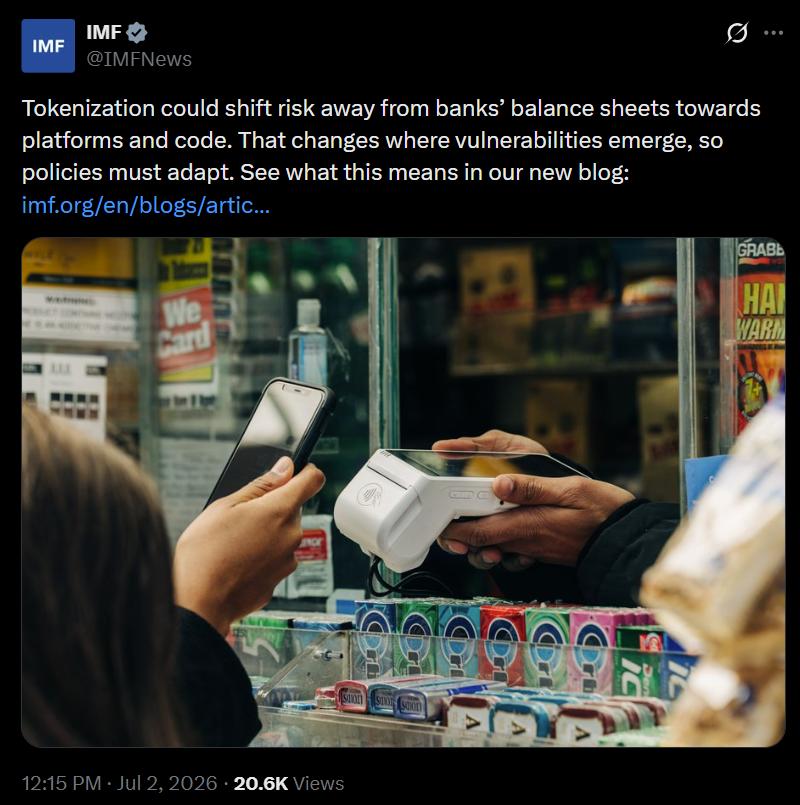
In a Thursday blog post, Tobias Adrian, who serves as the IMF's financial counselor and heads its Monetary and Capital Markets Department, stated that tokenization extends beyond being merely a specialized crypto development. Through the integration of assets, settlement processes and recordkeeping onto a unified ledger, tokenization has the potential to transform the current multi-day settlement timeline into transactions that occur almost instantaneously.
However, Adrian cautioned that tokenization creates a shift in risk away from conventional financial intermediaries toward the foundational infrastructure, encompassing smart contracts, distributed ledgers and associated service providers. In the absence of standardized frameworks and harmonized regulation, markets utilizing tokenized assets risk becoming fragmented across platforms that lack interoperability, thereby generating novel systemic risk sources.
This report emerges at a time when financial institutions are accelerating their initiatives to incorporate tokenization into conventional market structures. The Clearing House, which counts JPMorgan Chase, Bank of America, and Barclays among its owners, is reportedly preparing to introduce a tokenized deposit network in early 2027 designed to maintain deposits within the regulated banking framework while facilitating faster, programmable payment capabilities.
The assessment from the IMF corresponds with recent research published by PwC, which determined that tokenization could resolve persistent inefficiencies plaguing traditional finance, such as payment settlement processes and the transfer of asset ownership. This also follows a May report released by Moody's demonstrating that traditional financial institutions are actively making preparations for a transition toward tokenized financial systems.
Regulators race to define tokenized finance
The report from the IMF highlighted the expanding role that regulators are playing in the development of tokenized finance. Adrian indicated that policymakers are facing a limited timeframe to establish how tokenized markets will develop, contending that choices regarding settlement assets, governance structures, interoperability standards and the involvement of central banks will be instrumental in determining whether tokenization enhances financial system efficiency or creates additional systemic vulnerabilities.
Within the United States, the Securities and Exchange Commission has implemented measures to provide clarity on how current securities regulations apply to tokenized assets instead of establishing a distinct regulatory structure.
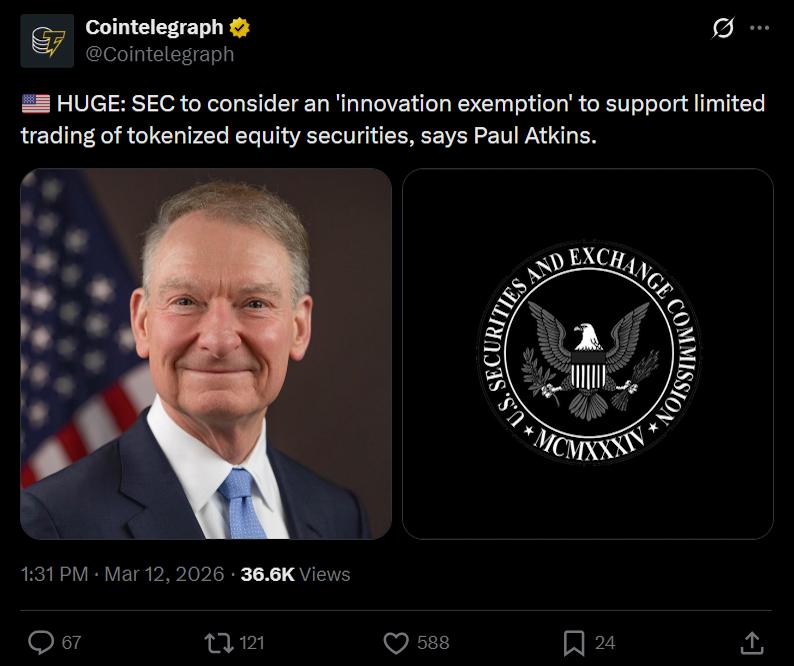
The agency has additionally indicated it is evaluating an "innovation exemption" that would potentially permit market participants to conduct tests of blockchain-based trading platforms designed for tokenized securities during the period when a more comprehensive long-term regulatory framework is being formulated.