
Web3 Security Firm SlowMist Unveils Comprehensive Protection Framework for AI-Powered Autonomous Agents
A multi-tiered security infrastructure for AI agents operating in Web3 has been launched by SlowMist, addressing growing concerns as automated systems increasingly manage blockchain transactions and crypto holdings.

Security-focused blockchain firm SlowMist has unveiled a comprehensive five-tier protection framework designed specifically for AI and Web3 agents, positioning the solution as an essential defense mechanism against escalating threats associated with automated systems managing blockchain transactions and cryptocurrency holdings.
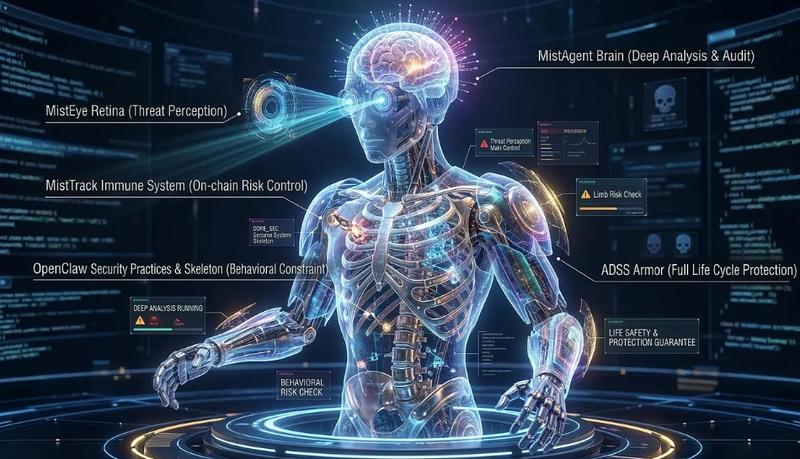
According to a blog post published on Wednesday, the framework is built around a user's AI agents and integrates governance mechanisms through its AI Development Security Solution, abbreviated as ADSS, alongside execution-layer instruments such as OpenClaw, MistEye Skill, MistTrack Skill and MistAgent. The organization explained that the architecture is engineered to establish a comprehensive closed-loop workflow incorporating pre-execution verification, in-execution limitations and post-execution analysis.
The cybersecurity firm's designated "digital fortress" is engineered to provide protection against various threat vectors including prompt injection attacks, supply chain poisoning incidents, unauthorized data exposure and financial losses stemming from unapproved operations or exploitation of AI agent vulnerabilities. The solution also attempts to minimize security risks while maintaining optimal AI performance and efficiency.
Autonomos AI agents introduce new attack surface in business operations
This initiative emerges at a time when an increasing number of cryptocurrency organizations are exploring automated tools for trading operations and transaction execution, creating "new attack surfaces," including supply chain poisoning vulnerabilities, which have emerged as novel entry points enabling malicious actors to embed hidden backdoors within systems, as noted by SlowMist.
The governance component of the framework, ADSS, is designed to create auditable security protocols for enterprises aimed at mitigating these vulnerabilities. The solution encompasses permission restriction mechanisms for AI agents, live threat assessment for external communications and enhanced blockchain-based risk identification capabilities.
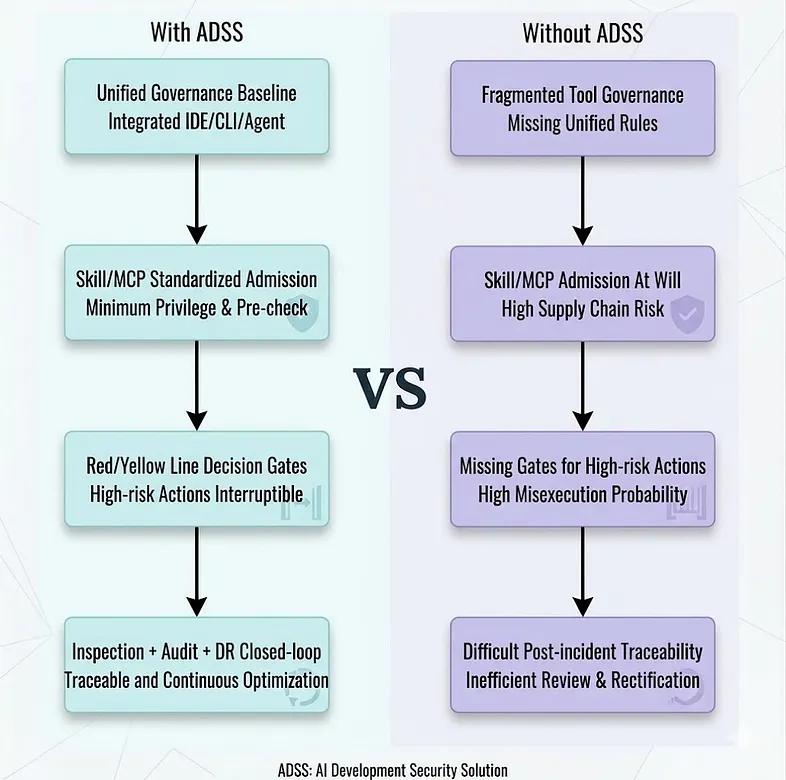
The fundamental value proposition of ADDS centers on transforming "scattered security actions" into a comprehensive operational framework that is "executable, auditable, and sustainable," according to SlowMist's statement.
Autonomous crypto trading bots on the rise
Cryptocurrency enterprises are deploying an expanding array of autonomous crypto trading bots. On Jan. 21, blockchain analytics platform Nansen introduced autonomous cryptocurrency trading capabilities that allow users to execute transactions via AI agents and natural language prompts, featuring cross-chain transaction support on the Base and Solana blockchains.
Additional firms that have rolled out no-code AI trading agents comprise Coinbase, Bitget, Walbi and Gate.io. These platforms aim to reduce entry barriers for individual investors by offering automated trading strategies and conversational user interfaces.