
S&P Global Introduces Risk Evaluation System for Expanding Crypto Vault Lending Market
The financial ratings giant unveils a comprehensive assessment methodology for cryptocurrency lending vaults spanning six risk dimensions amid sector deposits reaching approximately $10 billion.
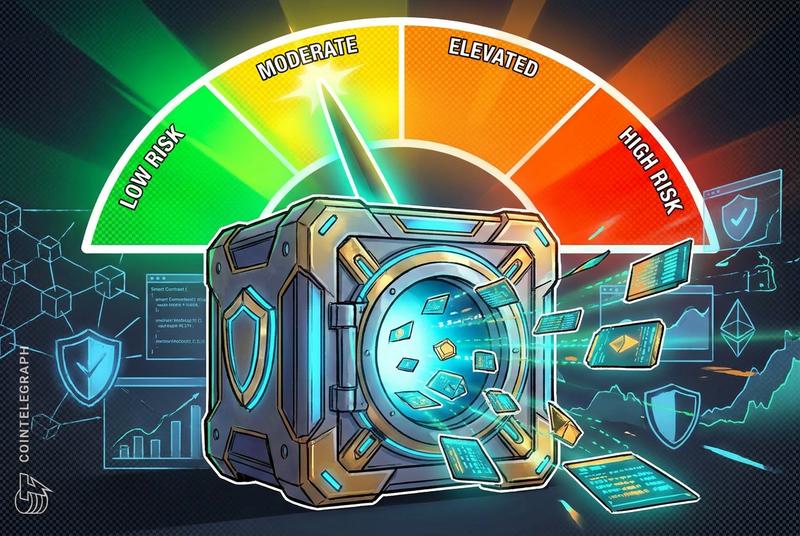
The financial services giant S&P Global Ratings has unveiled a comprehensive risk evaluation methodology designed specifically for digital asset lending vaults, responding to increased adoption of these onchain financial instruments.
The framework, detailed in an announcement released Monday, analyzes vaults through six distinct dimensions: the credit quality risk of the portfolio, the risk associated with liquidity mismatches, risks related to curators, blockchain-specific risks, protocol-level risks, and risks concerning vault security along with governance structures.
The rating agency clarified that these assessments will focus on analyzing potential loss scenarios for vault investors, though they won't serve as traditional credit ratings nor will they assess the yields being offered. Additionally, the methodology wasn't constructed to prioritize any single risk category over the remaining five, as explained by Lisa Schroeer, an analyst at S&P Global Ratings.
"A material weakness in any factor can constrain the overall VRA," Schroeer told Cointelegraph. "A strong score in one factor does not offset a material weakness in another." She said that the approach reflects a sector where "there are many points of risk/failure that can break."
These digital asset lending vaults function by aggregating capital from multiple investors and allocating those funds according to predetermined strategic approaches overseen either by smart contract protocols or human portfolio managers. In return, those who deposit funds obtain tokens that signify their proportional ownership of both the vault's underlying assets and the generated profits.
Data from S&P indicates that total deposits held within digital asset lending vaults reached approximately $10 billion by September, representing substantial growth from the $1.5 billion recorded just two years prior. The ratings firm stated its intention to release initial Vault Risk Assessments through subsequent announcements, although specific vaults scheduled for initial evaluation were not disclosed.
Describing how the framework could benefit market participants, Schroeer said: "The assessment aims to provide more transparency on the risks so that any entity can make more informed decisions when deciding how to allocate capital to DeFi vaults."
Crypto vaults grow as risks draw scrutiny
The crypto vault sector has experienced significant expansion throughout the previous year as cryptocurrency exchanges, digital wallet providers and decentralized finance platforms have introduced products that bundle lending services and various yield-generation mechanisms for end users.
During February, the Wallet application integrated within Telegram unveiled self-custodial vault products for BTC, ETH and USDT utilizing backend infrastructure provided by Morpho, TAC and Re7. The cryptocurrency exchange Kraken subsequently launched in May with a Bitcoin-focused yield vault utilizing Veda's technology and Sentora's curation services, successfully drawing $30 million in deposits from 4,000 different wallets during just the first 10 hours of availability.
This vault concept has subsequently broadened to encompass tokenized securities products. During September, Kraken introduced yield-generating vaults for blockchain-based representations of Nvidia stock, the SPDR S&P 500 fund and Invesco QQQ ETFs, with strategic management provided by Sentora that involves lending these tokenized assets throughout DeFi marketplaces.
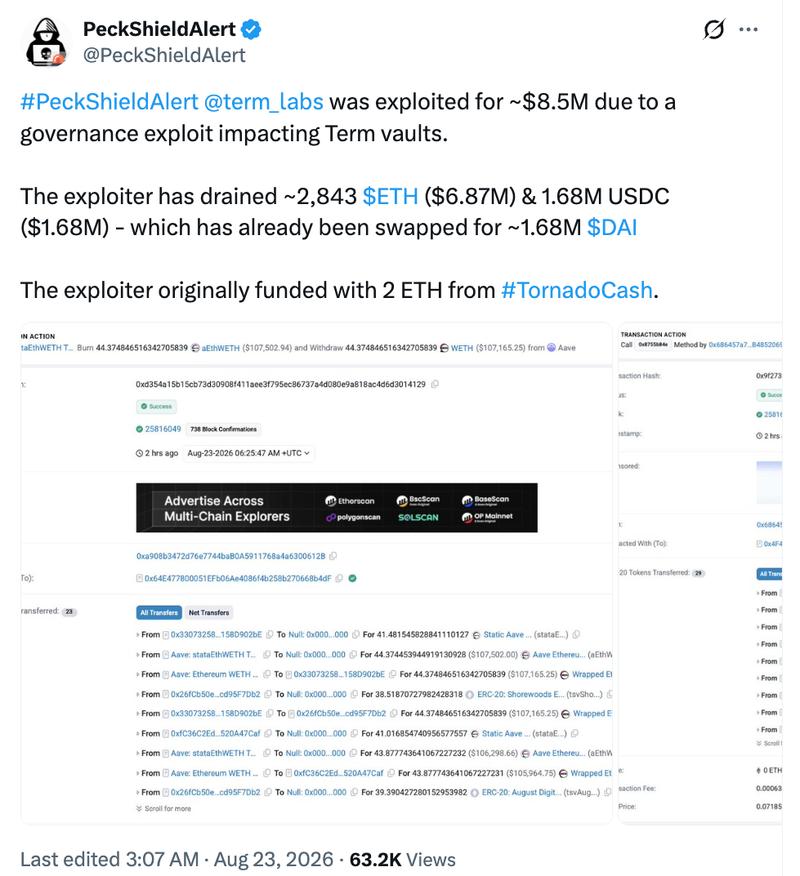
The increasing adoption of crypto vault products has been accompanied by notable security incidents. During August, the lending protocol known as Term Finance suffered losses estimated at $8.5 million following a security breach where an attacker successfully exploited vulnerabilities in the governance controls of its Meta Vaults infrastructure.
Currently, crypto vaults continue to operate within a regulatory gray area throughout the United States. During July, Hester Peirce, a Commissioner at the SEC, indicated that certain vault products and onchain lending instruments might fall within the scope of federal securities regulations based on their specific structural characteristics and operational methodologies.
According to Peirce, vaults that incorporate discretionary decision-making authority regarding asset allocation strategies, yield optimization approaches, lending term configurations or liquidation threshold determinations could potentially activate securities law requirements, investment company regulations or investment adviser compliance obligations.