
Chainalysis: Peer-to-Peer Stablecoin Wallet Usage in China Surges 43-Fold Amid Regulatory Constraints
Despite stringent cryptocurrency regulations, China witnessed a remarkable 43-fold increase in unique wallets conducting peer-to-peer stablecoin transactions from Q1 2024 through Q2 2026, with users gravitating toward direct wallet-to-wallet transfer methods.

Between the opening quarter of 2024 and the second quarter of 2026, unique wallets conducting peer-to-peer (P2P) stablecoin transactions within China experienced a dramatic 43-fold expansion, blockchain analytics firm Chainalysis has revealed.
During the 2026 reporting cycle, which spanned from July 2025 through June 2026, the blockchain analytics firm documented $104.1 billion distributed across 18.1 million transfers connected to China's self-custodied stablecoin reserves.
Annual turnover of stablecoin holdings reached 33.2 times, representing more than triple the worldwide average rate of 9.3, a trend that Chainalysis identified as being consistent with users employing stablecoins as operational working capital.
According to Chainalysis's latest report, China's cryptocurrency economy carries a valuation of no less than $176 billion. Domestic peer-to-peer activity represented 59.1% of the aggregate total, amounting to 3.5 times its proportion during the 2025 reporting cycle.
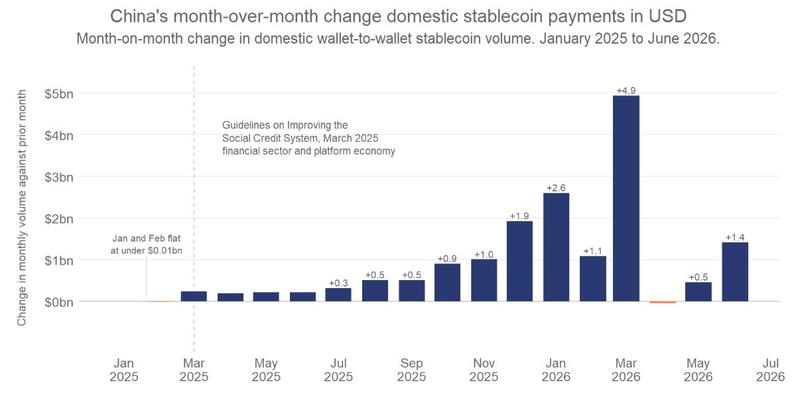
This expansion occurs notwithstanding China's established cryptocurrency trading restrictions, which government officials strengthened in February through new regulations specifically targeting unauthorized stablecoins pegged to the yuan and real-world asset tokenization.
East Asian markets take different crypto paths
The P2P-dominated landscape in China presents a stark contrast to South Korea, which Chainalysis identified as East Asia's most substantial crypto economy with a valuation of $449.1 billion. Transaction activity expanded by 12.3% compared to the preceding period, with retail market participants demonstrating a pronounced preference for tokens associated with artificial intelligence.
Hong Kong distinguished itself through institutional participation. According to Chainalysis, institutional platforms represented 16% of service inflows, approaching three times the proportion observed in any neighboring regional market. The territory attracted nearly $24 billion in incoming business-to-business transaction flows. April saw Hong Kong distribute its inaugural stablecoin licenses.
Within Japan, decentralized exchanges (DEXs) represented nearly 35% of overall service activity, marking the highest proportion among developed East Asian markets. Chainalysis reported that 65.7% of decentralized exchange swaps fell within the $10 to $1,000 range, and DEX transaction activity had climbed by more than 200% since 2022.
In July, Japanese legislative bodies approved revisions that incorporate digital assets into the nation's financial-markets regulatory framework.