BTC Holds Support at $76K While Market Analysts Point to 'Political Gridlock' Impact on Equities
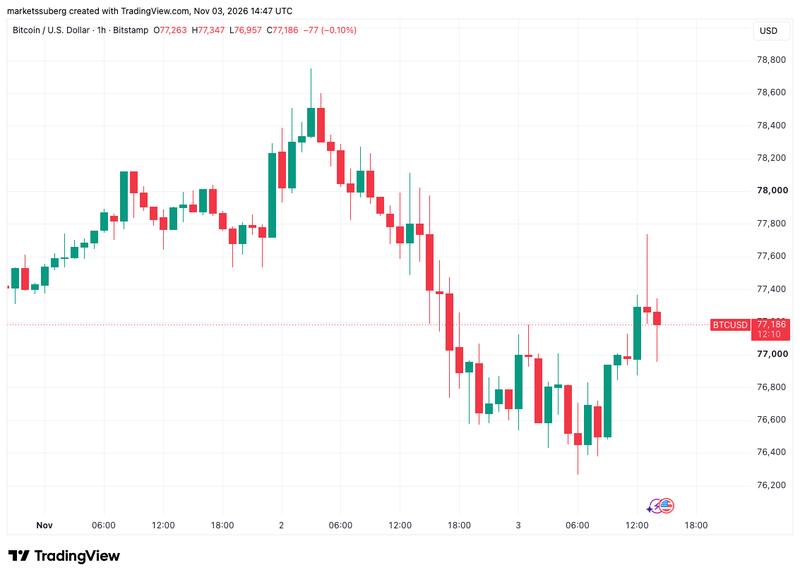
BTC trades around $77,000 while US Midterm Election voting proceeds and equity markets shrug off disappointing Apple Q4 margin forecasts.
As Wall Street opened for trading on Tuesday, Bitcoin (BTC) pushed higher amid a recovery in technology stocks, even as uncertainty loomed over the ongoing US midterm elections.
Key points:
- BTC price movement climbed 0.7% higher during Tuesday's session while US stock markets resisted pressure from midterm election uncertainty.
- Commentary from The Kobeissi Letter indicated that financial markets were factoring in a period of political uncertainty spanning two years, driven by anticipated Democratic progress in the midterm elections.
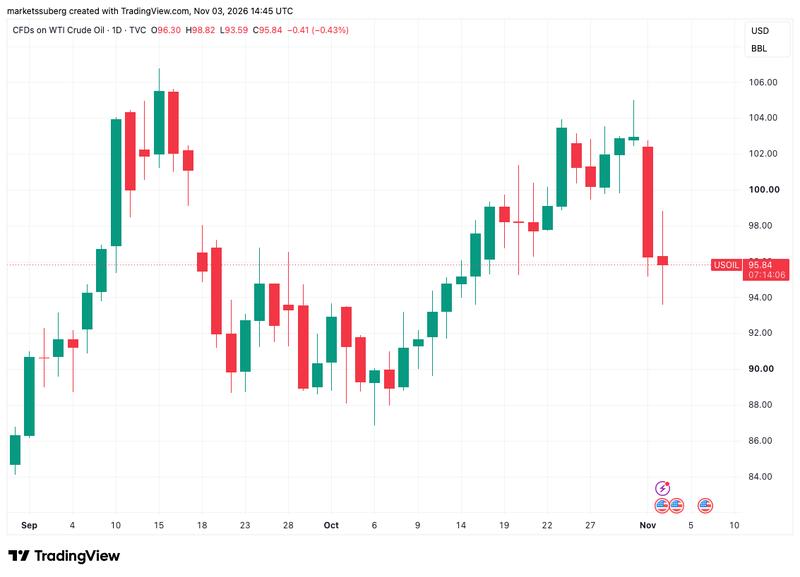
- WTI crude oil fell to $93.59 per barrel, marking its weakest price point since Oct. 15, even as new US military operations targeted Iran's Qeshm Island.
BTC price volatility cools as stocks rise
According to data from TradingView, BTC/USD was trading around $77,000, maintaining support above local lows near $76,300 established on Friday.
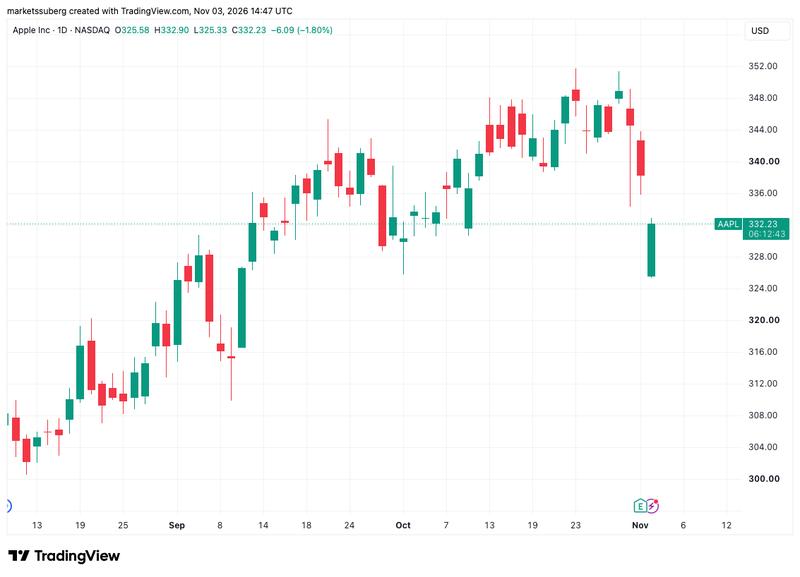
Equity markets grappled with competing pressures as the US trading session commenced. Shares of Apple attempted to recover from losses after declining 4% during premarket hours following the company's projection of gross margins between 45% to 46% for the December quarter, a decrease from 47.9% recorded in the prior quarter, attributed to increasing memory-chip costs.
Financial markets also considered the possible consequences of the US midterm elections on Congressional power dynamics. While polling data pointed to substantial Democratic advances, certain analysts warned that final results might prove less conclusive than anticipated.
"Investors seem to have a significant dose of skepticism about whether the final outcome is going to be quite as favorable to Democrats as the polling suggests," Tobin Marcus, head of US policy and politics at equity research company Wolfe Research, told CNBC. Wolfe added that polls were "likely overstating Democratic strength."
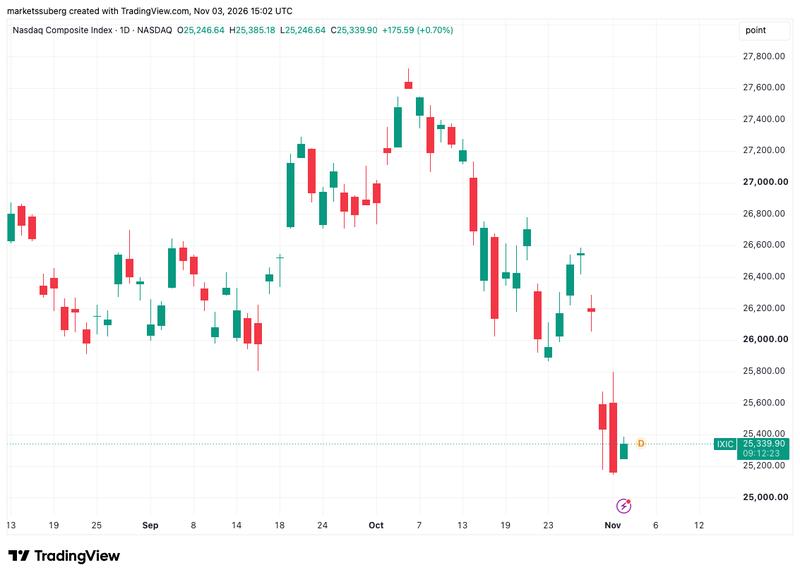
Monday's trading session concluded with the S&P 500 dropping 0.5% and the technology-focused Nasdaq Composite Index falling 1.1%. Market analysts at trading resource The Kobeissi Letter contended that political uncertainty in the US, not just apprehensions regarding AI expenditures, was the primary factor behind market declines.
"The reality is that the market is pricing-in a major shift in the political landscape of the US," it wrote on X.
Their analysis posited that a split Congress could result in repeated legislative standoffs, establishing an environment where policy determinations would grow increasingly unpredictable.
"A change in the political landscape always comes with uncertainty; markets hate uncertainty," it continued.
"Objectively, the market is in the process of pricing-in two years of political gridlock."
Oil digests latest Iran strike after 7% drop
Meanwhile, crude oil markets showed minimal reaction to a US military attack on Iran's Qeshm Island, an important strategic military command center for the Strait of Hormuz oil shipping route.
The strike occurred mere days following statements from US Secretary of State Marco Rubio indicating that President Donald Trump was willing to pursue a "diplomatic" resolution to the US-Iran war, remarks that precipitated a 7% decline in WTI crude oil prices on Monday.
WTI crude initially surged to $98.80 per barrel before retreating below $94 during Tuesday's session, reaching its lowest trading level since Oct. 15.