
Cryptocurrency Regulation Hangs in the Balance as 2026 US Midterm Elections Approach
As the 2026 midterm elections unfold, the cryptocurrency industry watches closely as the fate of the CLARITY Act remains uncertain, with market analysts debating whether historical Bitcoin trends following elections provide meaningful insights.

American voters are casting ballots in midterm elections this Tuesday, with outcomes that have the potential to alter congressional power dynamics and significantly influence how cryptocurrency will be regulated going forward.
Organizations representing the crypto sector have funneled approximately $176 million into over 100 electoral contests throughout this election cycle, based on a Reuters report published on Oct. 27.
Major contributors to the Fairshake political network include Coinbase, Ripple and Andreessen Horowitz.
Tuesday's outcomes stand to alter the trajectory of the currently stalled CLARITY Act while also deciding which elected officials will chair committees with jurisdiction over the crypto sector.
Democratic Party targets congressional majorities
As Tuesday's midterm elections begin, Republicans maintain control over both congressional chambers, holding 219 House of Representatives seats and 53 Senate seats, data from the Blockchain Association's election dashboard shows.
The Democratic Party aims to flip these majorities, and prediction market data from Kalshi at the time of publication indicates favorable odds for Democrats to secure both the House and Senate.
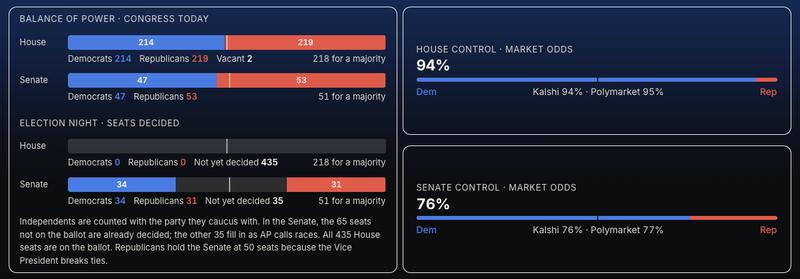
The American electorate will make decisions on the complete roster of 435 House seats alongside 35 Senate contests, establishing which political party will hold congressional power during President Donald Trump's second term final two years.
Should Democrats gain control, Congress may increase oversight of cryptocurrency businesses connected to Trump along with examining regulatory agency decisions more closely. Senate control would additionally influence the approval process for future presidential appointments to regulatory positions.
Senate contests in Ohio, Nebraska and Texas capture crypto industry focus
The Ohio Senate contest pitting Republican Jon Husted against Democrat Sherrod Brown represents a crucial measure of cryptocurrency's electoral clout. Industry organizations have purportedly invested over $50 million working against Brown, who has maintained a longstanding critical stance toward crypto and could regain a prominent Senate committee position.
Nebraska's race features Republican Sen. Pete Ricketts competing against independent candidate Dan Osborn. Ricketts serves on the Senate Banking Committee and has backed crypto-favorable legislation, receiving approximately $11 million in expenditures from Fairshake, the Washington Examiner reports.
The Texas race also merits attention, where Republican Ken Paxton confronts Democrat James Talarico in a tightly competitive Senate election. Cointelegraph's prior reporting noted that the Digital Freedom Fund, backed by the Winklevoss twins, has allocated funds in support of Paxton.
The CLARITY Act confronts obstacles under any election outcome
Changes in congressional control have the potential to postpone the CLARITY Act, though the cryptocurrency market structure legislation has already encountered difficulties even with Republican leadership in place.
This legislative proposal would partition regulatory authority over crypto markets between the Securities and Exchange Commission and the Commodity Futures Trading Commission, in addition to creating guidelines for intermediaries. On Sept. 15, the Senate could not move it forward in a 49–50 procedural vote, falling short of the necessary 60 votes.
Democratic Sen. Mark Warner pointed to inadequate protections preventing Trump from financially benefiting from his administration's cryptocurrency policy decisions. Republican bill sponsors countered that their final version included substantial ethics provisions that Democrats had requested.
A change in control of Congress would most likely reset the timetable for the CLARITY Act.
Christian Davies, group head of innovation and digital capital at Relm Insurance
Ryan Kirkley, CEO of Global Settlement Network, shared the view that obstacles transcend simple party majority control.
The CLARITY Act was already struggling to get through the Senate with Republicans in control, so clearly the problem goes beyond which party holds the majority.
Ryan Kirkley, CEO of Global Settlement Network
The crypto industry has already achieved success with a federal stablecoin framework via the GENIUS Act, which was signed into law in July 2025.
Historical Bitcoin midterm trends provide limited predictive value for market participants
The historical price behavior of Bitcoin (BTC) surrounding US midterm elections has generated discussion across social media platforms, yet analysts warn that previous price declines provide minimal insight regarding potential movements following Tuesday's voting.
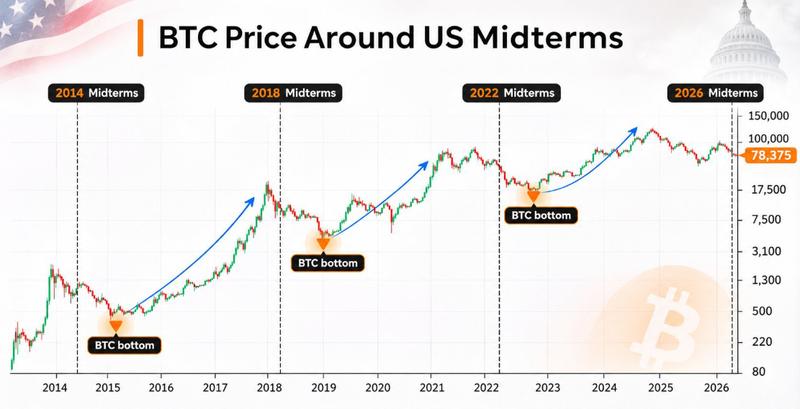
I'd be careful reading much into Bitcoin's record after past midterms. There haven't been enough cycles to call it a pattern, and the market is built differently now: ETF flows, institutional portfolios and global liquidity move the price far more than they used to.
Michael Heinrich, CEO and co-founder of 0G Labs
Kirkley from GSN indicated that institutional capital flows, expectations surrounding interest rates and overall market liquidity represent more pressing factors influencing Bitcoin's price action.
Bitcoin doesn't need a particular election result to succeed. It needs capital, confidence and a macro environment that gives investors a reason to take risk again.
Ryan Kirkley