
Preserving Europe's unified crypto market: Ensuring MiCA's revision strikes the right balance
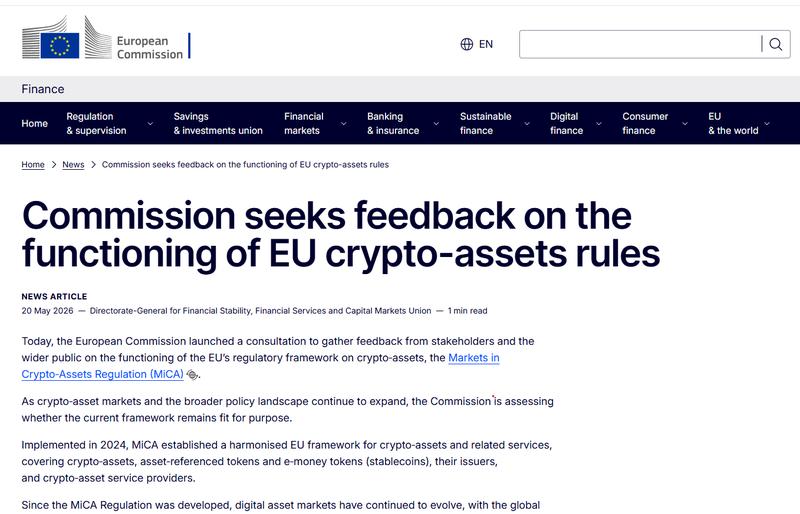
With the European Commission's consultation period on MiCA coming to an end, European authorities face a crucial decision on whether their cryptocurrency regulations safeguard the industry while avoiding excessive barriers to innovation.

The introduction of the Markets in Crypto Assets Regulation (MiCA) accomplished what the European digital asset industry had been seeking for many years: the establishment of a unified, comprehensive regulatory framework.
This marked the first instance where a crypto asset service provider (CASP) granted authorization in any single Member State gained the ability to extend its services throughout the entire European Union and European Economic Area. Furthermore, customers located anywhere within the bloc gained access to an expanding range of licensed and supervised service providers. This represents a substantial accomplishment that market participants should recognize and value.
With the review consultation for MiCA now reaching its conclusion, attention must shift toward fine-tuning the framework: preserving effective elements while acknowledging instances where regulatory obligations have expanded beyond the scope of the risks they aim to mitigate.
The value of a unified market
Begin by examining MiCA's successes. Prior to its implementation, any company seeking to conduct operations throughout Europe confronted a fragmented landscape of national frameworks, inconsistent registration demands, and in certain jurisdictions, a complete absence of specialized regulations.
A harmonized market fundamentally transforms the financial calculations involved in establishing a credible enterprise. It enables service providers to concentrate investment into a single authorization process and unified compliance infrastructure instead of navigating 30 separate systems. Additionally, it delivers genuine value to consumers: access to numerous providers competing based on quality, pricing, service delivery and security measures, all subjected to consistent regulatory standards.
The passporting mechanism serves as the instrument converting 30 disconnected markets into a single accessible marketplace encompassing approximately 450 million individuals. This represents the most compelling incentive for an internationally flexible industry to establish operations in Europe over alternative locations.
MiCA has elevated entry requirements through implementation of more stringent authorization and compliance standards. Nevertheless, authorized CASPs receive in exchange entry not simply to an individual Member State, but rather to the complete EU single market.
The critical question that the review process must address is whether the regulatory requirements necessary for market access maintain appropriate proportion to the magnitude of the market opportunity they provide.
Regulate the risk, not the activity
The guiding philosophy for this review should be clear and direct: regulations should be implemented where genuine risks exist to market participants or market stability, and such regulations must remain proportional to the level of risk present.
When a service involves client funds, asset custody, market integrity concerns, or financial stability implications, comprehensive regulations are not simply acceptable but essential. This is precisely where supervisory focus should be directed, and where the industry has minimal grounds for objection.
Compliance structures should be evaluated according to a single criterion: do they substantially diminish risk?
Throughout time, regulatory frameworks have a tendency to gather additional rules, reporting mandates and documentation requirements, frequently introducing complexity and expense without delivering proportional risk-mitigation advantages.
Consequently, a review should scrutinize each requirement critically and preserve only those that address identifiable and significant risks. Requirements that meet this standard deserve retention. Those that fail this test should be simplified, optimized, or eliminated entirely. Proportionality should not be viewed as an escape clause; rather, it constitutes the discipline maintaining a rulebook's credibility.
Be honest about the cost curve
It must be acknowledged frankly that compliance expenses for CASPs have increased substantially under MiCA. This observation does not inherently constitute criticism. A portion of these costs represents the entry fee for accessing a substantial and valuable marketplace, and properly managed firms should expect to bear such expenses. However, cost carries implications for the broader market ecosystem.
The burden of compliance overhead weighs most heavily upon smaller enterprises and market newcomers—precisely those participants responsible for driving competitive dynamics and innovation. When fixed authorization costs escalate sufficiently, they cease functioning as protective measures and begin operating as entry obstacles, reinforcing established players and diminishing the consumer choice that the single market intended to broaden.
The hazard requiring vigilance, consequently, is not any individual regulation but rather the aggregate trajectory. Should the review process substantially increase the regulatory burden absent clear risk-based justification, the probable outcome will not be enhanced market safety but rather market contraction: reduced innovation and fewer companies willing to establish European operations.
Digital asset enterprises possess exceptional mobility, and some may progressively redirect capital investment toward jurisdictions offering equivalent market access with reduced regulatory friction. If this scenario materializes, European consumers will experience diminished choice, while European supervisors will oversee a shrinking portion of global activity that persists irrespective of their jurisdiction.
What a good review looks like
None of these observations advocate for wholesale deregulation. Rather, they support a review process constructed around proportionality principles: utilize this opportunity to rigorously examine requirements that generate costs without corresponding benefits, to provide firms with space for innovation and growth, and to continuously question whether each obligation genuinely protects the market or merely imposes costs upon it. Several concrete examples demonstrate this approach:
- Tiered regulation by size and risk: A small startup serving a limited client base should not confront identical compliance obligations and prudential requirements as a multinational entity managing assets worth billions. Establishing proportionate regulatory tiers based on asset volume, customer numbers or systemic significance would reduce barriers facing emerging participants while preserving rigorous oversight where most critical.
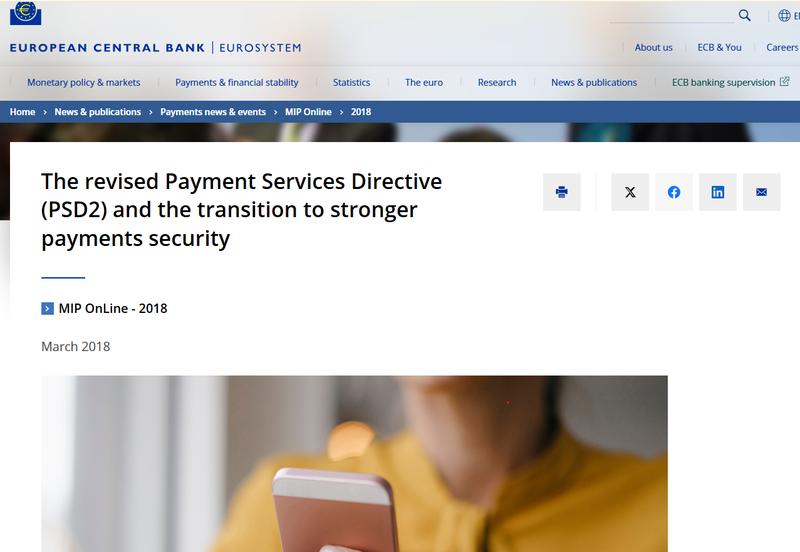
- Dual licensing for e-money tokens: The custody and transfer of EMTs can activate additional regulatory requirements, including Payment Service Directive (PSD2), layered upon MiCA licensing obligations. This regulatory overlap generates redundant compliance costs and legal ambiguity without delivering clear consumer protection advantages. More precise delineation—or establishing a unified licensing pathway—would minimize friction while maintaining adequate supervisory coverage.
- Rigid reserve requirements for stablecoins: Issuers face mandatory requirements to maintain a minimum of 30% of reserves as bank deposits. During periods of rising interest rates, this constraint limits yield generation potential; during banking crises, it creates concentrated counterparty risk exposure. A more adaptable allocation framework—one permitting high-quality liquid assets beyond traditional bank deposits—could enhance resilience without compromising redemption capabilities.
Europe has constructed something exceptional: a substantial, harmonized, credibly regulated marketplace for crypto assets. The objective now is maintaining its attractiveness to the firms that sustain its operations.
Achieving optimal balance serves everyone's interests, both regulators and industry participants, and the forthcoming months present the critical window for achieving this equilibrium.