
US Bitcoin Demand Weakens as Coinbase Premium Reaches Monthly Bottom Following CLARITY Act Rejection
Following the US Senate's rejection of the CLARITY Act, Bitcoin demand on Coinbase experienced a notable decline, coinciding with traders transferring BTC to trading platforms while facing unrealized losses.

The appetite for Bitcoin (BTC) among United States investors faces mounting challenges following the Senate's inability to move forward with the CLARITY Act.
Key points:
- The Coinbase Premium Index for Bitcoin dropped to -0.079 on Tuesday, marking the lowest reading observed since Aug. 16.
- Selling pressure from US-based traders showed divergence compared to activity on other major trading platforms following the Senate's failure to advance the CLARITY Act.
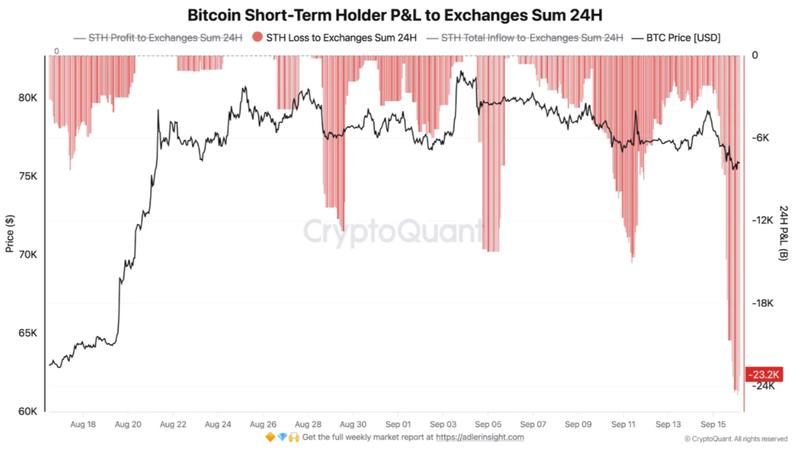
- Over the past 24 hours, short-term holders transferred 34,000 BTC to trading platforms, potentially looking to sell at a loss. This represents the most significant inflow recorded in a month.
Market Analyst Identifies "Bullish" Indicator as Coinbase Selling Patterns Differ from Binance
The CLARITY Act failed to secure the required 60 votes from Senators on Tuesday, which leaves only a limited number of pathways for bringing this important cryptocurrency legislation back to the floor for discussion before 2027. Following this news, Bitcoin experienced downward price pressure, with United States demand taking a particularly notable hit from the legislative outcome. Information from CryptoQuant, an onchain analytics platform, reveals the Coinbase Premium descending to one-month low levels of -0.079 on Tuesday.
The metric known as the Coinbase Premium, which tracks the price differential between BTC/USDT trading pairs on Coinbase versus Binance, experienced a brief positive turn at the beginning of the week, climbing to 0.004, before declining more substantially throughout Monday. At present, it stands at the lowest point recorded since Aug. 16, a time when BTC/USD was exchanging hands at approximately $63,000.
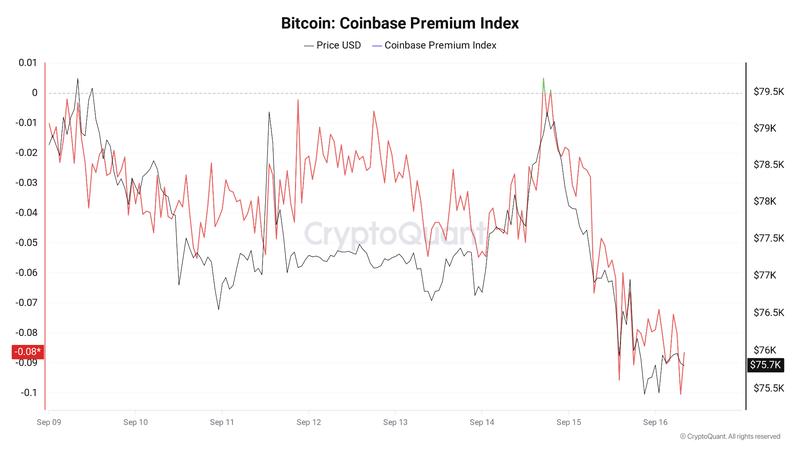
When the Coinbase Premium enters negative territory, it suggests relatively weaker demand among Coinbase market participants when compared to those trading on Binance. Throughout much of 2026, the premium has remained in negative territory, highlighting the outflow of investor funds as Bitcoin declined from its most recent all-time peak of $126,200 observed in October 2025.
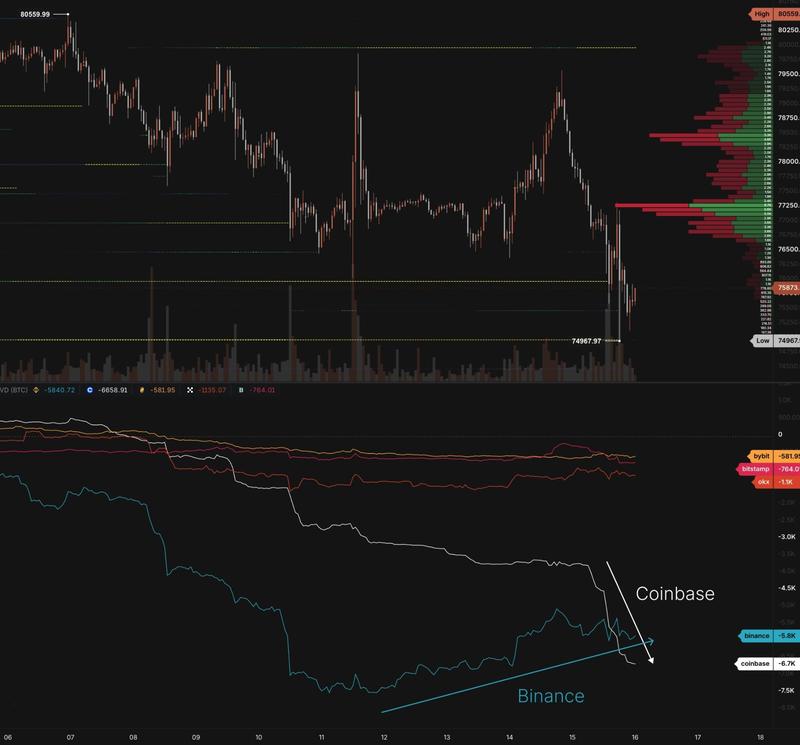
In reaction to these developments, Willy Woo, an onchain analyst, noted that the difference in selling behavior between Coinbase and exchanges outside the US became more pronounced in proximity to the vote.
Woo presented a chart displaying cumulative volume delta (CVD) information organized by exchange, measured in BTC starting from Sept. 6. The CVD metric calculates the net difference between buyer and seller volume within a single candle, aggregating each candle's data to produce a total for a specified timeframe. Around Sept. 11, Binance's CVD started trending upward, whereas Coinbase's metric continued its descent as sellers on that platform maintained their dominance.
"I see the US selling with the failed Clarity Act (on Coinbase) Meanwhile the more dominant global offshore continues accumulating (on Binance),"
Woo wrote in a post on X, describing the scenario as "bullish."
Recently Acquired Bitcoin Sent to Trading Platforms by Short-Term Holders at Unrealized Loss
Additionally, data from CryptoQuant revealed that the majority of reactionary selling triggered by the CLARITY Act's failure originated from more recent Bitcoin purchasers.
Wallets classified as short-term holders (STH), defined as those holding an unspent transaction output (UTXO) for a period of less than six months, transferred as many as 34,000 BTC to exchanges within a rolling 24-hour window. The predominant portion of these coins moved to exchanges at prices below what they were worth when they last transferred onchain.
"With 23 200 BTC sent to exchanges at a loss, this STH capitulation event is the largest recorded over the past month,"
CryptoQuant reported in a blog post.
In earlier reporting, Cointelegraph noted that unrealized profitability among STH had achieved an important threshold for 2026, which could potentially increase the likelihood of a long-term bullish shift in BTC price trends.