
Hedge funds liquidated Bitcoin ETF positions totaling 52K BTC in Q1, regulatory documents reveal
Institutional holdings in spot Bitcoin ETFs underwent significant changes amid Q1's market decline, with hedge funds liquidating stakes while banking institutions and strategic investors expanded their positions.
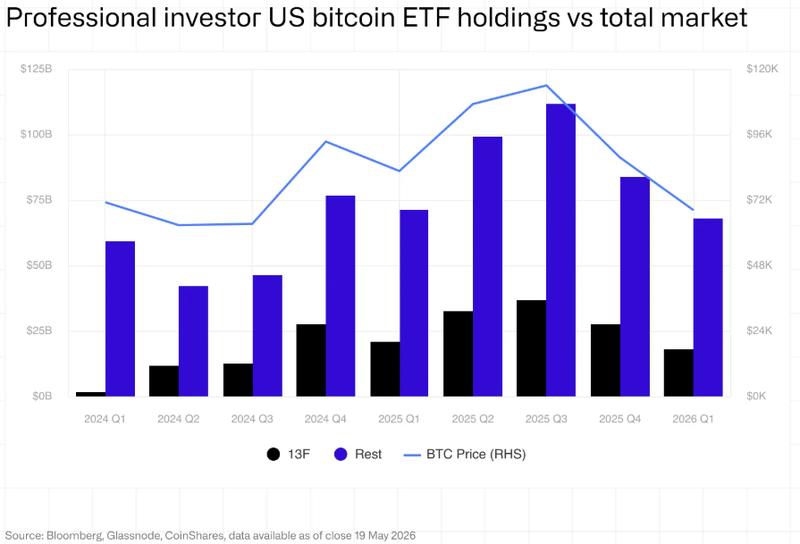
Institutional holdings in United States spot Bitcoin exchange-traded funds (ETFs) experienced a substantial contraction throughout the opening quarter as Bitcoin entered deeper bear market territory, indicating that institutions focused on active trading strategies represented a major contributor to downward pressure amid the correction.
Fresh analysis from CoinShares examining quarterly 13F regulatory submissions — mandatory disclosures revealing equity positions of asset managers controlling a minimum of $100 million — revealed that institutional investors decreased their Bitcoin ETF positions to 261,000 BTC from 313,000 BTC throughout the opening quarter, representing a 17% contraction.
The total dollar value of these positions dropped 35% to $17.8 billion, as the proportion of aggregate US Bitcoin ETF holdings controlled by 13F reporting entities fell to 20.8% from 24.7%.
This dataset is consistent with what bitcoin markets have historically looked like in drawdowns. Leveraged and tactical strategies unwind.
Matt Kimmell, CoinShares digital asset analyst
The liquidation activity was overwhelmingly concentrated within hedge fund and brokerage categories, which together represented approximately 96% of the overall exposure reduction. Hedge fund entities slashed their positions by 31,400 BTC, representing a 39% decrease, as brokerage firms cut exposure by 18,800 BTC, marking a 53% reduction.
By comparison, investment advisory firms — representing the dominant professional category with 150,300 BTC under management — trimmed exposure by merely 5.9%. Banking institutions more than doubled their Bitcoin ETF positions, acquiring an additional 7,800 BTC throughout the quarter.
The contraction in institutional ownership aligned with a pronounced correction in Bitcoin's market value. The digital asset declined 22% throughout Q1, continuing losses from late 2025 and temporarily falling beneath $60,000. During its lowest moment, Bitcoin had retreated approximately 50% from its October 2025 all-time peak exceeding $126,000.
Despite BTC market volatility, regulatory backdrop improves
Notwithstanding the market turbulence, CoinShares noted that the opening quarter produced multiple regulatory advancements that may bolster the digital asset sector's extended-term expansion.
These included initiatives by United States regulatory authorities to deliver enhanced clarity regarding the separation of supervisory responsibilities between the Securities and Exchange Commission (SEC) and the Commodity Futures Trading Commission (CFTC), along with recommendations affecting the treatment of digital assets within retirement investment vehicles.
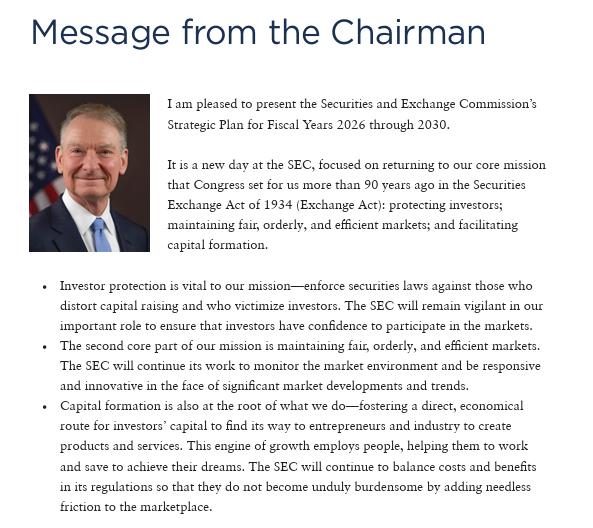
Regulatory advancement has persisted following Q1, as the SEC recently designated digital assets as a strategic priority extending through 2030. Within a preliminary document published this week, the regulatory body committed to "provide a firm regulatory foundation for digital assets and distributed ledger technologies through a rational, coherent, and principled approach."
CoinShares additionally emphasized the expanding recognition of Bitcoin within conventional financial institutions. During earlier months this year, BlackRock recognized Bitcoin's potential function in contemporary investment portfolios, contending that the conventional equity-and-bond diversification approach has diminished in reliability throughout the post-2020 market landscape.
Despite this progress, market participants continue to monitor the progression of the CLARITY Act, a recommended market structure legislation that would create a more thorough regulatory architecture for digital assets and provide additional definition regarding the respective authorities of the SEC and CFTC.
The present iteration of the legislation has attracted examination from the banking sector, although certain legislators anticipate it may advance to the Senate floor for consideration as soon as August.