US Credit Unions With $25 Billion in Assets Enter Stablecoin Testing Initiative
Through a collaborative pilot program launched by Stablecore, Circuit and Curql, credit unions across the United States gain opportunities to evaluate stablecoin payment systems and digital asset offerings.

An early-access initiative designed for credit unions in the United States has been introduced by Stablecore, a provider of digital asset infrastructure solutions for the financial services sector. The program represents a strategic effort to enable smaller lending institutions to assess stablecoins and blockchain-enabled financial products prior to mainstream implementation.
Wednesday's announcement detailed the collaborative nature of the program, which brings together Circuit, a credit union service organization (CUSO) specializing in research and development activities, and Curql, a fintech investment collective that represents over 160 credit unions across the nation.
Through this initiative, credit unions that choose to participate gain the ability to evaluate and experiment with stablecoin and digital asset offerings, encompassing stablecoin payment solutions, tokenized deposit products, Bitcoin (BTC), cryptocurrency on-ramps and off-ramps, as well as staking functionalities, prior to making determinations about incorporating these services into their current banking infrastructure.
This initiative represents an expansion of Stablecore's comprehensive strategy to deliver stablecoin and tokenized-asset capabilities to banking institutions and credit unions throughout the United States via their current core banking infrastructure. The company's integration into the Jack Henry Fintech Integration Network took place in February, a platform managed by the well-known core banking technology solutions provider, positioning Stablecore to serve approximately 1,670 bank and credit union core system clients.
Through this most recent program launch, credit unions that collectively oversee approximately $25 billion in assets will gain the capability to investigate and evaluate stablecoin and digital asset service offerings.
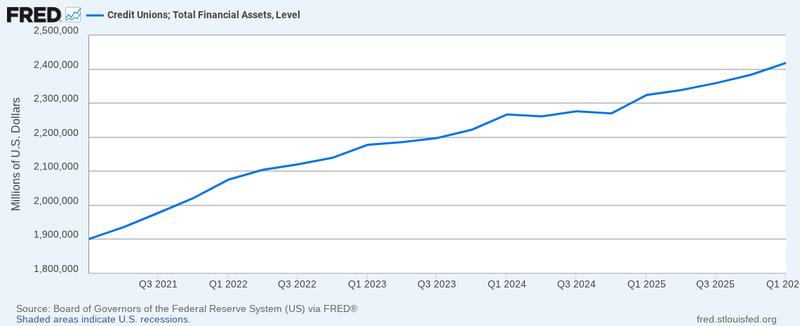
As a critical component of the financial landscape in the United States, credit unions maintain significance with over 4,200 federally insured entities operating throughout the country. Despite experiencing a reduction in their total count through recent years, both membership figures and aggregate assets under management have demonstrated consistent expansion.
Credit unions move to implement GENIUS Act stablecoin rules
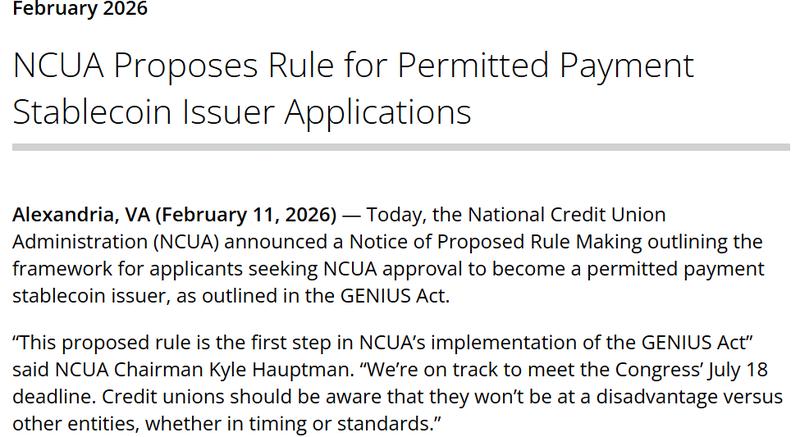
Emerging indicators suggest that credit unions throughout the United States are progressively positioning themselves to integrate stablecoin service capabilities. The National Credit Union Administration (NCUA), serving as the federal regulatory authority overseeing federally insured credit unions, put forward a licensing framework proposal in February addressing payment stablecoin issuers that operate through credit union subsidiary structures.
According to the framework outlined in the proposal, any entity issuing payment stablecoins through a subsidiary relationship with a federally insured credit union would face mandatory licensing requirements from the NCUA prior to commencing stablecoin issuance activities.
The proposal concentrates its scope on establishing the licensing procedure and supervisory framework, while indicating that supplementary rulemaking addressing reserve requirement specifications, capital standards, liquidity parameters and risk management protocols will follow in subsequent regulatory actions. Public stakeholders had the opportunity to submit comments on the proposed regulations through April 13.