
Tennessee and Georgia Implement New Regulations Banning and Restricting Cryptocurrency ATMs
The number of cryptocurrency ATMs across the United States is rapidly declining as new legislation takes effect in Tennessee today, while Minnesota operators face a deadline of Aug. 1 to adhere to comparable regulations.
The presence of cryptocurrency ATMs throughout the United States is quickly diminishing as operators of these kiosks in a pair of states confront prohibitions and regulatory constraints under newly enacted legislation.
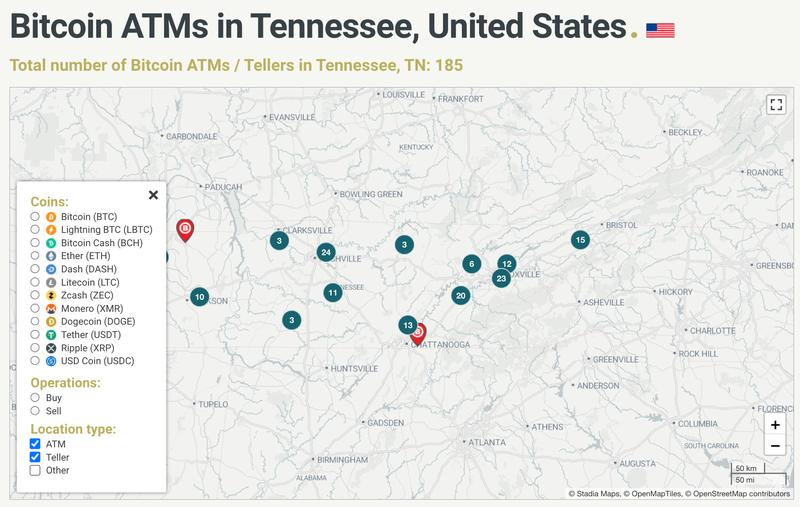
New laws governing crypto ATMs that were enacted by Tennessee and Georgia became effective on Wednesday, establishing a total prohibition in Tennessee while mandating transaction caps and reporting requirements in Georgia. These actions by both states come after Indiana implemented its ban in March, and Minnesota prepares to enforce its ATM prohibition starting Aug. 1.
The legislation in Tennessee, which received Governor Bill Lee's signature in April, prohibits both the operation and installation of cryptocurrency ATMs and kiosks throughout the state, whereas Georgia's legislation mandates that operators of these ATMs establish limits on money transfers for both new and current users, provide customer warnings, and under certain circumstances provide refunds to individuals who may have fallen victim to fraudulent schemes.
Numerous state governments and local municipalities throughout the United States have started to independently pursue enforcement actions against cryptocurrency ATM operators as a reaction to cases involving residents, especially elderly individuals, being deceived into transferring funds to fraudsters. Legislative bodies in Delaware and New Jersey have put forward comparable proposals that would completely prohibit these machines.
These regulatory constraints may have already played a role in the collapse of at least one ATM operating company. Bitcoin Depot filed for Chapter 11 bankruptcy protection in May. Just days prior to the filing, the company had revealed that it harbored "substantial doubts" regarding its ability to continue operations in light of an increasingly difficult regulatory landscape and ongoing legal challenges.
"Bitcoin Depot's bankruptcy is likely a preview of what the broader crypto ATM industry will face in the US over the next several years. The traditional model depended on high transaction spreads and limited regulatory scrutiny to offset unusually high compliance, cash logistics, fraud remediation, and retail revenue sharing costs. That equation is breaking down as states increasingly impose consumer protection standards that compress fees, expand operator liability for scam related activity, and raise expectations around transaction monitoring and reimbursement."
Roshan Dharia, CEO of Echo Base and a restructuring adviser, told Cointelegraph
Canada weighs countrywide ATM ban
While not yet implemented, federal legislators in Canada have put forth a proposal for a comprehensive ban on crypto ATMs throughout the entire nation. This proposed regulation, which would still permit Canadian citizens to purchase digital assets through physical money services business locations, was introduced in response to what government authorities described as the ATMs serving as the "primary method for scammers to defraud victims and for criminals to place their cash proceeds of crime."