
Netflix Production Money Converted to Dogecoin: '47 Ronin' Filmmaker Sentenced to Prison
Director Carl Rinsch receives a 30-month prison term after misappropriating funds allocated for a Netflix series, using the money to purchase Dogecoin, trade stocks and acquire high-end luxury items.
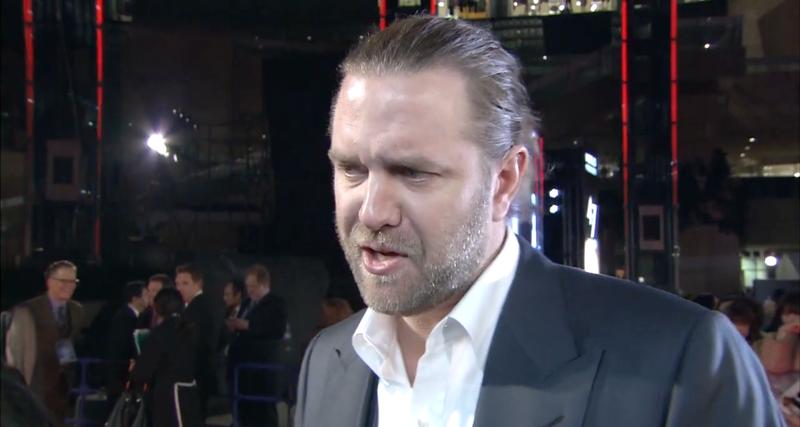
Film director Carl Rinsch has received a 30-month prison sentence after being found guilty of defrauding Netflix of $11 million, funds which he used to invest in cryptocurrency, engage in stock trading and purchase luxury items.
On Monday, a federal court in Manhattan handed down the two-and-a-half-year sentence to Rinsch, the director behind the 2013 Keanu Reeves film "47 Ronin," following his December conviction on multiple charges that included fraud and money laundering.
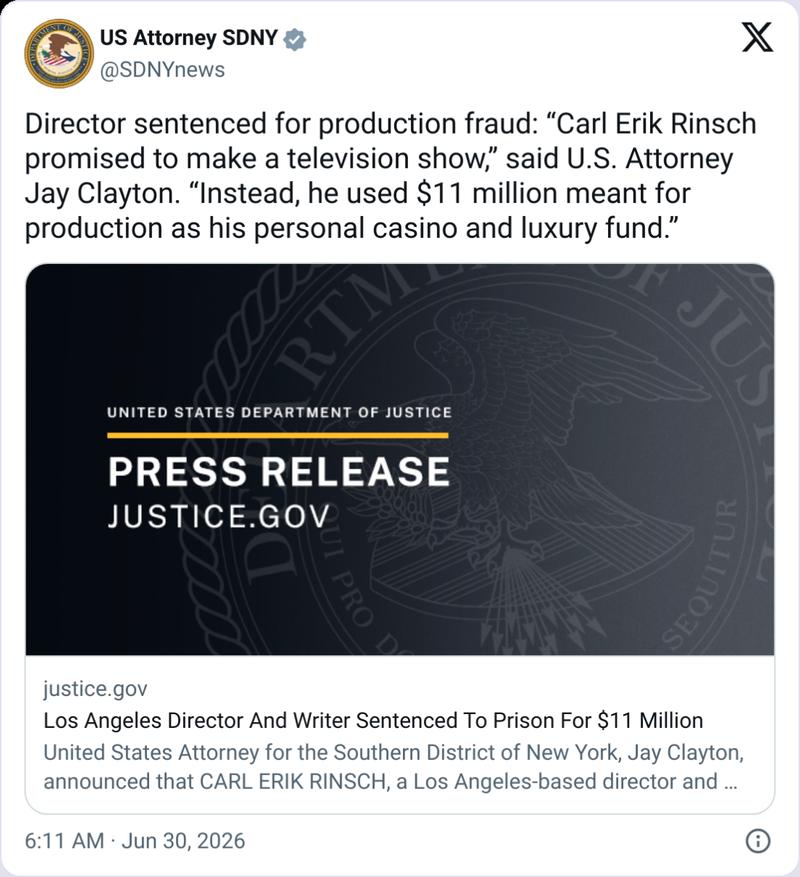
"Rinsch orchestrated a scheme to steal millions by seeking $11 million from a subscription streaming service, falsely claiming that money would be used to finance a television show that he was creating," Manhattan US Attorney Jay Clayton said in a statement Monday.
"Instead of using the money to make the show, Rinsch made risky bets on highly speculative stock options and cryptocurrency, and spent millions of dollars on luxury goods for himself," Clayton added. "Today's sentence sends a deterrent message: fraud will not be tolerated."
The sentence handed to Rinsch fell significantly short of the 90-year maximum potential imprisonment he faced across his seven total charges, all of which he entered not guilty pleas to. His legal team also put forward arguments that he was dealing with mental health challenges.
The sentencing concludes a 15-month period that began when Rinsch was taken into custody in March 2025 on charges of defrauding what prosecutors identified in legal filings as "Streaming Company-1," which numerous media outlets have confirmed to be Netflix.
Rinsch makes $27 million on Dogecoin bet
Based on a March 2025 indictment and a November 2023 New York Times article detailing a confidential arbitration case between Netflix and Rinsch, the streaming platform originally provided Rinsch with $44 million to produce his science fiction series "White Horse," which was subsequently retitled "Conquest," but when he requested additional funding to complete the project, Netflix transferred another $11 million in March 2020.
From this new funding round, Rinsch allocated $10.5 million to stock market speculation and rapidly lost approximately half of this amount within a matter of weeks through options trading focused on pharmaceutical stocks and the S&P 500.
Rinsch then moved more than $4 million of his remaining capital to cryptocurrency exchange Kraken and invested the entire sum in the memecoin Dogecoin (DOGE), a wager that eventually produced approximately $27 million in profits when he sold his position in May 2021, based on an account statement reviewed by The Times.
Using the proceeds from his DOGE profits, Rinsch proceeded to spend approximately $10 million on personal items and luxury purchases, which included $1.8 million toward credit card bills, $1 million on legal representation to pursue litigation against Netflix, $3.8 million on furniture and antiques, $2.4 million on five Rolls-Royces and a Ferrari, and $652,000 on watches and clothes, per the indictment.
Rinsch ultimately never completed the series or reimbursed Netflix for the funds the company had supplied to finish production.
Prosecutors asked for five years
Rinsch faced conviction on one count each of wire fraud and money laundering, with each offense carrying a potential maximum sentence of 20 years behind bars, in addition to five counts of conducting monetary transactions in property derived from unlawful activity, with each of those counts carrying a potential maximum of 10 years.
In a mid-June sentencing memorandum, prosecutors requested that the court impose a five-year prison term on Rinsch after his legal team advocated for a sentence that would not include incarceration.
Rinsch's defense team stated he was struggling with mental health problems, with friends and family members submitting letters to the court indicating that his conduct underwent noticeable changes around the period when the offenses occurred. Keanu Reeves also submitted a letter to the court expressing support for Rinsch.
Beyond his two-and-a-half-year incarceration period, Rinsch received a sentence that includes three years of supervised release, $11 million in forfeiture and $700 in mandatory special assessments.