MoneyGram Expands Blockchain Payment Capabilities Through Tempo Alliance
In a move to enhance blockchain payment infrastructure, MoneyGram has formed an alliance with Tempo to enable stablecoin settlement and validate remittance operations as the industry continues its digital transformation.

In an effort to advance blockchain adoption for international money transfers, MoneyGram has entered into a partnership with Tempo, a blockchain platform designed for payment processing, to enable stablecoin settlement capabilities and assist in transaction validation across the network as remittance providers increasingly embrace distributed ledger technology for cross-border fund movements.
According to the announcement from both organizations, Stripe intends to conduct transaction settlement with MoneyGram utilizing Tempo's underlying infrastructure as part of broader initiatives to migrate treasury operations and payment processing onto stablecoin-based systems.
As a Layer 1 blockchain developed through incubation by both Stripe and Paradigm, Tempo specializes in facilitating stablecoin transfers and international payment transactions. Earlier this year in April, payment giant Visa joined the network as an initial validator, joining other prominent entities including Stripe and Zodia Custody in this capacity.
According to MoneyGram's announcement, the company will take on responsibilities as an "anchor remittance validator" within the network, contributing to transaction validation processes as the organization transitions from merely utilizing blockchain infrastructure to actively participating in network operations.
The United States Federal Reserve highlighted stablecoins as a "potential remedy" for addressing inefficiencies in international payment systems, according to a FEDS Notes publication released on March 30. Both MoneyGram and its primary competitor Western Union hold dominant positions in this market sector, which the Federal Reserve characterized as "generally viewed as slower, more expensive, and not very transparent to end-users relative to domestic payments."
Remittance companies deepen stablecoin and blockchain push
Major international remittance service providers worldwide are progressively broadening their engagement with stablecoins and payment systems built on blockchain technology.
Most recently, MoneyGram entered into a collaboration with cryptocurrency platform Kraken to enable customers to transform digital currencies into physical cash available for collection via the remittance company's retail distribution network. According to Kraken's statement, the offering would commence with cash withdrawal functionality before subsequently adding bank deposit options and international payout capabilities.
Earlier this year in March, Western Union formed a partnership with Crossmint to facilitate its forthcoming Digital Asset Network initiative, which aims to create connectivity between stablecoins and the company's worldwide disbursement infrastructure. Over recent weeks, the organization has commenced deployment of its dollar-backed USDPT token utilizing the Solana (SOL) blockchain network, initially launching in Bolivia and the Philippines, with projections to extend the stablecoin offering to over 40 nations throughout the following year.
Throughout Latin America, a region where remittance transfers constitute a significant component of family earnings and international payments, stablecoins have emerged as an increasingly favored mechanism for dollar-denominated transfers and wealth preservation.
Research published by Mexico-headquartered cryptocurrency platform Bitso in April revealed that stablecoin transactions represented 40% of cryptocurrency acquisitions on their platform during 2025, exceeding Bitcoin for the first time among the platform's user base of approximately 10 million individuals distributed throughout the geographic area.
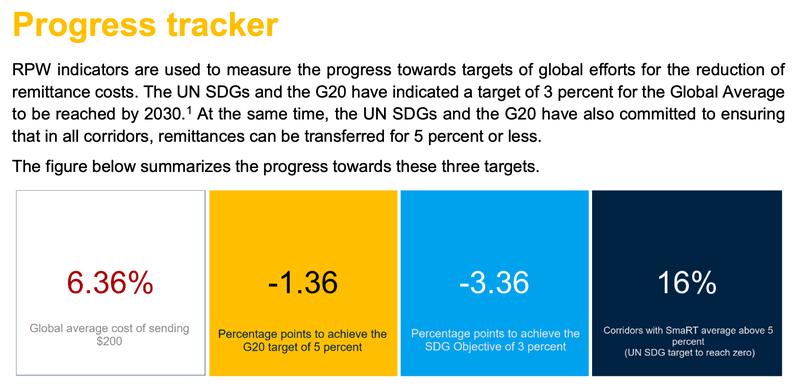
According to statistics compiled by the World Bank, conventional global remittance transaction fees reached an average of 6.36% during the third quarter of 2025, representing more than twice the United Nations' established objective of 3%.