
Malta unveils comprehensive DeFi regulations including DAO governance under MiCA
Malta's financial watchdog has released a consultation paper proposing regulatory guidelines for software-based organizations, contending that complete decentralization remains elusive for most DeFi platforms.
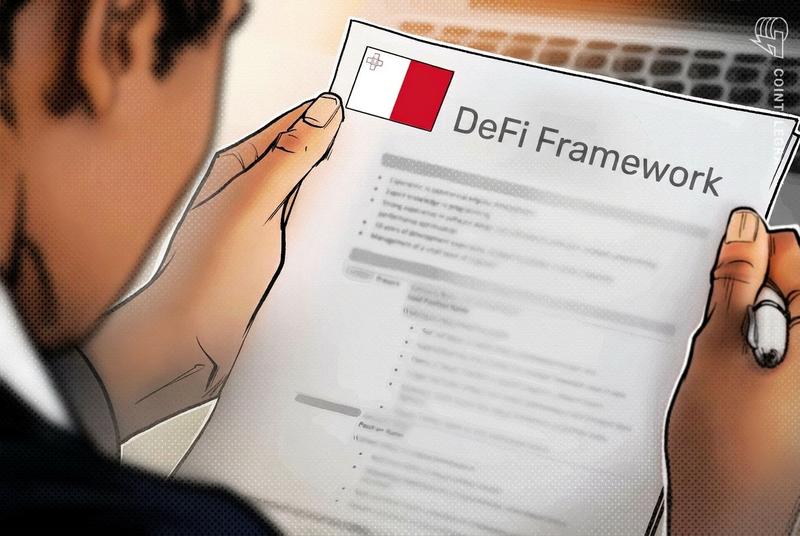
The financial services regulator of Malta has released a comprehensive discussion paper that outlines a proposed legal structure for decentralized finance (DeFi), featuring provisions for recognizing decentralized autonomous organizations (DAOs), as European authorities wrestle with establishing appropriate oversight for blockchain-powered financial platforms.
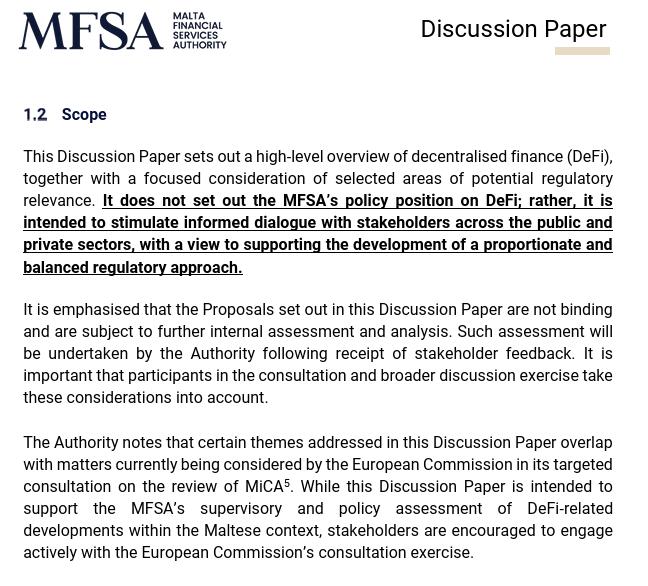
The Malta Financial Services Authority (MFSA) launched a public consultation period on June 12 regarding DeFi governance within the framework of the European Union's Markets in Crypto-Assets (MiCA) regulation. The consultation document seeks input from the industry until July 10 and introduces a novel legal designation for "software-based organizations," a category designed to include DAOs alongside other DeFi entities that operate through software governance mechanisms.
Instead of establishing DAOs as an independent legal construct, the MFSA's approach involves classifying them under the broader umbrella of software-based organizations, creating a distinction between the legal structure that governs the organization and the regulatory parameters that apply to the protocol and underlying software technology.
The consultation paper represents an evolution of Malta's established position within the digital asset sector, having rolled out one of Europe's earliest comprehensive regulatory frameworks for cryptocurrencies back in 2018. The regulator emphasizes that while services that are genuinely fully decentralized typically remain beyond MiCA's regulatory reach, numerous DeFi projects continue to maintain centralized elements that undermine their decentralization claims and create challenges regarding regulatory responsibility.
MiCA excludes fully decentralised models from its regulatory scope, meaning that projects without intermediaries or central control may not need to comply with MiCA.
EU regulators increasingly turn attention to DeFi
The release of Malta's discussion paper occurs alongside a wider initiative throughout the European Union aimed at establishing clarity around the appropriate regulatory treatment of decentralized finance platforms and decentralized autonomous organizations under the MiCA framework.
Research published in March by a European Central Bank working group revealed that governance structures and operational control within four prominent DeFi protocols exhibited significant concentration, indicating that numerous projects might face difficulties demonstrating they are "fully decentralized" and thus would remain subject to MiCA's regulatory requirements.
The ongoing dialogue advanced further in May, when the European Commission initiated a focused review of MiCA requesting stakeholder input on various topics including the permissibility of interest-bearing stablecoins, appropriate approaches to DeFi oversight, and whether existing gaps in the regulatory framework justify the introduction of supplementary rules.
Nevertheless, consensus regarding the necessity of specialized DeFi regulations remains elusive. In an interview with Cointelegraph at the WAIB Summit Monaco held earlier this month, Peter Kerstens, an adviser to the European Commission, expressed his view that policymakers would be better served by focusing on the integration of tokenization within a comprehensive digital asset regulatory structure, rather than developing a second iteration of MiCA specifically targeting DeFi applications.