
Institutional Settlement Gets Boost as UAE Stablecoins Build AED-USD Exchange Infrastructure
A new infrastructure will facilitate real-time conversion capabilities between stablecoins pegged to the dirham and the US dollar, operating within the United Arab Emirates's official payment token regulatory structure.
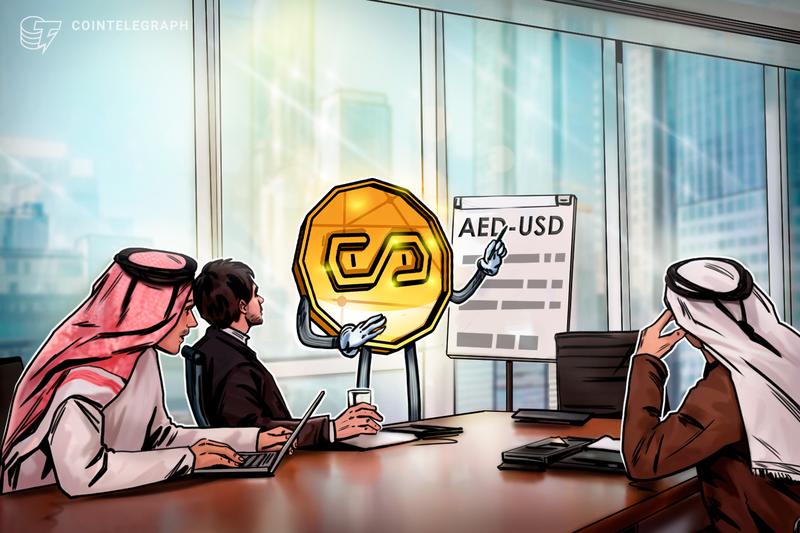
A regulated infrastructure for exchanging between stablecoins denominated in UAE dirhams and US dollars is being built by AE Coin and USD Universal, with the goal of facilitating institutional settlement activities and treasury management functions across the United Arab Emirates.
Al Maryah Community Bank powers the infrastructure, which has been engineered as a compliant conversion pathway that allows for near-instantaneous transfers between AE Coin, which is pegged to the dirham, and USDU, which is backed by US dollars, all operating under the UAE's official payment token regulatory structure.
Based on a statement provided to Cointelegraph, the conversion system has been created to address liquidity management needs and facilitate cross-border payment transactions. Two regulated digital asset service providers with operations in the UAE—Aquanow and Changer.ae—will offer initial access to the platform.
The Financial Services Regulatory Authority in Abu Dhabi Global Market regulates USDU, which is also registered with the Central Bank of the UAE as a foreign payment token, whereas AE Coin has received licensing from the UAE central bank.
According to the companies involved, the infrastructure may eventually be extended to encompass trade finance operations and settlement services involving multiple currencies, with potential integrations into fintech platforms that specialize in cross-border payment solutions.
In January, Universal introduced USDU as the inaugural US dollar-backed stablecoin to receive registration under the UAE's Payment Token Services Regulation framework, targeting institutional and professional market participants. While the stablecoin has authorization for digital asset-related payment activities within the UAE, it has not yet secured approval for widespread retail payment usage on the mainland.
UAE expands blockchain and digital asset infrastructure
In recent years, the UAE has positioned itself as among the most rapidly expanding centers for cryptocurrency enterprises, as regulatory authorities and government officials have worked to cultivate an increasing density of blockchain and Web3 businesses establishing operations throughout the region.
During the current week, a blockchain-based business identity platform was introduced by Ras Al Khaimah free zone Innovation City, serving over 1,000 companies that hold registration there, marking another step in the nation's ongoing expansion of blockchain-enabled financial and commercial infrastructure.
Regulatory bodies in Dubai have maintained their pace of approving licenses for cryptocurrency firms and digital asset service platforms. During February, the VARA regulator in Dubai granted a Virtual Asset Service Provider license to Animoca Brands, while BitGo, a digital asset custody provider, secured a broker-dealer license toward the end of 2025.
Additionally, Binance introduced tokenized stocks and exchange-traded funds sourced from Ondo Global Markets following regulatory approvals in Abu Dhabi during this year, with the product launch featuring tokenized representations of equities and ETFs connected to corporations including Apple and Nvidia.
During March, VARA broadened its regulatory scope even further by implementing regulations governing crypto exchange-traded derivatives within Dubai, establishing leverage restrictions, suitability criteria and disclosure obligations for licensed platforms that provide these financial products.