Coinbase Partners with Nium to Bring USDC Stablecoin Payments to Worldwide Network
Singapore-based Nium leverages Coinbase's technology stack to power USDC stablecoin transactions across borders, giving companies the flexibility to complete settlements in traditional currencies or digital assets without pre-funding requirements.

Financial technology company Nium, based in Singapore, has partnered with Coinbase to incorporate USDC stablecoin payment capabilities into its worldwide transaction network, facilitating the transmission, receipt and conversion of stablecoins to traditional currencies across over 190 nations via a unified platform.
Based on an announcement released Tuesday, this partnership leverages Coinbase's technological infrastructure for safekeeping, liquidity provision and digital wallet services, giving Nium's client base the ability to finance international payouts using USDC and complete settlements in either digital stablecoins or regional fiat currencies without the need for prefunded account balances.
The company explained that this arrangement facilitates just-in-time settlement mechanisms, permitting capital to be distributed at the moment of payout instead of being maintained across numerous legal jurisdictions, and offers functionality to connect stablecoin holdings to card-based programs for everyday consumer purchases.
Based on information from Nium, the company's network accommodates over 100 different currencies, featuring local fund collection capabilities in 40 different markets, instant payout services across more than 100 payment corridors and possesses upwards of 40 regulatory authorizations globally.
This deployment comes after the firm's most recent introduction of a platform that gives enterprises the capability to create stablecoin-backed payment cards operating on Visa and Mastercard infrastructure, featuring automatic conversion of balances to traditional currency during transactions, with regulatory compliance and system integration managed via a consolidated solution.
USD Coin (USDC), a stablecoin pegged to the US dollar that was introduced in 2018 through a collaboration between Circle and Coinbase, is engineered to preserve a 1:1 valuation ratio with the dollar and maintains backing through cash holdings and short-duration US Treasury reserve assets.
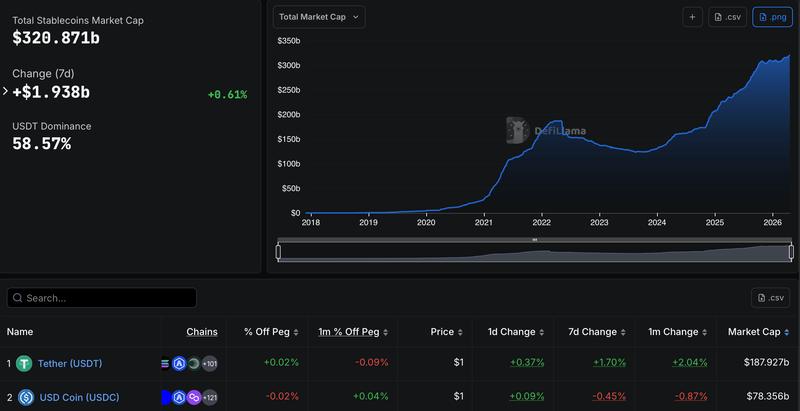
Data from DefiLlama indicates that it holds the position of second-largest stablecoin measured by market capitalization, currently standing at approximately $78 billion, trailing Tether's USDT (USDT), which maintains a market value of roughly $188 billion.
Circle expands USDC use in cross-border payments
Circle has been broadening USDC's presence in the international payments sector via multiple strategic partnerships designed to incorporate stablecoin settlement mechanisms into established financial infrastructure.
During March, the organization collaborated with Sasai Fintech to broaden USDC payment options throughout African financial corridors, focusing on remittance services, commercial transactions and mobile wallet applications. Within certain regions of Sub-Saharan Africa, the cost of remittances surpasses 7%, significantly higher than the United Nations' 3% benchmark objective.
In recent weeks this month, Circle formed an alliance with Thunes to broaden USDC settlement capabilities throughout its international payments infrastructure, facilitating nearly instantaneous cross-border fund transfers while minimizing dependence on prefunded account structures. This integration expands USDC-denominated liquidity throughout Thunes' operational network, which covers more than 140 nations worldwide.
Current data indicates growing USDC transaction volume. A CEX.IO analysis released earlier this month revealed the stablecoin's total supply increased by approximately $2 billion during the first quarter, whereas Tether's USDT experienced a decline of roughly $3 billion, representing the first divergence in growth patterns between these two assets since 2022.