
Authorities in Belgium Detain Leader of Phishing Operation Linked to $572K Heist
Law enforcement in Belgium reports that a pan-European cybercrime group extracted more than $572,000 from targets, subsequently converting stolen funds into cryptocurrency for laundering purposes.

Law enforcement officials in Belgium have taken into custody a 19-year-old individual believed to be a central player in a cross-border phishing and financial laundering operation that extracted in excess of 500,000 euros ($572,000) by deploying fraudulent government communications via email and telephone to manipulate targets into downloading remote-access technology.
The individual was apprehended at an Airbnb rental property located in Antwerp, where law enforcement also discovered a second suspect. The Federal Judicial Police initiated their inquiry in March 2026, a time when phishing-related criminal activity emerged as a key enforcement focus within the area, as stated in a police communication released on Thursday.
The primary suspect appeared before an investigating judge, who subsequently issued a warrant for arrest. The criminal organization utilized money mules along with cash couriers and converted the stolen funds through cryptocurrency channels.
The inquiry demonstrates that digital currencies can serve various functions within phishing schemes, notably as a vehicle for cleaning illegally obtained money.
Phishing dominates crypto security losses
Phishing represents a substantial danger to cryptocurrency holders as well, representing the largest portion of the $482 million in losses recorded during the first quarter of 2026. Attacks involving phishing and social engineering were responsible for $306 million of these total losses, based on data from Hacken.
Phishing schemes and social engineering fraud continue to represent a persistent challenge for the cryptocurrency sector, given that threat actors manipulate human psychology instead of targeting weaknesses in protocol software.
On May 25, blockchain analyst "b-block" issued an alert that fraudsters leveraged Google's advertising platform to distribute malicious phishing advertisements masquerading as decentralized trading platform Uniswap, with reports indicating more than $400,000 was taken from victims.
Information aggregation platform DeFiLlama indicated that "fake ads on Google are a common source of phishing attacks." Cryptocurrency cybersecurity organization Security Alliance additionally disclosed in April that there had been a "significant uptick" in phishing operations conducted through Google Search during March.
Blockchain protection firm CertiK's Skynet report similarly identified phishing and social engineering as primary attack methodologies employed by malicious threat actors with connections to North Korea.
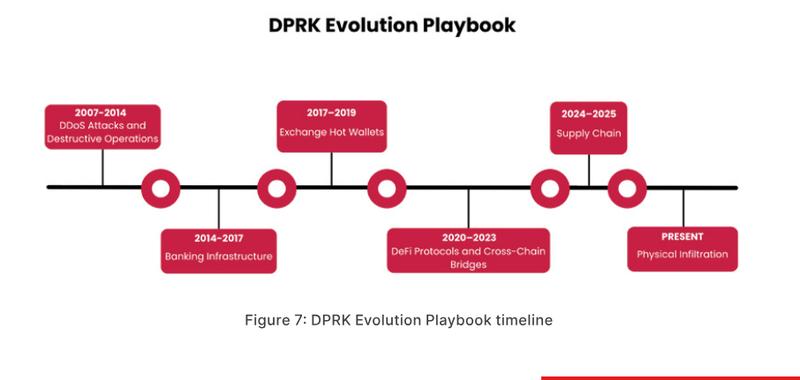
CertiK connected the 2022 Ronin Bridge security breach that resulted in the theft of $600 million to a targeted spearphishing operation that involved a fraudulent LinkedIn job recruiter and a PDF document embedded with malicious software.