
Trump mandates assessment of Federal Reserve payment system access for fintech companies
Federal financial regulators have been directed to examine regulations that may be modified to expedite charter applications from qualified fintech companies seeking to become banks and credit unions.
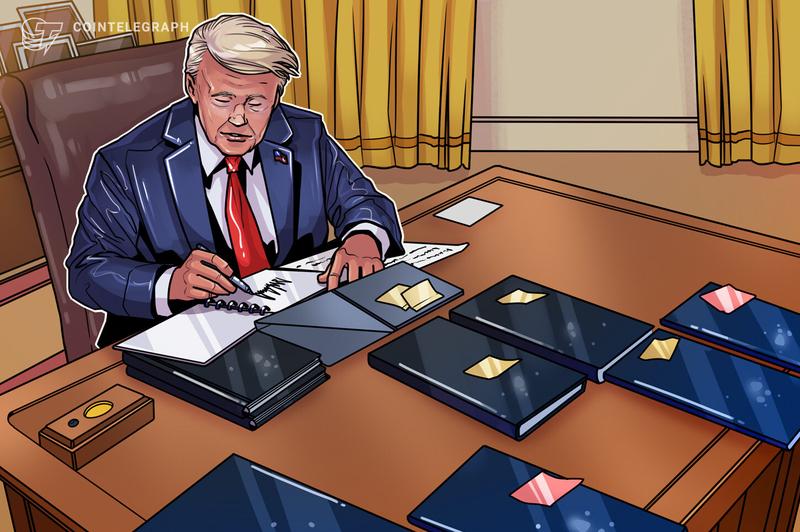
On Tuesday, US President Donald Trump put his signature on an executive order mandating a comprehensive review of obstacles that may be hampering fintech innovation or blocking access to payment infrastructure and banking partnerships.
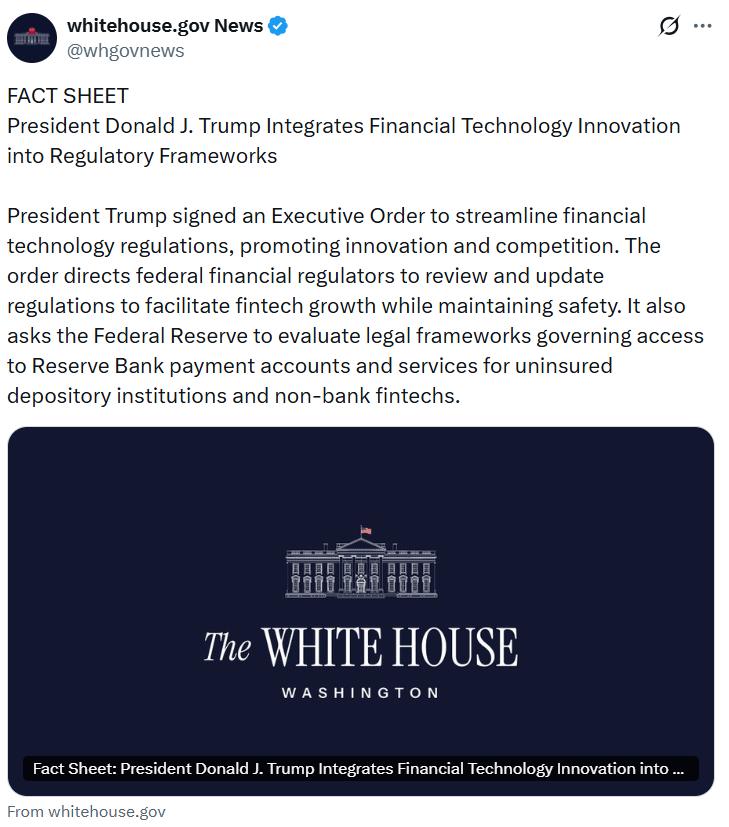
The directive instructs the Federal Reserve Board to conduct an evaluation of the legal, regulatory and policy structures that govern how fintech and crypto companies access Federal Reserve payment systems, with a comprehensive report due to Trump within a 120-day timeframe.
The governors have additionally been directed to examine the Federal Reserve's legal authority for providing direct access to fintech and crypto companies and to investigate "options for expanding such access to the extent permitted by law, subject to appropriate risk management requirements."
Federal Reserve payment systems offer access to fundamental banking infrastructure, facilitating more efficient money transfers and minimizing reliance on intermediary financial institutions. Fintech and crypto companies have encountered substantial obstacles in obtaining banking services.
Among the more severe instances, they experienced debanking, being cut off from banking infrastructure as part of what has been labeled "Operation Chokepoint 2.0."
Review into bank partnership barriers
Under the terms of the order, within the next 90 days, the leadership of each US federal financial regulatory agency has been tasked with reviewing regulations, orders, and no-action letters that might be blocking fintech companies from forming partnerships with federally regulated institutions including credit unions, broker-dealers, and investment advisers.
These officials are further mandated to examine current regulations, guidance, supervisory practices, and application procedures and to identify any that could be revised "to facilitate innovation."
"The United States is a global leader in financial innovation, driven in part by the rapid growth of financial technology and fintech firms," Trump wrote in the executive order.
"To foster this financial innovation, the federal government must update regulations to allow integration of digital assets and innovative technology into traditional financial services and payment systems."
The Trump administration has reversed many of the policies that contributed to crypto debanking. A US think tank, the Cato Institute, found in January that most debanking cases in the US resulted from government pressure rather than individual banks' policies.
Streamlined applications for bank, credit union charters
The leadership of the federal financial regulatory agencies has also been instructed to examine regulations, guidance documents, orders, and no-action letters that could be modified to simplify applications for qualified fintech companies pursuing bank charters, credit union charters, deposit or share insurance, and other federal licenses.
A national bank trust charter authorizes a financial institution to engage in fiduciary activities such as trust services, custody and asset safekeeping.
In December, the Office of the Comptroller of the Currency conditionally approved five applications for crypto-related national trust banks, including First National Digital Currency Bank, Ripple, BitGo, Fidelity Digital Assets and Paxos.