Trading Platform Liquid Unveils AI-Integrated App Enabling Direct Market Execution via ChatGPT and Claude
The new Co-Invest application enables users to deposit funds, review their portfolios and complete transactions in over 500 different markets directly through AI conversational platforms.

Multi-asset trading platform Liquid has introduced a new trading application that enables users to complete trade executions directly within OpenAI ChatGPT and Anthropic Claude interfaces, covering cryptocurrency, stock markets, forex trading and prediction markets.
The company reports that Co-Invest app users have the capability to deposit funds into their accounts, examine their trading positions and execute trades all within the conversational interface. According to Liquid, the system directs orders through multiple trading venues such as Hyperliquid, Lighter and Ostium.
The Co-Invest platform from Liquid enables trading activity across over 500 different markets, the company states, encompassing pre-IPO secondary offerings and Polymarket positions. Liquid reports that since its August 2025 debut, the platform has facilitated over $3 billion in total trading volume and now maintains an active user base of approximately 40,000 individuals.
Accompanying the product launch, Liquid's founder Franklyn Wang published a blog post in which he described the company's vision of AI as an instrument for diminishing information asymmetries within financial markets, suggesting that conversational artificial intelligence has the potential to transform retail investor capital allocation approaches.
Co-Invest is not just another financial product. It marks a shift from human-limited capital allocation to intelligence-augmented capital allocation.
Franklyn Wang, Liquid founder
Crypto companies move to expand infrastructure for AI-driven payments, transactions
An increasing number of cryptocurrency and payments companies are developing infrastructure that enables artificial intelligence systems to independently maintain funds, process payments and engage with cryptocurrency services.
Visa introduced a tool designed for programmatic AI-based payments in March, while Tempo, which has backing from Stripe, launched a payments protocol centered on machine-initiated transactions. During that same month, MoonPay released an open-source wallet standard enabling AI agents to maintain custody of funds and carry out transactions across multiple blockchains, featuring capabilities for wallet storage, transaction signing and expenditure controls.
In the early part of this month, Amazon Web Services incorporated Coinbase's x402 payments protocol into its Bedrock AgentCore platform, providing AI agents with the ability to execute USDC micropayments and utilize services via cryptocurrency payment infrastructure.
In May, that same protocol introduced batch settlement functionality, a capability designed to lower the expenses associated with high-frequency AI agent payment processing by enabling smaller transactions to be settled collectively at a later time. Base creator Jesse Pollak states that this update makes possible micropayments valued at under $0.0001 for services including compute resources and AI inference operations.
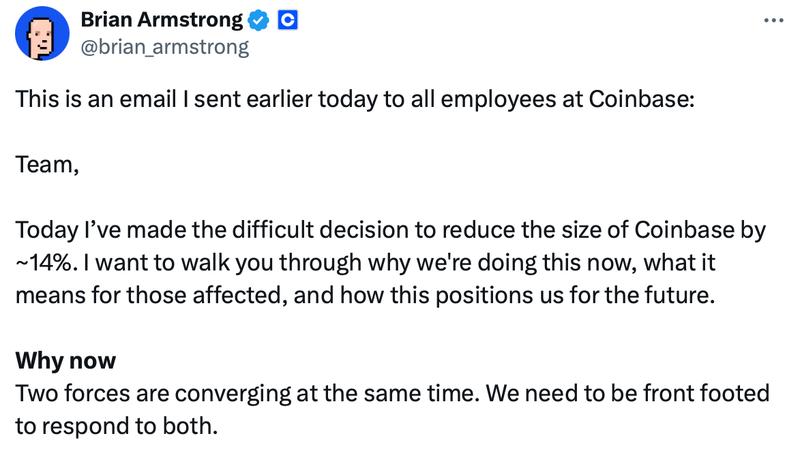
The expansion of AI infrastructure throughout the cryptocurrency sector has also started to transform hiring practices and operational structures across the industry. Multiple companies such as Kraken, Coinbase, Gemini, Crypto.com, Block and Dune have all made public announcements regarding layoffs or organizational restructuring initiatives this year, with these changes partially attributed to expanded implementation of AI technology and automation systems.