
Tokenization's liquidity hurdle and mainstream stablecoin usage take center stage at CONNECT
At Cointelegraph's CONNECT gathering in Singapore, industry experts discussed tokenized asset markets, mainstream adoption of stablecoin transactions, and the changing environment for cryptocurrency investment.

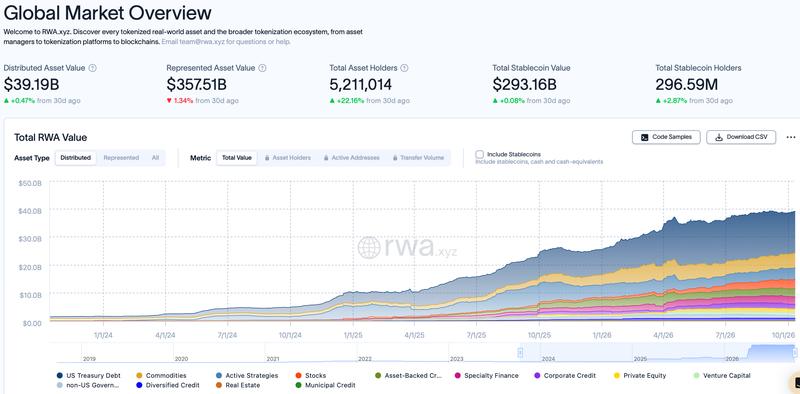
The emergence of tokenized assets is creating fresh trading possibilities throughout financial sectors, yet the expanding volume of real-world assets (RWAs) migrating onchain continues to outpace investor appetite, according to Alex Taaffe, who serves as chief revenue officer at the cryptocurrency trading company GSR.
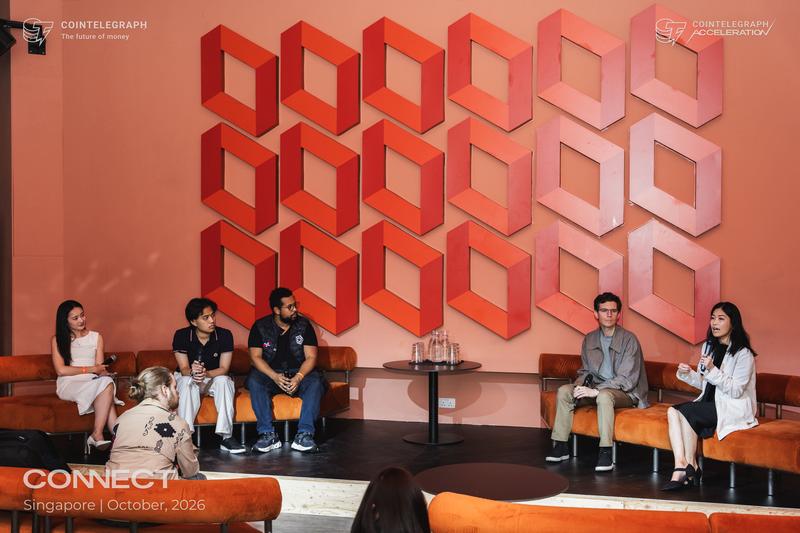
During his participation in a panel focused on liquidity and market fragmentation at CONNECT by Cointelegraph: Singapore Edition held on Oct. 9, Taaffe noted that liquidity conditions are showing improvement in markets for pre-IPO equities, commodity trading, and international stocks that were once difficult for investors to access. That said, he emphasized that appetite for completely tokenized RWAs hasn't matched the accelerating pace of asset issuance.

The gathering organized by Cointelegraph assembled Web3 entrepreneurs, capital allocators and sector leaders for four distinct panel conversations addressing tokenization, payment systems using stablecoins, onchain infrastructure for trading, and venture capital liquidity events, complemented by a competition featuring emerging startups.
Specifically on RWAs, and fully tokenized assets, there's a supply and demand inbalance. There's a ton of supply. Every asset manager issuer wants to do capital formation onchain.
Alex Taaffe
Taaffe observed that the proliferation of entities issuing assets alongside multiple blockchain platforms has created additional fragmentation of liquidity throughout tokenized asset markets.
Lingling Jiang, serving as partner at DWF Labs, concurred that fragmentation continues to pose obstacles, especially in scenarios where multiple issuers tokenize identical underlying assets while establishing distinct pools of liquidity.
Despite these challenges, Jiang noted that liquidity within cryptocurrency markets has experienced substantial enhancement over recent years, though she acknowledged the sector still has considerable progress to achieve.
Everyday payment integration critical for stablecoin mainstream acceptance
Throughout the panel titled "Stablecoins at the Point of Sale: Cards, Wallets and the Race for Everyday Spend," Mike Silagadze, who founded and leads ether.fi, explained that although stablecoins have simplified cross-border money transfers, broader consumer adoption relies on their usability for routine purchases.
Silagadze referenced Singapore as an example, where individuals might possess USDC yet still require the local fiat currency for settling bills, illustrating the disconnect between blockchain-based payment systems and conventional financial service requirements.
Yvonne Chia, serving as head of communications at USDD, emphasized that when stablecoin issuers adopt the perspective of users, "the most important thing for you is the user experience."
That's the kind of direction that we want to move in, to make it as easy as possible for the user to have stablecoins, use stablecoins, to the point where it doesn't cross their mind that they are using a stablecoin. It's just a regular part of their lives.
Yvonne Chia

The reason no one uses stablecoins in many parts of the world is because it just doesn't plug into your day-to-day life.
Mike Silagadze
Extending beyond practical usability concerns, regulatory obstacles persist, noted Ilya Podoynitsyn, who co-founded and serves as CEO of FinHarbor. He emphasized that service providers must work through regulations that vary significantly between jurisdictions, compelling them to customize their technical infrastructure and compliance frameworks for each specific market.
Ashna Vaghela, holding the position of chief customer officer at cryptocurrency payments company Mercuryo, expressed that stablecoin transactions ought to achieve the same level of simplicity as utilizing Apple Pay, enabling users to finalize purchases without exiting their current application.
I think that's the whole point, to be invisible.
Ashna Vaghela
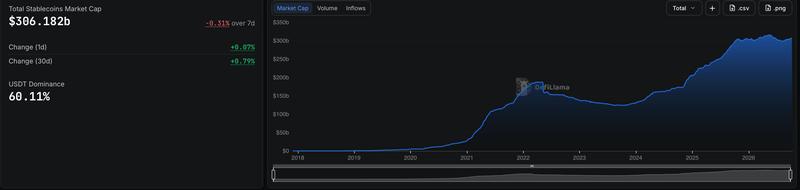
This conversation occurred while the stablecoin market capitalization reached $306 billion, representing an increase of approximately 2% year over year following growth of roughly 74% during the previous 12 months.
Onchain trading infrastructure encounters liquidity dispersion and counterparty risk obstacles
Platforms facilitating cryptocurrency trading encounter difficulties in locating available liquidity distributed across blockchain ecosystems and in handling counterparty exposure, based on insights from panelists engaged in the discussion titled "What's Still Missing in the Onchain Trading Stack in 2026."
Austin Federa, who co-founded DoubleZero, explained that transferring liquidity among different blockchain networks continues to present more complexity compared to traditional financial infrastructure. He stated that "fragmentation is not just an execution problem, it's like a data problem," further noting that "it's actually very hard to figure out how much liquidity truly exists onchain."
Regarding risk oversight considerations, Miguel Morel, who founded and leads blockchain intelligence company Arkham Intelligence, explained that trading operations can leverage onchain information to evaluate counterparty exposure, especially within prediction market environments, where certain participants might possess informational advantages relative to others.
If you know who's on the other side and you're taking less risk, you can offer a tighter spread.
Miguel Morel
This identical blockchain-derived data can additionally assist exchanges in evaluating customer fund deposits, Morel noted, enabling them to determine the origins of capital and support compliance-related determinations.
Without needing to ask for a passport, you can know where those deposits are coming in from.
Miguel Morel
Morel went on to explain that trading platforms can utilize such intelligence to decide whether to authorize trading activity with the deposited assets or escalate them for additional compliance examination.
Maturing cryptocurrency markets present increased exit complexity for investors
Obstacles related to liquidity have created complications for crypto venture capital investors seeking exits, based on perspectives shared by panelists in the discussion "The Exit Problem: How Investors Get Their Money Back."
Pulkit Gupta representing Nomad Capital indicated that liquidity conditions within crypto markets have proven especially challenging throughout the most recent three-month period, with the majority concentrated in higher-capitalization cryptocurrencies.
For me, on the altcoins, it has been really tough for us to get an exit.
Pulkit Gupta
This venture capital organization has provided funding to multiple crypto initiatives that have publicly tradable tokens, among them Movement, Solayer and Berachain.

Reinforcing the transition toward extended timeline expectations, Sonia Shaw, leading OneAsset as CEO, indicated that market conditions have evolved toward maturity, necessitating that emerging companies prove more robust operational fundamentals. Recounting an interaction with an investor anticipating a liquidity event within six months, she remarked, "I don't think the market's like that anymore."
Shaw framed this departure from quick exits as an encouraging indicator of market evolution and stability.
Aleksandr Nechaev, holding a partner position at Funders VC, drew attention to the complications arising from the velocity of transformation affecting both products and market dynamics.
The rapid pace of change makes founders' expertise and ability central to investment decisions.
Aleksandr Nechaev
The theme of transformation and the manner in which founding teams manage through uncertainty resurfaced later during the event's pitch competition, which was powered by Funders VC.