
The Role of Privacy-Focused Cryptocurrencies in Money Laundering After Crypto Heists
While privacy-focused cryptocurrencies frequently surface following crypto hacks, they represent merely a single component within an extensive laundering infrastructure that encompasses exchanges, cross-chain bridges, and fiat conversion points.

Key takeaways
Privacy-focused cryptocurrencies represent merely one component within a comprehensive laundering infrastructure following crypto heists. These digital assets function as temporary obscurity mechanisms designed to interrupt the trail of traceability.
Cybercriminals usually transfer stolen assets through processes involving aggregation, obfuscation, and blockchain migration before implementing privacy mechanisms and attempting final liquidation.
Privacy-centric digital currencies prove most effective in the immediate aftermath of security breaches as they diminish blockchain transparency, postpone account freezing measures, and assist in severing attribution connections.
Law enforcement measures targeting cryptocurrency mixing services and similar laundering infrastructure frequently redirect criminal fund flows toward different pathways, which includes privacy-oriented cryptocurrencies.
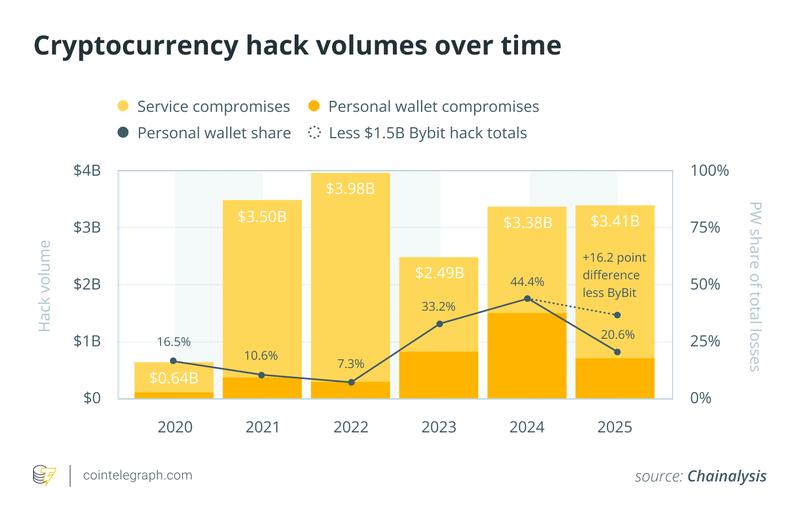
In the wake of cryptocurrency security breaches, criminals frequently channel stolen assets through privacy-oriented digital currencies. Though this pattern has generated an impression that cybercriminals favor privacy coins, these digital assets actually operate as a specialized obfuscation mechanism embedded within a more extensive laundering infrastructure. Understanding the prevalence of privacy coins following hacks requires examining the broader cryptocurrency laundering ecosystem.
This piece investigates the movement patterns of stolen funds following security breaches and identifies the characteristics that make privacy-focused cryptocurrencies valuable to cybercriminals. The analysis covers emerging money laundering techniques, the constraints of privacy coins such as Monero (XMR) and Zcash (ZEC) as laundering mechanisms, lawful applications of privacy-preserving technologies, and the regulatory challenge of fostering innovation while preventing money laundering.
How funds flow after a hack
In the aftermath of a security breach, cybercriminals typically avoid transferring stolen digital assets directly to cryptocurrency exchanges for rapid conversion; rather, they implement a calculated, multi-phase methodology designed to conceal the money trail and impede investigation efforts:
Consolidation: Digital assets from numerous victim wallets are combined into fewer controlling addresses.
Obfuscation: Digital holdings are distributed across sequences of intermediary cryptocurrency addresses, frequently utilizing cryptocurrency mixing services.
Chain-hopping: Assets are transferred or exchanged across different blockchain networks, disrupting traceability within individual network monitoring systems.
Privacy layer: Some funds are transformed into privacy-oriented digital assets or channeled through privacy-preserving mechanisms.
Cash-out: Digital assets are ultimately converted to more tradable cryptocurrencies or traditional currency through regulated exchanges, over-the-counter (OTC) trading platforms, or peer-to-peer (P2P) networks.
Privacy-focused cryptocurrencies typically become relevant during phases four or five, further obscuring the traceability of stolen assets after preceding phases have already rendered the blockchain history more complex.
Why privacy coins are attractive for scammers right after a hack
Privacy-oriented cryptocurrencies provide particular benefits during the period when cybercriminals face maximum vulnerability, specifically in the immediate aftermath of the theft.
Reduced onchain visibility
In contrast to transparent blockchain systems, where sender identities, recipient addresses, and transaction values remain completely auditable, privacy-preserving networks intentionally obscure these data points. After funds enter these networks, conventional blockchain forensics tools lose considerable effectiveness.
Following the theft, cybercriminals attempt to postpone detection or circumvent automated wallet blacklisting implemented by exchanges and service providers. The immediate reduction in transparency proves especially beneficial during the crucial days following a theft when investigative scrutiny reaches peak intensity.
Breaking attribution chains
Cybercriminals rarely transfer funds directly from compromised assets into privacy-focused cryptocurrencies. They generally employ numerous techniques, including token swaps, blockchain bridges, and intermediary addresses before adding a privacy component.
This layered methodology substantially complicates efforts to trace the final destination back to the initial security breach. Privacy-oriented coins function more effectively as a strategic disruption point within the attribution sequence than as an independent laundering mechanism.
Negotiating power in OTC and P2P markets
Numerous laundering pathways incorporate informal OTC intermediaries or P2P exchange participants who function beyond heavily regulated trading platforms.
Employing privacy-enhanced digital assets diminishes the intelligence counterparties possess regarding the funds' provenance. This dynamic can streamline negotiations, reduce the apparent risk of transaction interruptions, and strengthen the attacker's bargaining position in less transparent trading environments.
Did you know? Multiple early ransomware organizations initially required payment in Bitcoin (BTC) but subsequently migrated to privacy-focused coins only after trading platforms began working more extensively with law enforcement agencies on wallet blacklisting initiatives.
The mixer squeeze and evolving methods of laundering
One factor explaining why privacy-oriented cryptocurrencies surface more regularly during certain periods involves enforcement actions against alternative laundering infrastructure. When regulatory authorities pursue specific mixing services, bridge protocols, or high-risk trading platforms, illicit assets simply migrate to different channels. This displacement produces a diversification of laundering pathways spanning various blockchain networks, exchange platforms, and privacy-focused ecosystems.
When cybercriminals regard one laundering pathway as compromised, alternative channels experience elevated transaction volumes. Privacy-focused cryptocurrencies benefit from this pattern, as they provide built-in transaction concealment that operates independently of external service providers.
Limitations of privacy coins as a laundering tool
Notwithstanding their privacy capabilities, most significant security breaches continue to involve substantial utilization of BTC, Ether (ETH), and stablecoins during subsequent phases. The explanation is direct: Liquidity and withdrawal possibilities matter considerably.
Privacy-focused cryptocurrencies typically demonstrate:
Lower trading volumes
Fewer listings on prominent centralized trading platforms
Increased regulatory attention.
These characteristics make converting large quantities of cryptocurrency to traditional currency challenging without attracting scrutiny. Consequently, cybercriminals utilize privacy-oriented coins temporarily before transitioning back to more liquid digital assets ahead of final withdrawal.
Effective laundering requires integrating privacy-enhancing mechanisms with high-liquidity digital assets, customized for each stage of the operation.
Did you know? Certain darknet trading platforms currently display pricing in Monero as the standard option, despite still accepting Bitcoin, because sellers prefer avoiding disclosure of their revenue patterns or transaction volumes.
Behavioral trends in asset laundering
Although tactical details differ, blockchain investigators commonly recognize several high-level warning indicators in illicit asset movements:
Layering and consolidation: Swift distribution of digital assets across extensive wallet networks, subsequently followed by calculated reaggregation to streamline the ultimate withdrawal.
Chain hopping: Transferring assets across numerous blockchain platforms to sever the traceable connection of a unified ledger, frequently incorporating privacy-enhancing mechanisms.
Strategic latency: Permitting funds to stay inactive for prolonged durations to circumvent the period of intensified public and regulatory attention.
Direct-to-fiat workarounds: Choosing OTC intermediaries for ultimate liquidation to circumvent the comprehensive monitoring infrastructure of major trading platforms.
Hybrid privacy: Utilizing privacy-focused coins as a targeted instrument within a comprehensive laundering operation, instead of as a complete substitute for mainstream digital assets.
Contours of anonymity: Why traceability persists
Notwithstanding the obstacles generated by privacy-preserving technologies, investigators consistently achieve successes by concentrating on the periphery of the ecosystem. Advancement typically occurs through:
Regulated gateways: Compelling interactions with trading platforms that require comprehensive identity verification
Human networks: Focusing on the physical operations of money-mule organizations and OTC trading operations
Off-chain intelligence: Utilizing conventional investigative techniques, confidential sources, and Suspicious Activity Reports (SARs)
Operational friction: Capitalizing on errors committed by the perpetrator that connect their digital activity to a verifiable identity.
Privacy-oriented cryptocurrencies amplify the difficulty and expense of an investigation, but they fail to completely shield cybercriminals from the integrated pressure of forensic examination and conventional law enforcement methodologies.
Did you know? Blockchain forensics companies frequently concentrate less on privacy-oriented coins directly and more on tracking how assets flow into and out of them since those transition points provide the most dependable investigative indicators.
Reality of legitimate use for privacy-enhancing technologies
It remains critical to differentiate between the underlying technology and its potential criminal exploitation. Privacy-oriented financial instruments, including specific cryptocurrencies or mixing services, fulfill legitimate objectives, such as:
Protecting the privacy of corporate transactions, encompassing protection of proprietary information or strategic business activities
Defending individuals from surveillance or tracking in authoritarian contexts
Minimizing the possibility of targeted robbery by limiting public disclosure of individual assets.
Regulatory examination isn't initiated by the simple presence of privacy capabilities, but when these features facilitate illegal activity, including ransomware compensation, hacking proceeds, sanctions circumvention, or darknet trading platforms.
This fundamental distinction complicates effective policy development. Comprehensive prohibitions potentially restrict legitimate financial privacy for regular users and commercial entities while frequently failing to prevent criminal organizations that migrate to alternative techniques.
Balancing act of regulators
For digital currency exchanges, the persistent presence of privacy-oriented cryptocurrencies in post-hack laundering operations amplifies the necessity to:
Improve transaction surveillance and risk evaluation
Minimize vulnerability to high-risk incoming funds
Reinforce adherence to international Travel Rule obligations and additional jurisdictional requirements.
For regulatory authorities, it highlights an ongoing difficulty: Criminal organizations adapt more rapidly than inflexible regulations can develop. Initiatives to suppress one instrument frequently relocate activity to alternatives, transforming money laundering into a fluid, evolving challenge instead of a problem that can be comprehensively eliminated.