
New 401(k) regulation permits alternative cryptocurrencies, though obstacles persist
The new regulation doesn't prohibit alternative cryptocurrencies and lesser-known digital assets, though industry analysts warn of potential difficulties in achieving retirement plan inclusion.
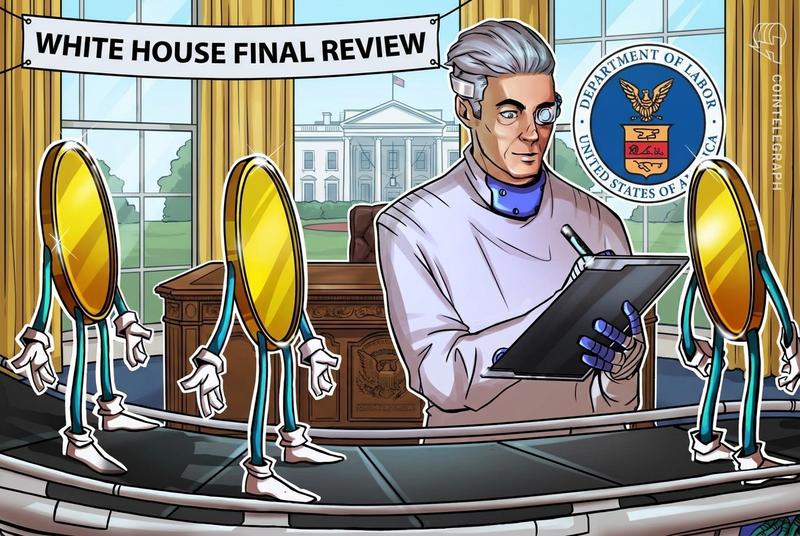
Alternative digital currencies may gain access to United States 401(k) retirement accounts through a newly proposed Labor Department regulation, though industry professionals indicate they might encounter greater obstacles compared to Bitcoin (BTC) and Ether (ETH).
According to the Office of Information and Regulatory Affairs, the regulation arrived at the White House on Thursday for its ultimate review. The regulation seeks to simplify the process for retirement accounts to provide alternative investment options such as cryptocurrency, simultaneously delivering enhanced legal safeguards for company sponsors and plan administrators.
The Labor Department's proposal from March doesn't identify specific digital currencies for inclusion and avoids establishing minimum market capitalization thresholds. Nevertheless, it provides retirement account administrators with guidance to evaluate six considerations during selection: performance, fees, liquidity, valuation, benchmarks and complexity.
While the regulation may create opportunities for additional cryptocurrencies within retirement accounts, it provides no assurance they will actually be made available. Regarding smaller digital tokens specifically, industry professionals indicate they may struggle due to their restricted track record, limited liquidity and additional risk factors.
Why smaller cryptocurrencies could face challenges
Teresa Goody Guillén, managing partner at Bellementis PLLC, said Bitcoin and Ether are likely to be the first cryptocurrencies offered because of their established markets and investment products. Bitcoin and Ether are the two largest cryptocurrencies by market capitalization, at approximately $1.5 trillion and $273 billion, respectively, according to CoinGecko data as of 20:01 UTC on Nov. 6.
However, this doesn't automatically disqualify alternative coins from consideration, she explained. Rather, administrators of 401(k) retirement accounts must demonstrate their investment selections are prudent and reasonable.
"The real question isn't which cryptocurrencies regulators pick – it's whether an investment meets the same standards of prudence, liquidity, valuation and investor protection as any other retirement option,"
Teresa Goody Guillén, managing partner at Bellementis PLLC
She further noted that although a digital currency's market capitalization is significant, it shouldn't serve as the sole determining criterion. "Big doesn't mean suitable, and small doesn't mean disqualified," Guillén said. "Digital assets shouldn't get special treatment, or be excluded because they use different technology."
Bernardo Brites, co-founder and CEO of Trace Finance, echoed Guillén sentiment, adding: "Run any token through that list and the answer is short. Bitcoin passes clearly. Ether passes; everything else fails on track record or benchmark before a fiduciary ever gets to market cap."
According to Brites, market capitalization in this context matters only in an indirect manner. "The practical test is simpler: can a plan committee document a daily, reliable price from a regulated wrapper?" he said. "If not, it is not going in."
ETFs could come before direct crypto holdings
Although the Labor Department's regulation doesn't restrict cryptocurrency investments exclusively to exchange-traded funds (ETFs) or managed investment vehicles, industry analysts predict these products will probably be made available ahead of direct cryptocurrency ownership.
"ETFs and managed funds will likely come first because they fit existing custody and recordkeeping systems," Guillén said. In contrast, direct cryptocurrency ownership would introduce supplementary complications regarding storage infrastructure, cybersecurity protocols and price determination, Guillén explained. Nevertheless, she emphasized that such risks shouldn't automatically disqualify them from consideration.
Brites similarly anticipates cryptocurrency investment options will roll out in phases. According to him, currently available brokerage alternatives would likely appear initially, with standalone ETFs and investment funds containing modest cryptocurrency allocations following thereafter.
According to his projections, certain cryptocurrency investment alternatives should become accessible in 2027, with ETFs appearing at major corporate employers during the latter portion of that year. Broader cryptocurrency availability across retirement accounts could materialize by 2028, he projected.
"The rule changes the legal risk, not the plumbing, and the plumbing is slower. White House review can take up to ninety days, then publication, then an effective date typically sixty days later."
Bernardo Brites, co-founder and CEO of Trace Finance
Legal uncertainties remain
Brites additionally clarified that continuing legal ambiguity may decelerate widespread acceptance. While the regulation would provide retirement account managers with certain protections against legal action, it wouldn't completely shield them from litigation regarding their investment determinations.
He additionally cautioned that subsequent administrations might overturn the regulation, a scenario that may cause employers to hesitate before incorporating cryptocurrency into long-term retirement account offerings.
"The 2022 guidance was reversed in 2025; a fiduciary signing a ten-year plan design has to consider that this rule could be reversed too," he said. "And with courts giving less deference to agencies, how much weight the safe harbor carries in litigation is itself unsettled."