
Legal experts weigh in: Will recent pro-crypto regulations from SEC and CFTC survive legal challenges?
Recently, both the SEC and CFTC have rolled out multiple crypto-friendly regulations. Legal experts examine whether these new rules can withstand court scrutiny and potential reversal attempts from crypto skeptics.
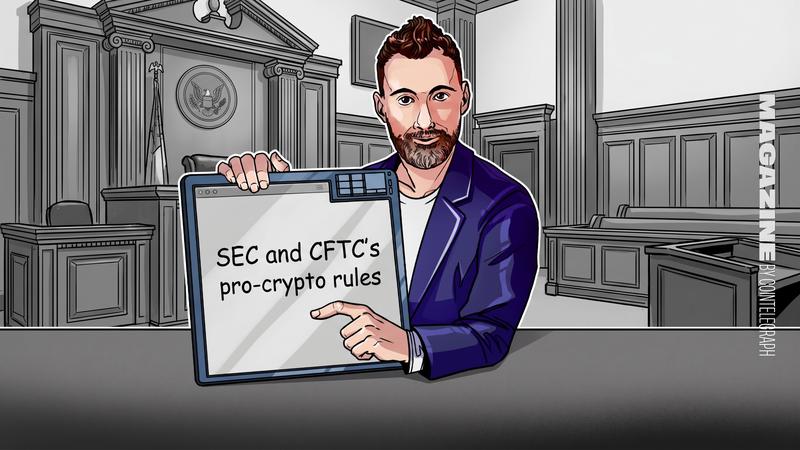
Following the collapse of the CLARITY cloture vote in the Senate, both the SEC and CFTC wasted no time in rolling out their own regulatory frameworks for cryptocurrency markets.
Just two days following the vote, the SEC announced a five-year exemption allowing for the issuance and trading of stock tokens. Subsequently, OXK partnered with ICE to introduce trading for 63 NYSE-listed stocks, while Securitize rolled out 12 Securitize Stocks, featuring companies such as Apple, Nvidia and Microsoft.
Additionally, the SEC has released guidance making clear that a crypto token doesn't automatically qualify as a security simply because a project engages in buybacks of its own tokens, and declared that liquid staking tokens fall outside the securities classification. The agency has also put forward new rules governing the custody of crypto assets.
Meanwhile, the CFTC has taken steps to exempt certain crypto software providers from registration obligations. The commission has proposed establishing a new "crypto asset market" registration category and plans to permit registered exchanges to provide leveraged trading options.
However, concerns are mounting within the industry that these regulations might rest on unstable foundations. TD Cowen has warned that agency-issued rules "are the easiest to rescind" — a reality that was clearly illustrated when commissioners appointed by Trump eliminated every remnant of the Gary Gensler era.
Additionally, a 2024 Supreme Court decision has made it simpler for courts to overturn agency regulations.
Brisov: Creating rules is their designated function. Under the Exchange Act of 1934, they possess this authority. The SEC came into existence following the catastrophic collapse of US markets at the close of the 1920s. Since its inception, the SEC has maintained the authority to establish rules and regulations governing how laws should be implemented. The American legislative system operates by establishing broad principles, similar to a framework, and then appointing a regulatory body to oversee these regulations.
This structure was intentionally designed — ensuring that when innovations like blockchain tokens emerged, US legislation would be equipped to integrate new technology. This is precisely what the Commission has been executing for decades, and it clearly falls within their scope of authority.
Brisov: A valid justification would be required for such action. While theoretically possible, any such action must align with the established body of law. During Gary Gensler's tenure, the Commission attempted to extend these rules to tokens. This effort ultimately proved unsuccessful due to persistent ambiguities, resulting in numerous companies permanently exiting the US market.
This creates an opportunity for the new Commission to review these rules and declare, "Your approach was attempted, but we observe it's not functioning effectively. Therefore, we'll introduce our own rules." However, the authority to propose rules has limitations. Should they introduce regulations that impose an unreasonable economic burden on businesses, or something outlandish, there are legal mechanisms enabling companies or any affected party to contest this regulation in court and argue, "We oppose what the SEC has implemented because it's harmful to the market."
In 2011, a situation arose when the SEC implemented new rules governing shareholder voting through proxy mechanisms. The business community responded, "this is absurd, it's overly burdensome, and we reject it." A case emerged, Business Roundtable vs SEC, and [business] prevailed.
Brisov: Under certain circumstances, the courts may reach an alternative conclusion.
One cannot simply approach and declare "we oppose this regulation." For example, if you represent a traditional broker-dealer or conventional participant in the United States investment market and you assert, 'This new regulation is causing us harm' they must be capable of demonstrating that insufficient research was conducted and that it creates excessive burdens for business operations, and proves detrimental to the US market. If they successfully demonstrate damages and establish inadequate research, then the court possesses the authority to invalidate this regulation.
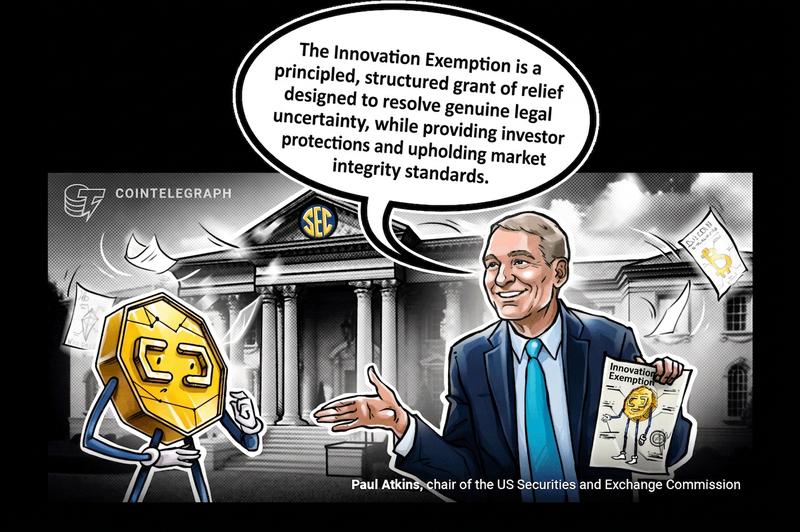
Based on my observations, Paul Atkins and the SEC have engaged in consultations with numerous crypto firms, with VCs. They've conducted thorough research, so this isn't something they hastily assembled overnight.

Brisov: These factors must be considered by them. When the potential exists for US market expansion and benefit from this regulation, they won't possess the ability to simply invalidate it. There's an identical analytical process that both an agency and a court must undertake. This is known as IRAC: issue, rule, analysis, conclusion. They would need to employ comprehensible, transparent reasoning.
Simple opposition isn't sufficient. They must provide explanations. They must present economic justification for their position. They must provide research evidence, and they must demonstrate that it's inadequate. Only after completing these steps can they arrive at an alternative conclusion.
For argument's sake, we might suggest that Paul Atkins has strong negative feelings toward the Howey test, and would have preferred to completely discard it — but that's not within his power. In every statement he issues, he consistently reiterates that the Howey case remains applicable, it continues to be valid regulation in the United States. Nevertheless, we have the ability to interpret it differently in this particular case, and that case — and this represents our reasoning. This is what provides us the authorization to do so, and he presents this transparently.
Brisov: If you adhere to it, and it's developed by individuals who possess proper expertise, you'll likely be safe. But it doesn't constitute legislation. An FAQ functions merely as a guide. It lacks any binding authority, even for the staff members.
Brisov: It serves as supplementary clarification, comparable to a casebook used in university settings. These are staff notes. A guide that clarifies for the staff members how they should operate and how they should interpret this. They revise them quite frequently.
Brisov: Precisely, and that's the appropriate approach. It's neither regulation nor legislation, they retain the ability to modify them weekly.