
Lawyer suggests CLARITY Act may provide CFTC with prediction market oversight tools
A legal expert appearing at a House subcommittee session stated that the proposed CLARITY Act might provide the CFTC with necessary regulatory powers to manage the "explosive growth of prediction markets."
A session was conducted by United States House Committee on Agriculture's Subcommittee on Commodity Markets, Digital Assets, and Rural Development legislators, focusing on potential approaches the Commodity Futures Trading Commission (CFTC) might take regarding prediction market platform oversight, with talks also covering cryptocurrency market structure bills currently pending.
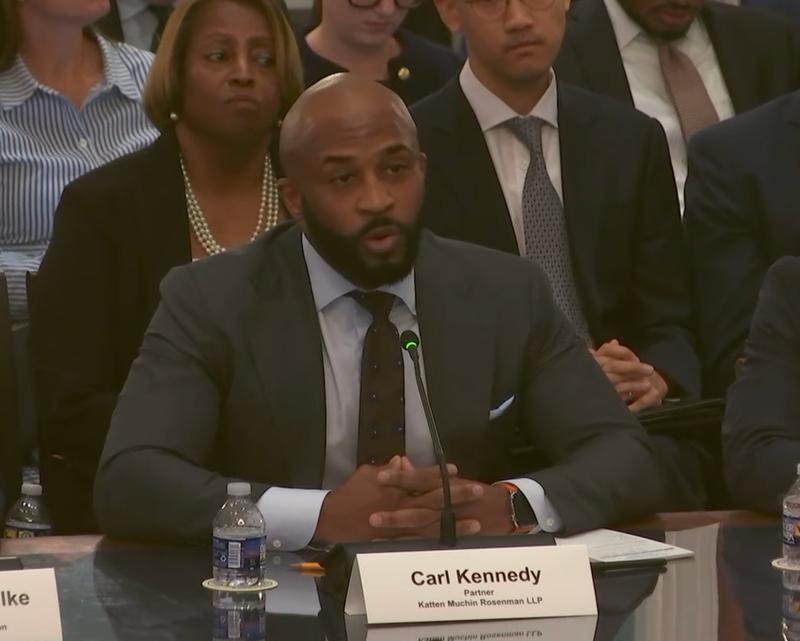
During the Tuesday session titled "Examining Customer Protections and Market Integrity in Sports Event Prediction Markets," Carl Kennedy, who serves as a partner at the New York-based law firm Katten Muchin Rosenman, expressed his view that the CFTC lacks adequate staffing to comprehensively handle regulatory oversight and enforcement activities concerning prediction market platforms such as Kalshi and Polymarket. The legal professional suggested that the Digital Asset Market Clarity (CLARITY) Act currently being reviewed in the US Senate might provide the commodities regulatory body with enhanced authority to tackle not just digital assets but also the "explosive growth of prediction markets."
I do believe that with additional resources — they're about to perhaps receive additional authorities under the CLARITY Act — with additional resources to address these new asset classes in the cash markets and crypto, as well as to deal with the explosive growth of prediction markets, I think that the CFTC certainly should receive additional resources.
Carl Kennedy
The statements from Kennedy represented merely one instance of regulatory and legal professionals offering their perspectives on the CFTC's methodology for managing prediction markets under the leadership of Chair Michael Selig. Following his Senate confirmation in December, the chair has independently adopted the stance that the regulatory agency possesses "exclusive jurisdiction" over these companies, maintaining that event contracts available on these platforms should be categorized as "swaps" falling under the CFTC's regulatory authority. Selig currently stands as the sole Senate-confirmed individual leading the CFTC within a leadership structure that typically comprises five commissioners.
The stance taken by the CFTC chair has resulted in what numerous Democratic senators characterize as an "assault" on state-level authorities attempting to impose regulations on prediction market platforms, with several US states pursuing legal action against Kalshi and Polymarket regarding sports betting activities. During the previous week, he directed Kalshi to disregard a decision issued by a Michigan court, which the company stated "put [it] in an impossible position" caught between state and federal regulatory authorities.
Various legal professionals anticipate that at least one of the legal disputes involving prediction markets might ultimately be brought before the US Supreme Court to resolve the conflict between state-level and federal regulators.
Release of CLARITY Act text anticipated in near future
Republican legislators advocating for the CLARITY Act to receive a congressional vote prior to the chamber's August recess for state work periods have indicated they anticipate releasing the legislative text in the near term. Specifics regarding how the proposed legislation might address prediction markets, ethical considerations and additional concerns raised by legal professionals had not been disclosed publicly as of Tuesday.
During June, organizations representing the gambling industry submitted a petition to the US Senate requesting the inclusion of language in CLARITY "that explicitly prohibits event contracts tied to sports and casino-style gaming." Additionally, the White House verified media reports indicating that the Trump administration had "agreed to the most comprehensive and wide-ranging ethics provision in history" and had "bent over backward to accommodate [Democrats'] concerns."