Forrester: Stripe's new protocol may finally unlock micropayments potential
According to Forrester, the Machine Payments Protocol from Stripe signals a transformation in automated payment systems, with AI agents eliminating the behavioral obstacles that previously blocked micropayment adoption.

The recently unveiled Machine Payments Protocol (MPP) from Stripe has the potential to represent a pivotal moment for micropayments — a frequently touted but rarely achieved application in cryptocurrency and traditional finance — as artificial intelligence agents transform the landscape of digital transactions.
This conclusion emerges from recent analysis published by Forrester senior analyst Meng Liu, who contends that MPP may finally achieve success in an area where numerous previous attempts over many decades have fallen short.
Launched in early March, MPP allows artificial intelligence agents to carry out transactions in an automated manner, eliminating the requirement for human authorization at every stage. The system is characterized as an open protocol designed for orchestrating payments between AI agents and various services. Liu characterizes this development as a fundamental transformation from transactions initiated by humans to those conducted machine-to-machine.
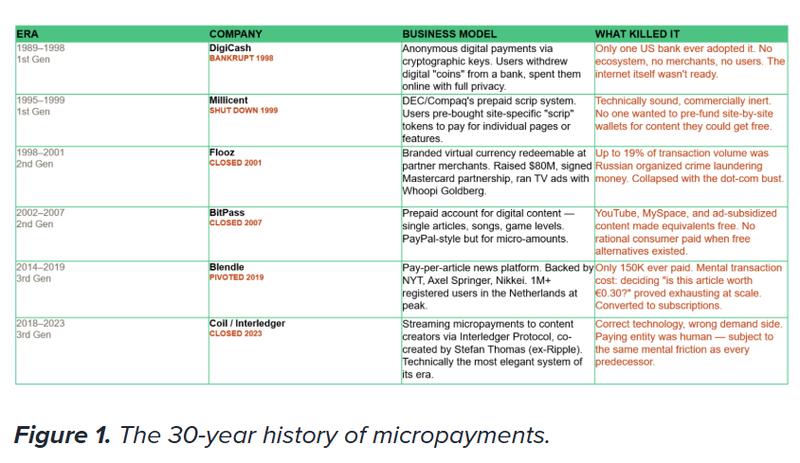
The concept of micropayments, which generally involve small-value transactions ranging from a few cents to several dollars, has historically been viewed as a promising method for generating revenue from digital content, online services and information, yet the approach has faced challenges in achieving widespread adoption.
One of the primary obstacles preventing broader acceptance has been related to human psychology, encompassing unwieldy digital payment processes and hesitation to authorize minor charges, according to Liu's assessment.
In stark contrast, artificial intelligence agents that process payments as an integral component of task execution, including making payments to obtain data access or utilize web-based services, bypass these limitations entirely.
Payment becomes a programmatic step, not a discrete decision. There's no checkout moment, no cart abandonment risk, and no mental transaction cost.
Meng Liu, Forrester senior analyst
Crucially, MPP does not represent a novel settlement network architecture. Rather, it functions as a coordination framework for automated payment processing, engineered to operate seamlessly across current infrastructure systems, encompassing traditional payment rails, digital wallet platforms and, when applicable, cryptocurrency rails.
AI payments push extends beyond Stripe
Stripe operates as a payments processing company that has broadened its scope to include digital assets, incorporating capabilities for stablecoins, cryptocurrency on-ramp services and blockchain-powered payment instruments. Although MPP itself does not inherently rely on blockchain technology, numerous other organizations are simultaneously building infrastructure solutions for AI-powered payment systems, especially in domains such as micropayments and autonomous transaction processing.
A notable recent development comes from MoonPay, which introduced an open-source wallet standard specifically engineered for AI agents. This technical framework empowers agents to custody, transmit and receive digital assets, providing them with the capability to conduct transactions autonomously without requiring human oversight.
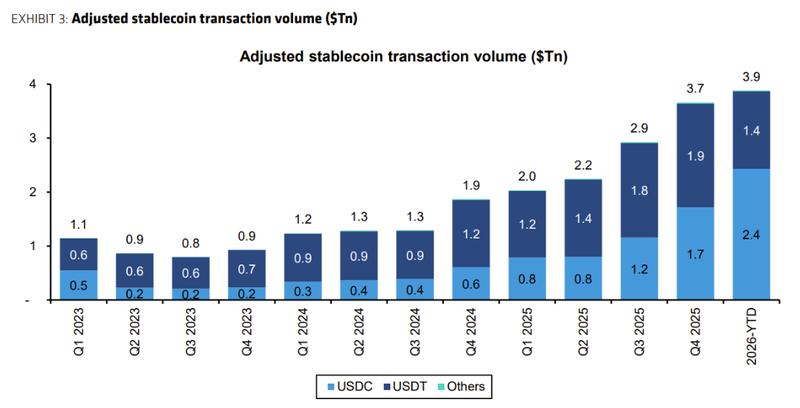
Additionally, research analysts at Bernstein anticipate that AI agents may drive increased demand for stablecoins, given their suitability for processing numerous low-value payment transactions. Similar to Forrester's Liu, Bernstein also highlighted Coinbase's x402 protocol, which facilitates automated internet-based payments between machines.