
European Union Imposes Cryptocurrency Sanctions on Russia, Targeting Exchanges and Digital Ruble
In response to Moscow's growing dependence on cryptocurrency transactions to evade international sanctions during its military campaign in Ukraine, the European Commission has implemented comprehensive measures.

The European Commission has unveiled a comprehensive set of cryptocurrency-focused sanctions directed at Russia as a response to Moscow's ongoing military offensive in Ukraine.
According to a Thursday announcement, the commission revealed that these sanctions were aimed at Russia's financial and energy industries, which included a "total sectorial ban on carrying out exchanges with any Russian crypto asset service provider as well as any decentralised platforms enabling crypto trading" that might be utilized to bypass these restrictive measures.
The European Commission, which represents 27 nations within the European Union, has additionally banned the utilization of stablecoins that are pegged to the Russian ruble, along with the central bank digital currency (CBDC) currently being developed by the Central Bank of Russia.
This package puts further pressure on Russia to engage in negotiations and do so on terms acceptable for Ukraine. Every day of further Russian attacks on Ukrainian civilian infrastructure is another day of suffering for the Ukrainian people.
European Commission
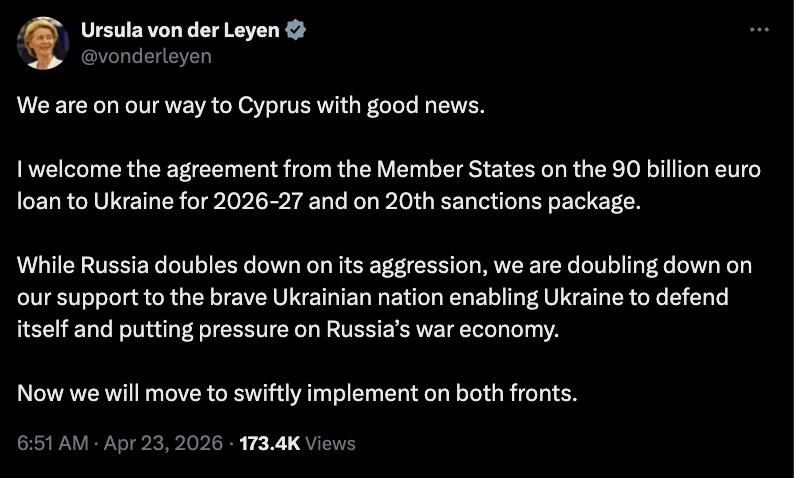
This package of sanctions was introduced following discussions between European Commission President Ursula von der Leyen and Ukrainian President Volodymyr Zelenskyy regarding the bloc's continued assistance for Ukraine while Russian forces continue their military assault.
Based on the commission's findings, Russia has demonstrated an "increasing[ly] reliant on cryptocurrencies for international transactions" as a response to worldwide sanctions. This development has resulted in measures specifically targeting organizations connected to the nation that use stablecoins such as A7A5 and cryptocurrency operators with links to Belarus.
Iran sanctions also under scrutiny in US
With ongoing United States and Israeli military operations against Iran, numerous lawmakers have raised concerns about whether the Islamic Republic might be evading sanctions through the use of digital assets.
Last month, reports emerged suggesting that Binance terminated employees who were responsible for informing executives that the exchange had facilitated $1 billion in transactions to entities tied to Iran.