
European Banks and Corporations 'Now Choosing Infrastructure Partners' for Stablecoin Integration
The European stablecoin landscape is transitioning from planning phase to implementation, as practical business requirements increasingly fuel adoption.

Financial institutions and corporate enterprises throughout Europe have progressed past the exploratory phase and are currently in the process of choosing infrastructure partners to facilitate stablecoin integration, as stated by Lamine Brahimi, co-founder and managing partner at Taurus, a crypto custody technology provider.
Speaking with Cointelegraph, Brahimi explained that a year and a half ago, the majority of discussions remained educational in nature, concentrating on grasping what stablecoins are and the potential risks involved. In contrast, organizations that have secured approval at the board level are now making preparations to launch. He indicated that the implementation of Markets in Crypto-Assets Regulation (MiCA) has sped up this shift by substituting fragmented national regulations with a unified regulatory framework.
In the past twelve months alone some of Europe's most stringent financial institutions are all arriving at the same conclusion, digital assets, including stablecoins, belong inside the existing banking stack, not beside it.
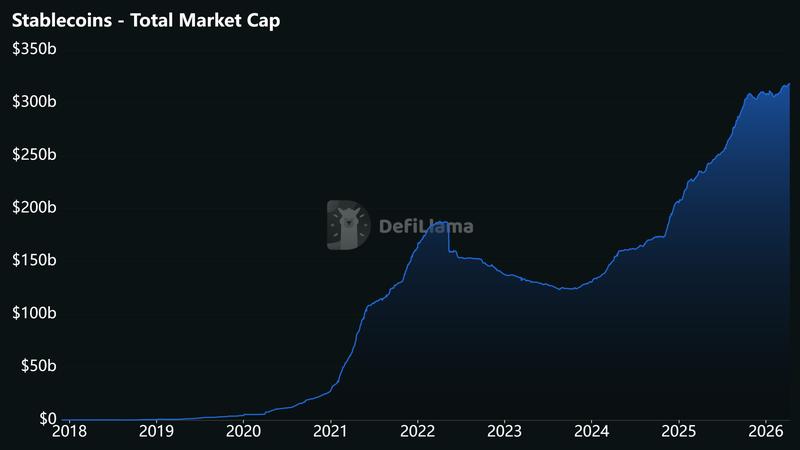
A significant portion of the demand is being generated by corporate treasury departments. While initial interest centered on payments and settlement processes, businesses are now seeking to leverage stablecoins for moving capital more rapidly, decreasing expenses and conducting operations beyond conventional banking hours, according to Brahimi.
Demand drives stablecoin adoption in Europe
According to Brahimi, the adoption trend is being propelled more by immediate practical requirements than by extended strategic planning.
Once clients start asking for better settlement, more flexibility, or more efficient cross-border movement of value, the conversation becomes much more immediate and much more practical.
This past Thursday, ClearBank Europe made an announcement that it has achieved the distinction of being the first Dutch credit institution to obtain authorization under MiCA to function as a crypto asset service provider. Additionally, a group of prominent European banking institutions, featuring ING, UniCredit, CaixaBank and BBVA, is in the process of building Qivalis, a euro stablecoin project compliant with MiCA that is intended to facilitate regulated onchain payments and settlement throughout Europe.
Banking institutions across Europe are also advancing with their own stablecoin projects. Societe Generale has focused its stablecoin offerings on cross-border payments, onchain settlement, FX and cash management, whereas Oddo BHF has introduced a euro stablecoin that complies with MiCA. At the same time, a banking consortium that includes ING, UniCredit and BNP Paribas is developing a Swiss-franc stablecoin scheduled for release in the second half of 2026.

Konstantin Vasilenko, co-founder and chief business development officer at Paybis, indicated that the platform has experienced increasing demand for stablecoins that meet compliance standards in Europe. From October 2025 through March 2026, USDC transaction volume on Paybis within the EU grew approximately 109%, whereas its proportion of overall stablecoin activity rose from around 13% to 32%.
Vasilenko further mentioned that throughout the EU, Paybis stablecoin purchase volume stayed approximately five to six times greater than sell volume during the period between October 2025 and March 2026. He additionally observed that the average size of stablecoin transactions was roughly 15% to 35% greater than standard Bitcoin or Ether transactions.
That usually points to working capital, settlement use and more deliberate business flows.
Stablecoin volumes could reach $1.5 quadrillion by 2035
A recently published report from Chainalysis estimates that transaction volumes for stablecoins could experience dramatic expansion throughout the coming decade, potentially reaching as much as $719 trillion by 2035 in organic growth projections, compared to approximately $28 trillion in 2025.
Under a more ambitious scenario, transaction volumes could rise to $1.5 quadrillion should stablecoins emerge as a predominant payment infrastructure and intergenerational wealth transfers from baby boomers to younger, more digitally-native generations speed up the rate of adoption.
Will Harborne, CEO of Rhino.fi, a stablecoin infrastructure provider, stated that stablecoins are set to gain growing significance for corporate treasury operations, cross-border settlement processes, and FX transactions between euro and dollar stablecoins throughout the upcoming years.
I think every business will eventually start accepting and using stablecoins in some form, and the companies that prepare early will be in the best position when that shift becomes mainstream.