
Ethereum Plunges to 13-Month Bottom as Zcash Vulnerability and Bitcoin's Sub-$60K Decline Raise Fears: Could $1.4K Be Next?
Ethereum's value collapsed beneath the $1,600 threshold following the discovery of a critical Zcash vulnerability and Bitcoin's descent under $60,000 for the first time in several months.

Key takeaways:
- Derivative instruments for Ether show a transition toward heavily pessimistic sentiment as cascading position liquidations prevent any meaningful recovery attempt.
- An AI system uncovered a severe vulnerability in the ZCash network, sparking widespread concerns about potential spillover effects and leading to a reduction in Ethereum's Total Value Locked.
On Friday, Ether (ETH) dropped to its lowest point in 13 months, touching $1,540, as it mirrored the pessimistic momentum sweeping through the wider digital asset marketplace. Market participants are now bracing for a potentially deeper downturn, considering the fragility evident in ETH derivative indicators and elevated concerns following the discovery of a vulnerability within the Zcash blockchain infrastructure.
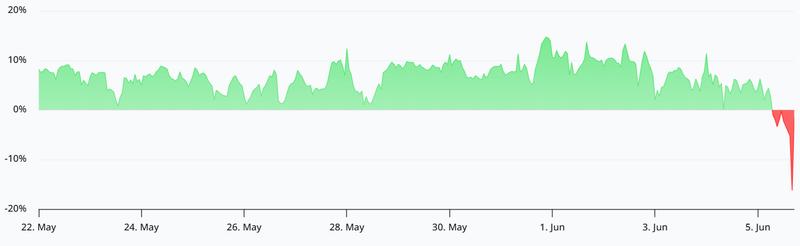
On Friday, the annualized funding rate for Ether futures contracts turned negative, signaling growing appetite for bearish positions. Despite ETH currently trading 67% beneath its peak price achieved in August 2025, optimistic traders have lost their conviction following the forced liquidation of $1.28 billion worth of leveraged long positions across a five-day period.
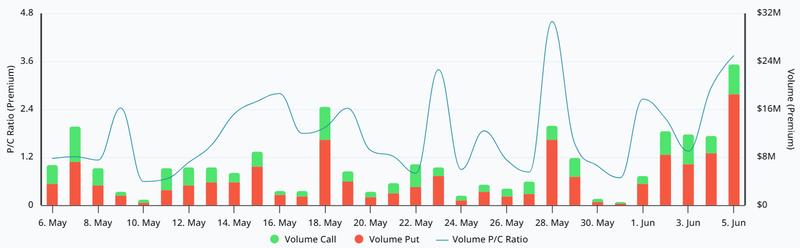
The appetite for protective measures against price declines intensified sharply, as evidenced by the Deribit ETH options put-to-call premium ratio climbing to 3.7 times on Friday. This metric has persistently reflected excessive preference for put (sell) contracts since the beginning of the week. Weak confidence levels among current holders are amplifying market uncertainty, creating favorable conditions for bears to establish dominance.
ETH price followed Zcash: Why?
The dramatic decrease in the Ethereum network's Total Value Locked (TVL) to levels not witnessed since February 2024 has compounded the negative effects on trader psychology. Reduced capital deployed in decentralized applications (DApps) generally translates to diminished ecosystem revenue generation, which in turn weakens the demand for ETH utilization within smart contract operations.
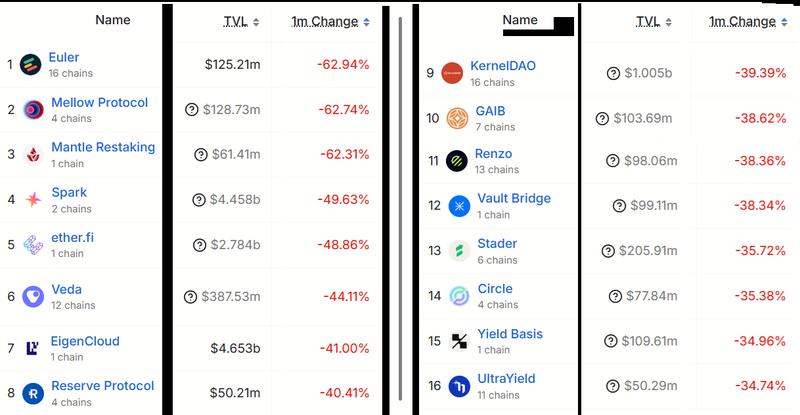
Several of the most prominent DApps operating on Ethereum suffered dramatic TVL reductions, with Spark declining by 50%, Ether.fi dropping 49%, EigenCloud falling 41%, and KernelDAO contracting by 39%. A portion of this capital flight from smart contract platforms can be linked to a critical security flaw that enabled unlimited ZEC token creation within the largest zero-knowledge pool on ZCash. This vulnerability was identified on May 29 through the deployment of Anthropic's Opus 4.8 AI model.
Because the ZCash vulnerability had remained undetected since 2022, market participants are increasingly worried that similar risks could be lurking in other blockchain networks and smart contract systems. The growing sophistication of AI-powered security vulnerability detection has heightened investor vigilance, particularly following the $630 million in cryptocurrency security breaches recorded during April.
The $293 million exploitation of KelpDAO and Drift Protocol's $280 million security breach represented 82% of the aggregate monthly damages across 25 different protocols, sparking widespread alarm throughout the decentralized finance (DeFi) sector. These security incidents occurred across various blockchain ecosystems, including Ethereum, Solana, Base, BNB Chain, Sui and PulseChain.
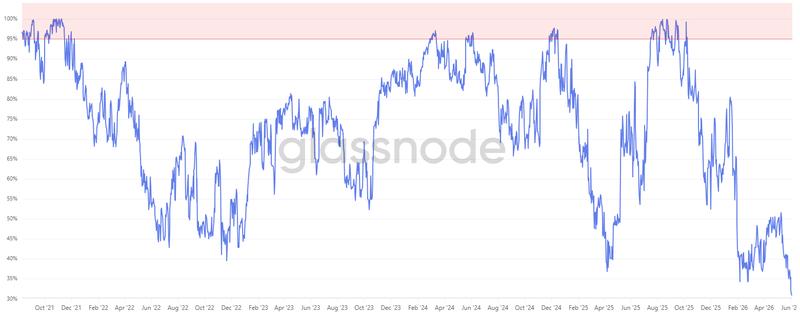
At present, merely 30% of the total ETH supply remains profitable when measured against the price at which those tokens last changed hands. This particular market configuration has materialized only on rare occasions throughout history, with the most recent comparable situation occurring during the March 2020 market crash triggered by COVID-19. Before that occurrence, this powerful bullish indicator also appeared in mid-December 2019, which was followed by a substantial 118% price surge within a 60-day timeframe.
Given that more than $500 million in leveraged long ETH positions have been forcibly closed out within the past 48 hours, there are currently no indications of an imminent recovery rally. Bitmine (BMNR US), the corporation with the largest Ethereum treasury holdings, is currently carrying an extraordinary $10.5 billion unrealized loss on its books, given that the firm controls 4.5% of the complete ETH circulating supply.
Ethereum could experience further downward pressure below the $1,550 level as market participant confidence continues to erode in the wake of numerous security breaches affecting the DeFi ecosystem and the discovery of the inflationary vulnerability within the shielded Zcash protocol infrastructure.