
ECB Study Reveals Minimal Cryptocurrency Adoption Among Eurozone Retailers
A comprehensive ECB study encompassing 8,205 businesses across the eurozone discovered that merely 0.2% of digital merchants process cryptocurrency transactions, physical store adoption stayed under 1%, and contactless payment usage experienced significant growth.

Cryptocurrency continues to occupy a minimal position as a payment alternative among businesses operating in the euro area, despite the expansion of alternative digital payment methods, based on fresh data from the European Central Bank (ECB).
A mere 0.2% of enterprises offering products and services through online channels accept cryptocurrency assets, the ECB revealed in its research on corporate cash usage, released on Thursday. Physical currency continues to hold its position as the payment method with the widest acceptance, with 92% of businesses operating physical retail locations accepting it.
The ECB's investigation included 8,205 commercial enterprises spread throughout the 21 nations within the euro area, encompassing retail outlets, dining establishments and coffee shops, accommodation facilities, and businesses in arts, entertainment and leisure sectors. The telephone survey interviews were executed by market research company Ipsos between Feb. 23 and April 10.
These results emerge while the ECB progresses its initiatives on a digital euro, a central bank digital currency (CBDC) intended to serve alongside physical cash and maintain the euro's standing.
Mobile payments are catching up
Contactless payment methods experienced the most substantial transformation among transaction options at brick-and-mortar establishments, with merchant acceptance surging to 68% in 2026 from 36% in 2024.
The mobile payment solutions most frequently accepted by merchants encompass instant payment systems and electronic wallets, including Apple Pay and Google Pay.
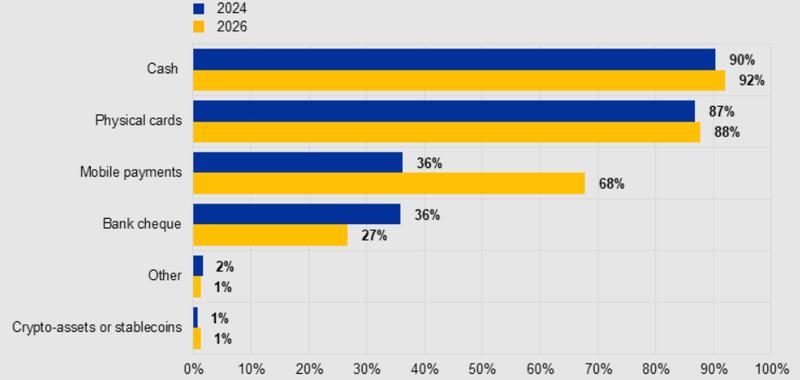
Physical currency acceptance climbed slightly to 92% from 90%, whereas acceptance of traditional payment cards increased to 88% from 87%. Cryptocurrency assets and stablecoins demonstrated essentially no progress at brick-and-mortar retail locations, maintaining acceptance rates below 1% in both 2024 and 2026. Meanwhile, acceptance of banking checks declined to 27% from 36%.
Merchants cite consumer preference as top payment factor
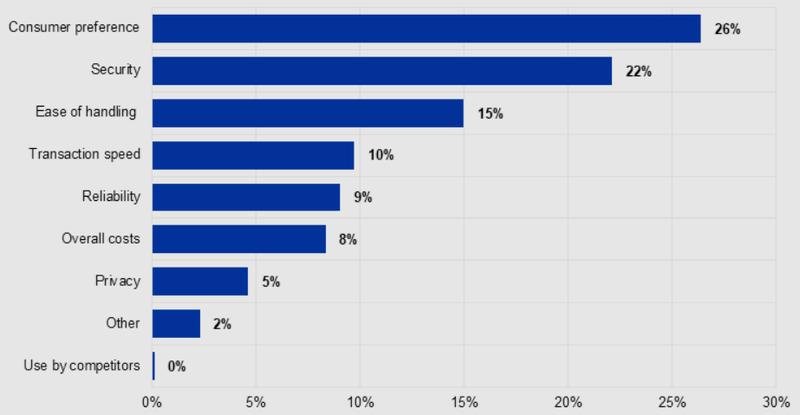
Customer preference emerged as the most significant consideration businesses weighed when determining which payment options to make available, mentioned by 26% of survey participants, with security considerations following at 22% and operational convenience at 15%.
Commercial establishments that decline cash payments most frequently referenced insufficient customer demand, at 36%, and challenges with depositing or accessing it, at 35%, whereas 29% identified security concerns.
Future projections differ substantially across national borders, with 51% of cash-accepting small and medium-sized businesses in Cyprus indicating they might discontinue cash acceptance, in contrast to 23% in Greece and 18% in Bulgaria.
What counts as accepting crypto?
The ECB's research questioned businesses about whether they process cryptocurrency assets or stablecoins, providing Bitcoin (BTC), Ether (ETH) and Tether's USDt (USDT) as illustrative examples.
Certain cryptocurrency payment service providers enable retailers to receive final settlement in conventional fiat currency despite customers completing transactions with crypto. The research does not clarify whether retailers should classify such transactions as cryptocurrency acceptance.
Cointelegraph inquired with the ECB regarding whether converted cryptocurrency transactions might consequently be omitted from merchant reporting and whether ambiguity in regulations could influence respondents' responses. The ECB stated it "prefer[s] not to speculate."
When questioned about whether eurozone retailers are authorized to process crypto under European Union regulations, the ECB clarified it does not establish payment regulatory frameworks and directed Cointelegraph to the European Commission and individual national legislative bodies.