
Critical $70K Level: Bitcoin Experts Explain Why This Support Is Make-or-Break
Bitcoin needs to maintain the $68,000 200-week EMA support level while reducing profit-taking pressure to successfully challenge the critical $75,000 resistance zone.

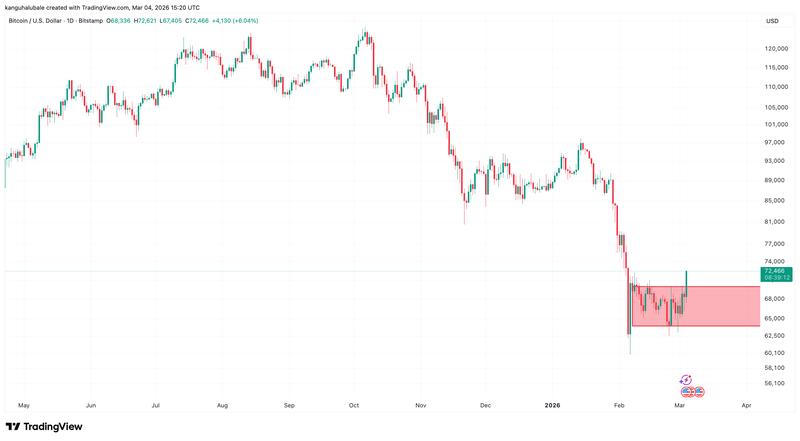
On Wednesday, Bitcoin (BTC) climbed 8% to surpass the $73,000 threshold, representing a critical price point that has rejected all upward momentum attempts throughout the past three weeks. Market experts are now explaining the importance of maintaining the $70,000 level to validate the ongoing recovery.
Key takeaways:
- A reduction in profit-taking activity during rallies toward $70,000 is essential for BTC price to achieve a sustainable breakout.
- The $68,000 -$70,000 support zone must remain intact for Bitcoin to validate its current recovery trajectory.
Strong buying pressure needed to counteract profit-taking
Following six consecutive weekly closes showing losses, Bitcoin has finally managed to push beyond the $64,000-$70,000 trading corridor that has characterized its market behavior throughout the previous three weeks.
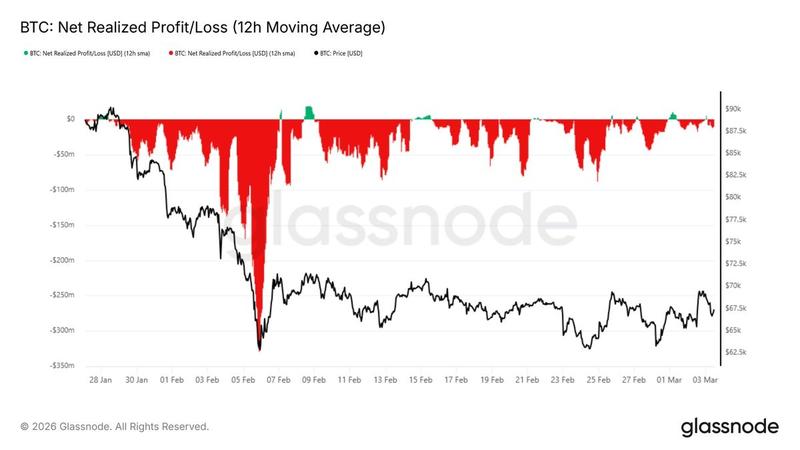
According to Glassnode, Bitcoin's difficulty in surpassing the $70,000 threshold stems from consistent increases in realized profits occurring near this price level, indicating substantial selling pressure from profitable holders.
The data visualization below demonstrates that whenever the 12-hour simple moving average of the net realized profit-and-loss indicator surged beyond $5 million hourly, prices encountered resistance and pulled back at the $69,400 range top.
This particular zone remains a consistent barrier for all recovery efforts, as evidenced by price action on Feb. 19, Feb. 25, and Tuesday.
Such selling activity drains bullish momentum within a market environment characterized by limited liquidity, "reflecting the fragility of the current demand structure," according to the onchain data analytics company.
To sustain price levels above $70,000, the "level of profit-taking has to be absorbed without triggering rejection," Glassnode noted.
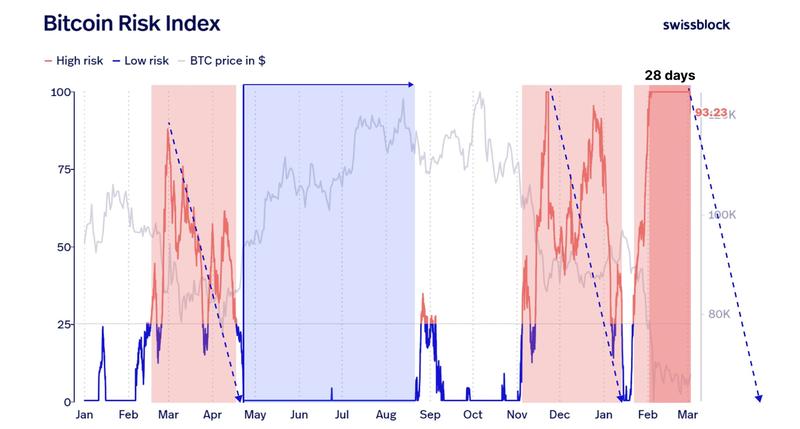
At the same time, private wealth management firm Swissblock observed that following approximately 30 days of "extreme risk" conditions pegged at 100, the Bitcoin risk index is beginning to moderate.
This transition toward reduced risk readings may trigger a bullish surge, allowing Bitcoin to maintain prices exceeding $70,000.
"While it remains at an elevated reading for now, a return to a low-risk environment could catalyze the next bullish leg, with initial targets at $83K and a potential extension toward $110K."
According to Cointelegraph's previous coverage, reduced volatility, improving ETF inflows and a weakening Coinbase discount indicated Bitcoin's downward trend is losing momentum, increasing the probability of a near-term bounce.
Maintaining $70,000 as a floor becomes critical for Bitcoin
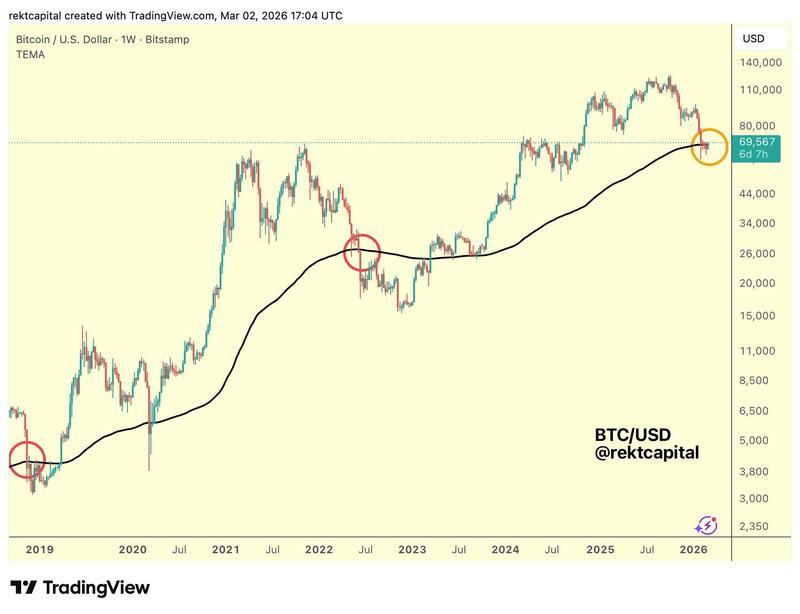
The 21% rebound in Bitcoin's value from its multi-year bottom beneath $60,000 has enabled the cryptocurrency to recapture important support zones, such as the 200-day exponential moving average (SMA) positioned at $68,000 and the psychologically significant $70,000 mark.
"For any prolonged upside from this point, Bitcoin would need to reclaim the EMA as support" within the weekly timeframe, according to analyst Rekt Capital in a recent X post, who further stated:
"Until proven otherwise, the EMA is acting as a resistance."
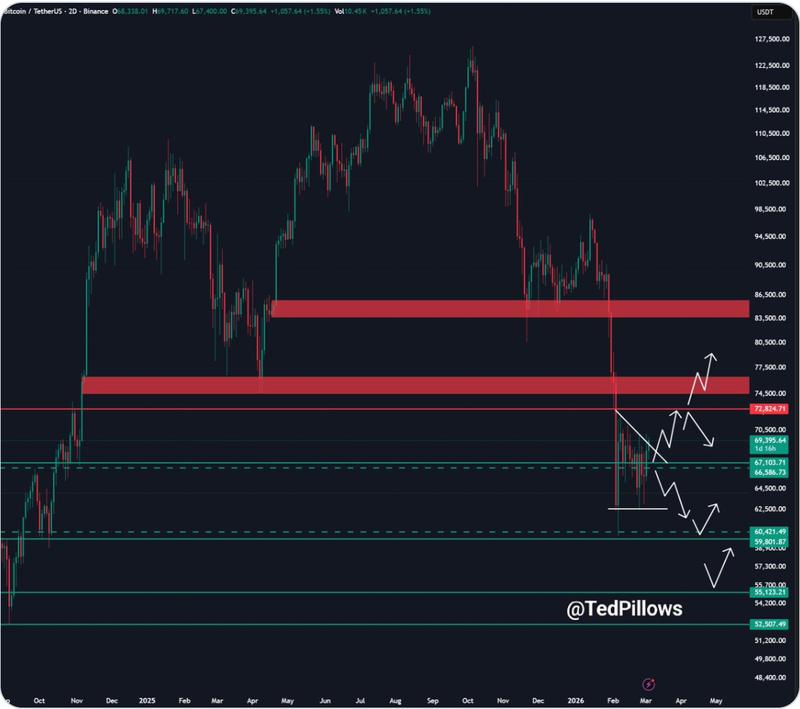
A closing price on the daily candlestick above $70,000 "would be good for markets," according to fellow analyst Ted Pillows in an X post published on Wednesday, who added:
"If Bitcoin fails to hold above the $70,000 zone, expect a retest of the $65,000-$66,000 support zone."
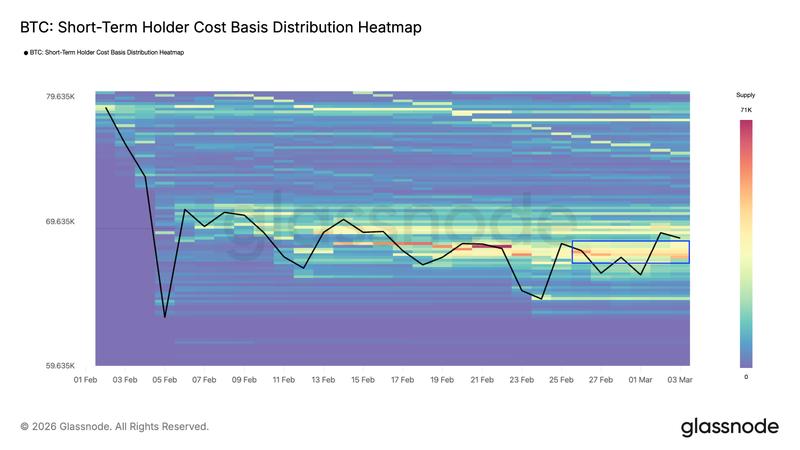
The short-term holder (STH) cost-basis distribution heatmap from Glassnode shows the largest concentration beneath $70,000, where market participants accumulated approximately 230,000 BTC during the past month.
Maintaining prices above these STH supply concentration zones represents a critical requirement for building sufficient momentum toward a definitive breakout move.
According to Cointelegraph's earlier analysis, successfully breaching the symmetrical triangle's upper resistance boundary at $70,000 would reinforce the argument for a continued advance toward $75,000 prior to the conclusion of the month.