
CFTC unveils crypto regulatory plan following SEC's lead as CLARITY Act stalls in Congress
Following Congressional failure to pass a comprehensive market structure bill, CFTC Chair Michael Selig announced the agency would leverage its "existing statutory authorities" to regulate cryptocurrency markets.

The US Commodity Futures Trading Commission (CFTC) Chair Michael Selig announced that his agency would proceed with cryptocurrency regulation following President Donald Trump's directive to act "with or without legislation" from the legislative branch.
During his speech at Monday's Fordham Law Blockchain Regulatory Symposium, Selig unveiled proposed regulations designed to offer cryptocurrency firms an alternative to navigating the fragmented regulatory landscape created by varying state-level requirements, allowing them instead to operate under CFTC oversight.
Based on the written remarks delivered at the symposium, the CFTC chair revealed the issuance of an advanced notice of proposed rulemaking targeting businesses "offering retail customers the ability to trade crypto assets on a margined, leveraged, or financed basis," with the proposed framework dubbed 'CTX.'
The agency head outlined plans to create a novel category within the designated contract market (DCM) framework, termed a "crypto asset market," or CAM, which would provide qualifying exchanges with the choice to register under either designation.
These rules would codify a pathway for crypto asset exchanges to operate under uniform national oversight by the CFTC pursuant to the same statutory authorities that the prior administration instead utilized to regulate by enforcement.
Michael Selig, CFTC Chair
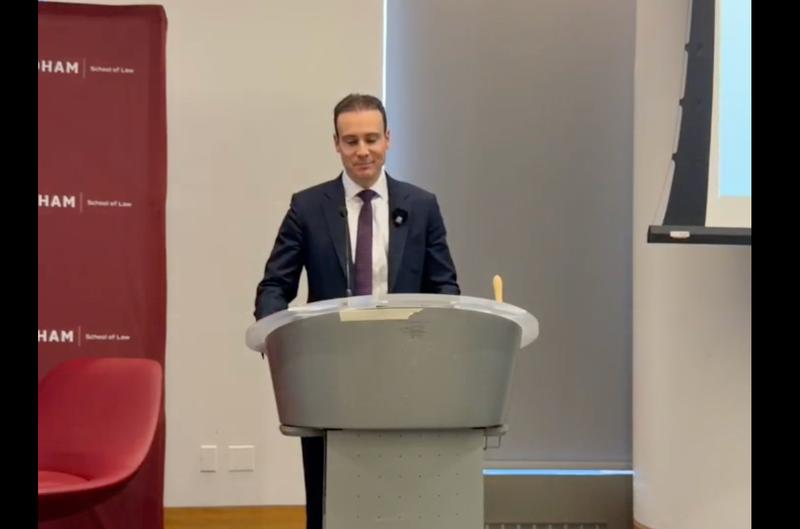
The chairman clarified that the proposed regulatory framework would not apply to what he described as "ordinary spot crypto exchanges" that remain "generally regulated under state money transmission laws." However, for entities facilitating spot market transactions in digital currencies such as Bitcoin (BTC), the CFTC would retain jurisdiction over anti-fraud and anti-manipulation enforcement actions.
The announcement of Selig's crypto regulatory framework follows several weeks after United States Senate members rejected the Digital Asset Market Clarity (CLARITY) Act, legislation that would have significantly expanded the CFTC's oversight powers and enforcement capabilities within the cryptocurrency sector.
In August, prior to the CLARITY Act's failed Senate vote, the Securities and Exchange Commission had already put forward its own proposed "tailored securities offering regime" designed specifically for digital assets, signaling both regulatory bodies' intention to proceed with rulemaking independent of Congressional legislation.
According to Selig, Trump made a commitment to establish a regulatory market structure for crypto assets regardless of legislative action, and the regulatory agencies would fulfill this promise by exercising their existing statutory authorities.
The opponents to CLARITY may have not bargained for the seeming readiness of the executive branch to act in the absence of any constraint from the legislative branch.
David Tawil, ProChain Capital
Both regulators still understaffed as they advance crypto proposals
SEC Commissioner Hester Peirce concluded her tenure at the agency on Friday, completing eight years of service, just before the 18-month extension period for her second term would have begun. Her departure reduces the SEC to just two commissioners at the helm, while Selig remains the CFTC's only commissioner and chair.
Last week, a White House official informed Cointelegraph that Trump plans to nominate new commissioners to fill vacancies at both regulatory agencies "in the near future." However, as of Monday, no announcements had been made regarding replacements for Peirce or the additional six vacant commissioner positions.