
BTC Faces Potential 50% Plunge as Correlation with U.S. Equities Strengthens
A shift to positive territory in Bitcoin's 20-week rolling correlation with the S&P 500 has emerged, representing a pattern that has traditionally signaled substantial BTC price drops.

Bitcoin (BTC) wiped out a significant portion of the gains it achieved during the US-Iran conflict this week, returning to alignment with the general downward trajectory affecting risk assets, particularly equities in the United States.
Key takeaways:
- The shift to positive correlation between Bitcoin and the S&P 500 has traditionally been followed by price declines averaging approximately 50% dating back to 2018.
- Bitcoin faces vulnerability to a comprehensive risk-asset selloff driven by increasing macroeconomic pressures.
By the end of Sunday's trading session, the BTC/USD pair had declined 5.65% over the course of the week to approximately $68,700, whereas the S&P 500 (SPX) concluded the trading week with a 1.90% decrease.
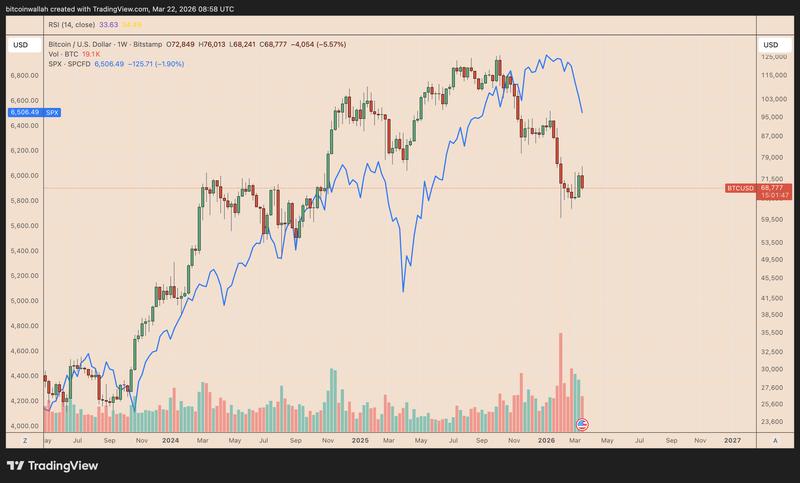
This resurgent correlation pattern is now pointing toward an elevated probability of additional downward movement in the Bitcoin marketplace.
Bitcoin historically falls 50% on average following stock market synchronization
This pessimistic signal for Bitcoin emerges from a weekly correlation indicator that measures the relationship between BTC and the S&P 500 (SPX), which serves as the benchmark index for US equities.
By Saturday's close, the 20-week rolling correlation coefficient measuring BTC against SPX stood at 0.13, representing a significant increase from its most recent low point of approximately -0.5.
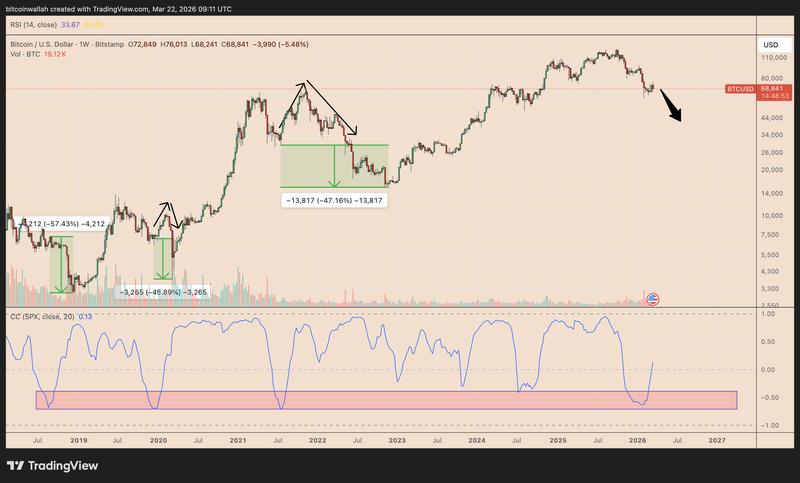
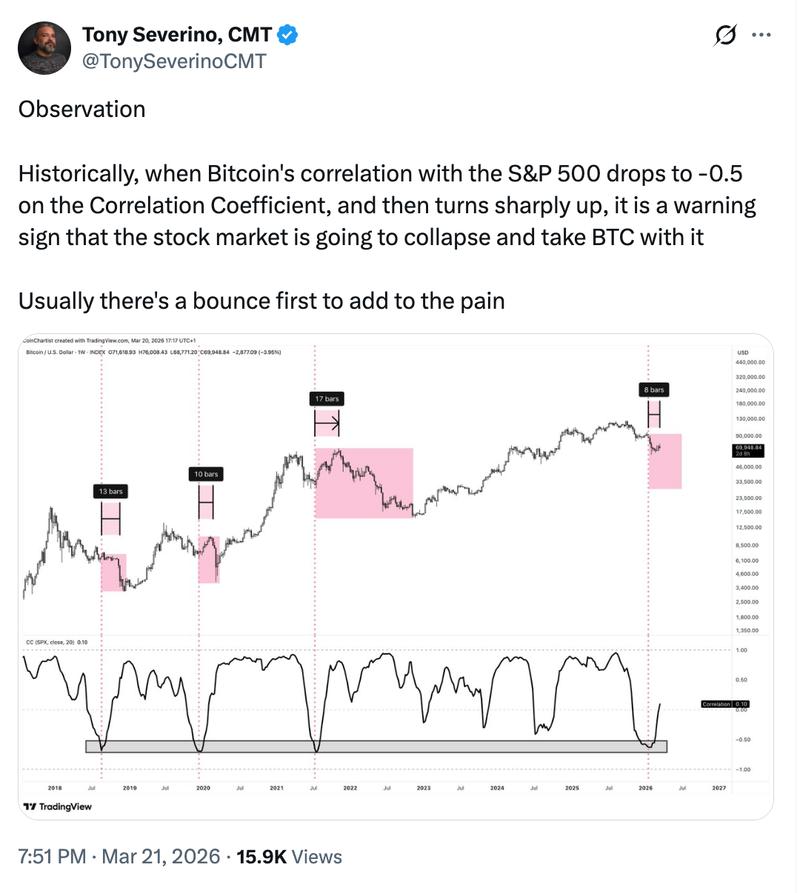
Historical data going back to 2018 shows that these types of dramatic recoveries in the BTC-SPX correlation metric have consistently preceded extensive Bitcoin market corrections, with an average decline of approximately -50%.
"It is a warning sign that the stock market is going to collapse and take BTC with it," said analyst Tony Severino.
Should the historical pattern repeat itself, a 50% decline from Bitcoin's present price level would point to a downside objective of approximately $34,350. Several market analysts have forecasted that Bitcoin could fall to levels between $30,000–$40,000 during 2026.
During 2020 and 2022, Bitcoin's price corrections materialized with delays spanning multiple months, occurring following typical "bull traps" where BTC experienced rallies concurrent with increasing SPX correlation, only to subsequently reverse course and eliminate those temporary gains.
Macroeconomic factors, including heightened oil prices, persistent inflation, and diminished probability of the Federal Reserve implementing interest rate cuts, reinforce the pessimistic perspective for both Bitcoin and equity markets in the months ahead.
Corporate accumulation hiatus contributes to bearish sentiment
The renewed alignment between Bitcoin and equity markets is occurring simultaneously with a temporary halt in corporate Bitcoin accumulation activities.
Strategy (MSTR), recognized as one of the most significant Bitcoin holders globally, has not executed any BTC purchases through the sale of its STRC preferred stock during the current week, based on information from data resource STRC.LIVE.
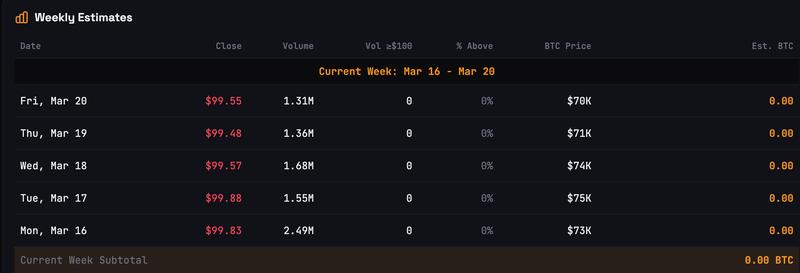
The company's most recent acquisition, which was disclosed on March 16, included the purchase of 22,337 BTC valued at $1.57 billion, elevating total holdings to 761,068 BTC. During that identical timeframe, Bitcoin experienced a rally of approximately 10.50%, outperforming US equities.
The STRC-funded purchasing activity conducted by Strategy provided crucial support for Bitcoin's price increase throughout the duration of the US–Iran war. In the absence of new acquisitions this week, BTC faces heightened exposure to the possibility of a selloff affecting stock markets.