
BlockSec tracking reveals Tether locked more than $500M USDT in one month
New BlockSec tracking data reveals Tether blocked over $500 million worth of USDT tokens spanning 370 addresses on Ethereum and Tron networks within a 30-day window, contributing to $1.26 billion in frozen funds during 2025 associated with illegal operations.
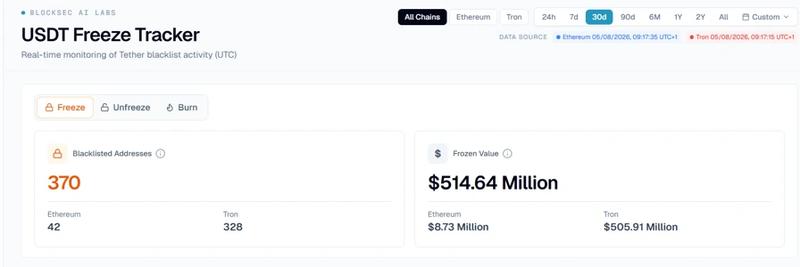
Within the last 30 days, Tether has immobilized over $514 million worth of USDT tokens spanning both the Ethereum and Tron blockchains, based on onchain intelligence provided by BlockSec's USDT Freeze Tracker, underscoring the expanding role the stablecoin issuer plays in enforcement operations related to cryptocurrency.
According to the tool's data as of Friday, a total of 370 addresses have been added to the blacklist during this timeframe, with the breakdown showing 328 addresses on Tron and 42 on Ethereum, while approximately $505.9 million was frozen on Tron alongside $8.73 million on Ethereum.
These numbers demonstrate that the bulk of recent enforcement measures are focused on the Tron network and underscore the frequency with which the globe's leading stablecoin issuer is taking onchain action to freeze funds that have been flagged as high-risk or connected to ongoing investigations.
This recent wave of activity also continues a trend of escalating enforcement frequency. Based on BlockSec's examination of 2025 data, Tether placed 4,163 distinct addresses on its blacklist across both Ethereum and Tron, immobilizing a combined total of $1.26 billion in USDT. The existing rate of freezing actions suggests Tether may surpass that blacklisted USDT total significantly before this year concludes.
From the $1.26 billion in frozen assets recorded in 2025, over half of that amount (approximately $698 million) was subsequently destroyed through the contracts' "destroyBlackFunds" function, and merely 3.6% of those blacklisted addresses were later removed from the blacklist, demonstrating that once freezes are implemented, they are seldom reversed.
Tether blacklisting activity accelerates in 2026
An independent analysis examining trends from 2023 through 2025 calculated that Tether froze approximately $3.3 billion spanning 7,268 addresses throughout those three years, substantially exceeding the activity of competing stablecoin issuer Circle during the same timeframe.
Tether has additionally released larger cumulative figures and provided details regarding some of the specific cases behind these actions. During February, the organization stated it had frozen approximately $4.2 billion worth of tokens over a three-year period due to connections with illicit activity, with roughly $3.5 billion of that total being locked since 2023 as regulatory authorities ramped up efforts to combat crypto-related criminal activity.
During April, Tether announced it collaborated with the US Treasury's Office of Foreign Assets Control along with law enforcement agencies to freeze over $344 million in USDT spanning two Tron addresses that US officials indicated were connected to alleged sanctions evasion activities involving Iran, whereas in February, Tether assisted authorities in seizing more than $61 million in USDT associated with so-called pig butchering scams.
Stablecoin blacklists fuel wider freeze debate
The expanding magnitude of blacklisting actions and associated seizures has contributed to a larger discussion regarding how far cryptocurrency issuers and protocols ought to proceed in blocking suspicious fund flows.
Certain projects within decentralized finance, as an example, have utilized upgradeable contracts along with administrative controls to stop or retrieve funds in significant exploit situations, prompting questions about who determines when such authorities are exercised.
Within the stablecoin sector, where issuers like Tether maintain direct oversight over minting and burning mechanisms, onchain data combined with enforcement disclosures demonstrate that blacklisting and freezing actions are now regularly employed in fraud, sanctions and scam-related investigations.
Tether and the Tron network did not immediately respond to Cointelegraph's requests for comment.