
US Launches Compensation Initiative for OneCoin Fraud Victims After 12-Year Wait
More than a decade after OneCoin's inception, victims of the massive cryptocurrency pyramid scheme are being offered compensation through a newly announced Department of Justice initiative.

Those who fell victim to OneCoin, the notorious $4 billion cryptocurrency pyramid scheme, are now being offered restitution in the United States.
The US Department of Justice announced on April 13 that $40 million worth of assets have been made available for distribution to individuals who invested in OneCoin during the 2014 to 2019 period and suffered financial losses.
For those affected by OneCoin, this compensation program represents a significant breakthrough, particularly since the majority had previously been left with no viable options for recovering their losses. A 2024 attempt by UK victims to pursue a class action lawsuit collapsed after their litigation funding was pulled.
In terms of both magnitude and the international drama that ensued, OneCoin stands among the most notorious crypto frauds. While the mastermind behind the scheme continues to evade capture, several founders and collaborators have faced imprisonment or worse.
The early days of cryptocurrency, often characterized by fraudulent operations and colorful personalities, left lasting impacts that persist to this day, with OneCoin serving as a prime example.
OneCoin's founding and legal troubles
Back in 2014, digital currencies remained largely confined to internet enthusiasts and tech circles. With Bitcoin's white paper having been published just six years prior, widespread understanding of blockchain technology and cryptocurrencies was minimal. Nevertheless, retail investors were beginning to show increased curiosity about this emerging asset category.
Between August and December 2014, Ruja Ignatova and Karl Sebastian Greenwood established OneCoin. The initial marketing efforts commenced in Europe, and the operation quickly established entities across Bulgaria, Dubai and Belize.
The operational framework of OneCoin was deliberately complex. Participants were required to purchase token packages that would supposedly enable them to "mine" OneCoin. These packages came at various price points, with virtually no ceiling on the maximum investment. According to CoinMarketCap, the highest-priced package reached 225,000 euros.
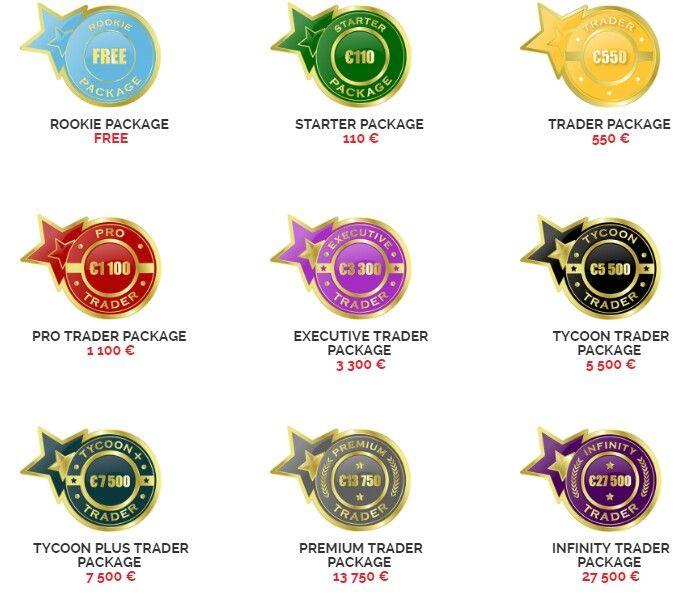
Those acting as promoters, on the other hand, could generate commissions by recruiting additional investors into the scheme. This structure facilitated the project's swift expansion.
Despite being advertised as a cryptocurrency, OneCoin lacked decentralization. The digital coin operated on centralized servers controlled by OneCoin Ltd. Public trading of the coins was impossible, and holders could only exchange minimal quantities within a restricted, closed environment.
From the beginning, the venture appeared questionable, yet the fear of missing out on potential gains, combined with the large crowds Ignatova attracted at seemingly legitimate conferences, proved persuasive enough for many investors.
During 2015, the scheme expanded globally, reaching Europe, Asia, Africa and Latin America. Following the typical multi-level marketing strategy, promoters stressed urgency and the imminent surge in cryptocurrency value and widespread adoption.
By late 2015, regulatory bodies started taking notice. Bulgaria's Financial Supervision Commission released a warning regarding OneCoin, prompting the company to shut down all Bulgarian operations.
Throughout 2016, numerous other national financial watchdogs added OneCoin to their radar. Before the year concluded, Norway, Bulgaria, Finland, Sweden and Latvia had all launched investigations into the operation. Hungary's central bank categorized it as a pyramid scheme.
In December, Italian authorities classified OneCoin as an unlawful pyramid scheme and ordered the cessation of all activities within Italy. Chinese authorities initiated their own investigation and detained several investors.
Regulatory action intensified throughout 2017. Germany, Thailand, Belize and Vietnam all issued cease-and-desist directives or outlawed OneCoin operations. In India, undercover law enforcement arrested 18 organizers at a OneCoin recruitment event. Indian authorities even filed charges against Ignatova herself in July.
As the year drew to a close, tensions had escalated to a critical point. Investors grew increasingly anxious about postponements of a promised exchange platform that would enable them to liquidate their coins. This issue was allegedly going to be addressed during an October gathering of OneCoin organizers scheduled for Lisbon, Portugal.
However, Ignatova failed to appear. A BBC investigation revealed that she boarded a Ryanair flight departing Sofia for Athens, Greece on Oct. 25, 2017. She has not been spotted since that day.
Arrests, murders and Crypto Queen on the run
As 2018 began, law enforcement agencies intensified their focus on the operation. At the behest of German prosecutors, Bulgarian police conducted a raid on OneCoin's Sofia headquarters. The operation, which the Sofia Globe reported also involved German police and Europol, resulted in the seizure of servers and physical evidence.
In July, co-founder Greenwood was apprehended on money laundering and fraud charges in Thailand, where he remained while awaiting extradition to the United States.
Even Ignatova's personal attorney, Mark S. Scott, was found guilty of conspiracy to commit money laundering and conspiracy to commit bank fraud stemming from his involvement and actions related to OneCoin. Several years later, he would lose his law license.
Over the following years, OneCoin remained newsworthy as new developments continued to emerge. In July 2020, two individuals promoting the project, Oscar Brito Ibarra and Ignacio Ibarra, were abducted and killed in Mexico. Local news sources suggested that regional cartels, which had been showing growing interest in digital currencies, may have been responsible.
In 2020, Hollywood entertainment outlets announced that Kate Winslet would take the lead role in a film about OneCoin. As of now, production has yet to begin.
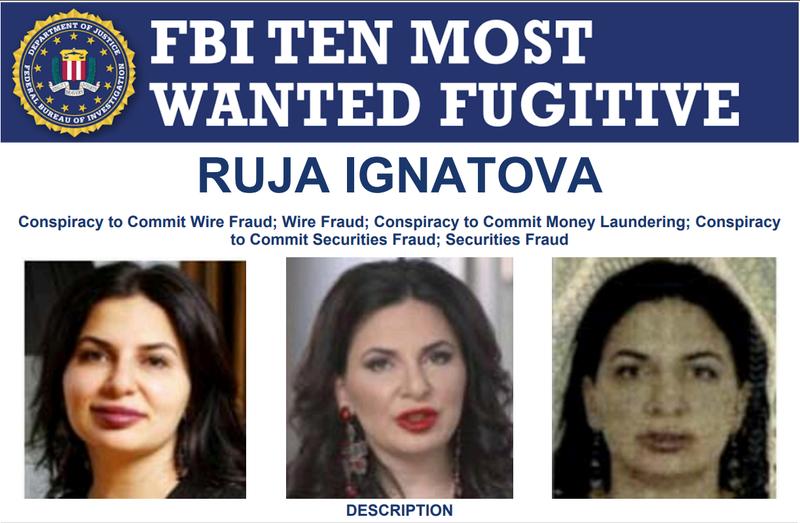
As Greenwood's legal proceedings advanced in the United States, the Federal Bureau of Investigation added Ignatova to its Ten Most Wanted fugitives list in June 2023.
In September, Greenwood received a 20-year prison sentence and was mandated to pay $300 million in restitution. He had entered guilty pleas to fraud and money laundering charges. His sentence represented a substantial decrease from the initial 60-year term requested by prosecutors.
In 2024, the DoJ apprehended and indicted William Morro on bank fraud charges connected to OneCoin. Morro had transferred approximately $35 million in OneCoin proceeds between financial institutions in China and Hong Kong, along with $6 million between Hong Kong and the US. Morro turned himself in to authorities and entered a guilty plea to one count of conspiracy to commit bank fraud.
In the most recent development, the DoJ revealed on Monday that $40 million in confiscated assets are now available to provide compensation to investors who purchased OneCoin during the 2014 to 2019 timeframe and suffered net financial losses.
When all was tallied, approximately 3.5 million individuals had lost money to the cryptocurrency scam. Law enforcement agencies estimate that the organizers successfully absconded with $4 billion in investor funds.
Ignatova continues to evade capture and remains on the Ten Most Wanted list. The FBI has posted a $5 million reward for information that leads to her arrest and/or conviction.