Iran Crisis Drives 8% Oil Spike: Bitcoin Week Ahead – Five Key Points
BTC maintained the $70,000 level through the weekly close while markets responded to deteriorating US-Iran relations and the Strait of Hormuz blockade.
The third week of April begins with Bitcoin (BTC) walking a tightrope as tensions between the US and Iran escalate once more.
- The collapse of US-Iran diplomatic talks propels oil prices beyond the $100 per barrel threshold, with the Strait of Hormuz facing a complete blockade.
- March PPI inflation figures are scheduled for release as evidence mounts that the oil situation isn't the sole factor driving price escalations.
- BTC secures a weekly closing price above the $70,000 threshold, though one analyst suggests further downside could still materialize.
- Data analysis reveals that profit-taking behavior prevents Bitcoin from sustaining momentum above the $70,000 level.
- Selling pressure shows signs of diminishing, as long-term Bitcoin holders increase their positions on Binance.
Diplomatic failure with Iran pushes oil past $100
Market participants are once again fixated on the US-Iran conflict following the abrupt collapse of diplomatic discussions that occurred over the weekend.
President Donald Trump unveiled comprehensive plans on Sunday to implement a blockade at the Strait of Hormuz, aiming to exert control over future oil transportation routes.
Trump shared through multiple Truth Social updates that "at some point, we will reach an 'ALL BEING ALLOWED TO GO IN, ALL BEING ALLOWED TO GO OUT' basis" regarding Hormuz.
"It appears that Trump's long-term plan is to blockade Hormuz, gain control, then begin letting traffic flow freely," market analysis resource The Kobeissi Letter stated in an X platform response.
"However, if this is possible to fully obtain, it will be a long process that would further restrict the flow of traffic for at least another 2 months, according to our analysis."

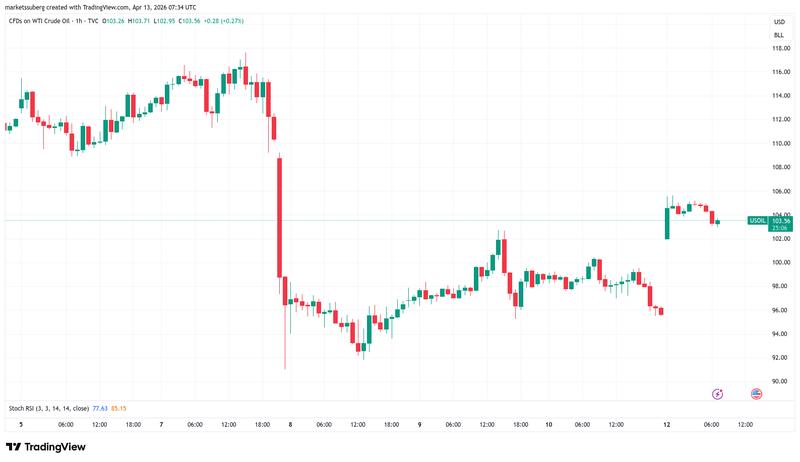
Concerns quickly centered on potential market reactions, though the response proved relatively moderate, with S&P 500 futures declining approximately 0.6%. Crude oil, conversely, experienced sharp gains, reaching levels near $105 per barrel following an 8% single-day increase.
The Kobeissi Letter noted that without successful diplomatic engagement, controlling Hormuz has emerged as Washington's "top priority" moving forward.
"We expect a volatile week ahead," the analysis stated.
PPI data approaches as analysts identify inflation spreading beyond oil
As previously covered by Cointelegraph, crude oil pricing exerts significant influence on US inflation measurements, particularly the Consumer Price Index (CPI), which saw its latest release last week.
The upcoming period brings the March Producer Price Index (PPI) reading, which is also expected to capture the initial impacts of the conflict.
Trading analysis firm Mosaic Asset Company cautioned that recent inflation metrics were already indicating contributing factors beyond the geopolitical situation.
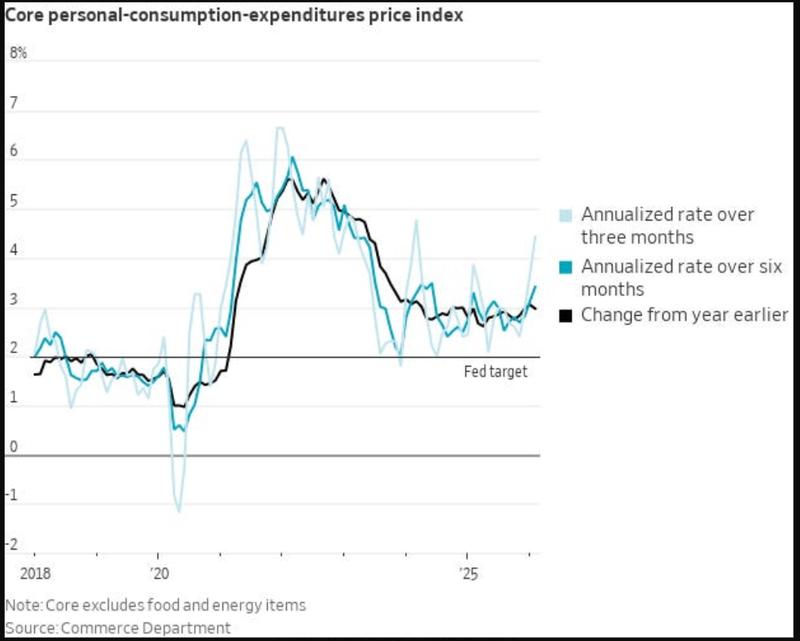
Mosaic highlighted both CPI and the Federal Reserve's "preferred" gauge, the Personal Consumption Expenditures (PCE) index, which received its most recent update on April 9.
The PCE data showed "more recent annualized rates over the past three- and six-months are accelerating higher."
"That shows inflation pressures outside of what's expected following war in the Middle East and impact on energy prices," the Mosaic analysis noted.
Consequently, the Fed might implement "tighter" monetary policy measures, maintaining current interest rate levels or potentially increasing them, notwithstanding persistent calls from Trump and other government officials to pursue the opposite course.
Current projections from CME Group's FedWatch Tool indicate that markets are not anticipating any rate reductions prior to the latter half of 2027.
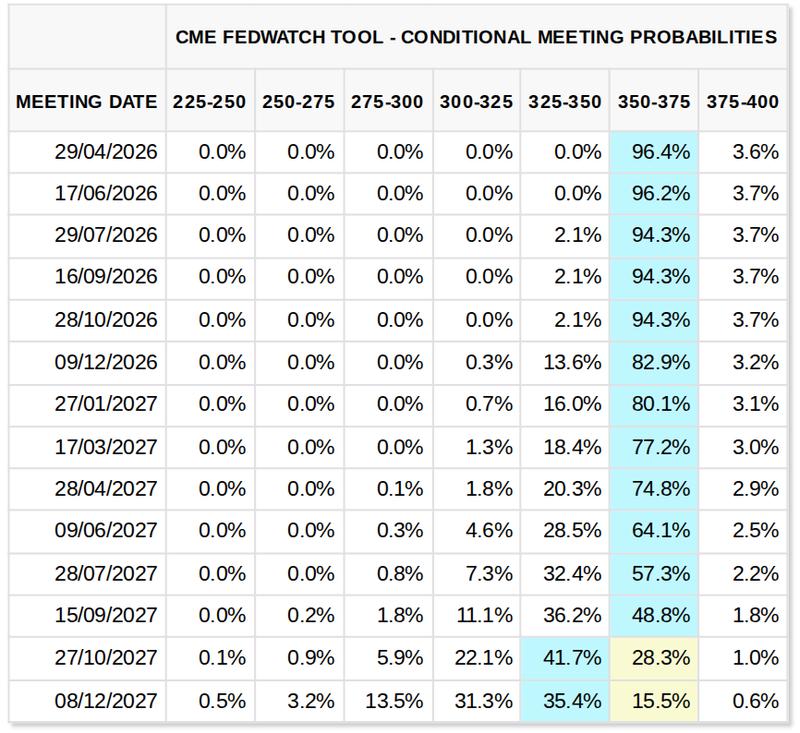
Bitcoin frequently demonstrates volatile responses to US inflation releases, especially when actual figures deviate significantly from market expectations.
Market analyst: BTC requires "one more low" before reversing
Bitcoin succeeded in preventing substantial losses despite the most recent geopolitical deterioration, dropping to approximately $70,500, according to TradingView data.
The weekly closing price of roughly $70,850 therefore maintained critical support zones including the 200-week exponential moving average (EMA) trendline and the previous 2021 all-time high level.
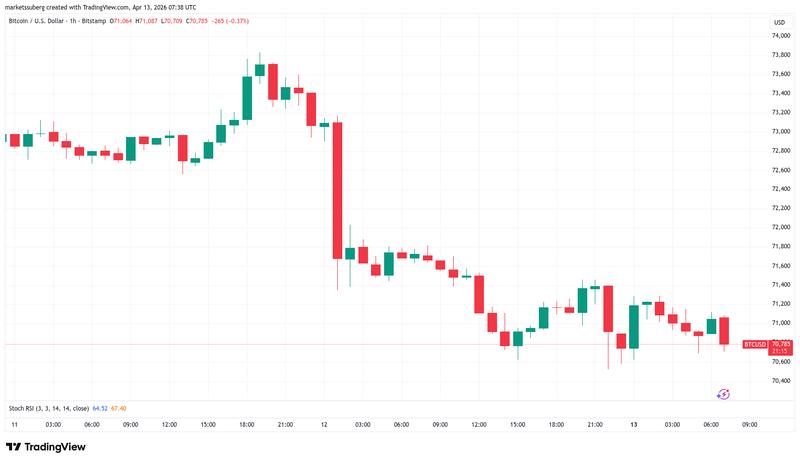
As the spot trading range continues contracting, analyst Roman indicated that an authentic high-time frame (HTF) trend reversal necessitates an additional BTC price decline.
"Why haven't we bottomed yet? Because AT LEAST 1 more low would give us reversal signals on HTF," he shared with X followers through a Sunday post.
Roman has consistently been among market observers projecting deeper long-term corrections for BTC/USD, with his price objectives hovering around the $50,000 zone.
Among the conditions for transitioning away from the bear market, he explained, was the formation of a bullish divergence on the relative strength index (RSI) compared to price action.
"RSI bull divs, bear momentum loss, likely see volume start to shift, & possible reversal pattern. All things we saw at the 2022 bottom," he elaborated.
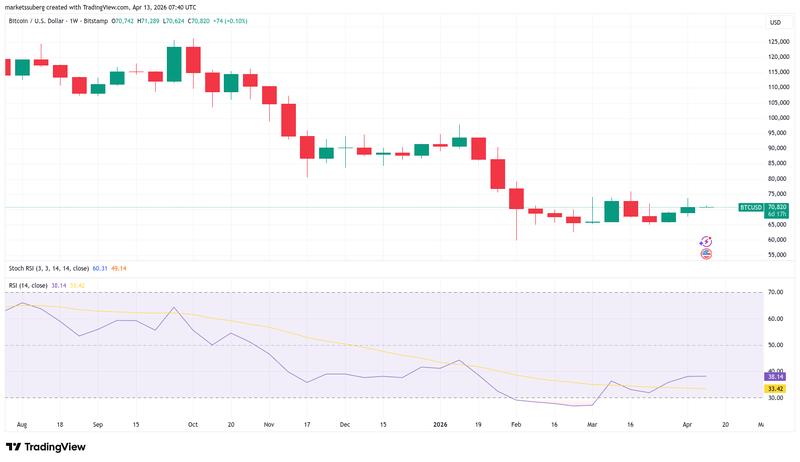
Cointelegraph has previously reported that RSI is starting to generate important bullish indicators, with another market analyst noting that the oscillator was replicating the conclusion of the 2022 bear market "nearly perfectly."
Profit realization continues limiting BTC upward momentum
Beyond macroeconomic developments, Bitcoin remains challenged by a recurring issue on shorter time frames, according to recent analysis.
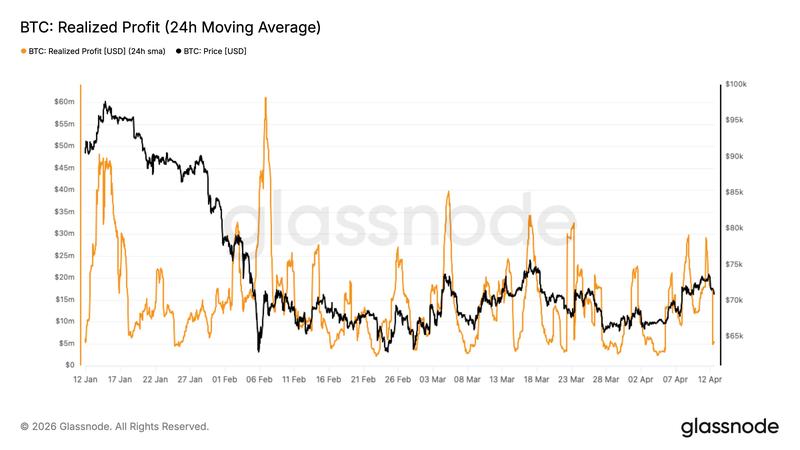
Through an X post published over the weekend, blockchain analytics provider Glassnode indicated that whenever BTC/USD crosses above $70,000, trader profit-taking impulses cause the upward movement to lose steam rapidly.
"Another bounce to >$70k range was exhausted by >$20M/Hour profit realization," the platform confirmed.
This pattern was documented last week as Bitcoin made several efforts to establish $70,000 as a floor.
"As price probed the $70K region, Realized Profit/hour spiked above $20M, signalling a local exhaustion," Glassnode reported at that time.
"A pattern consistent since February 2026: Every approach to the $70k–$80K band meets thin liquidity and profit-taking pressure, capping the bounce."
Distribution pressure subsides as market enters "calmer phase"
Discussion regarding increasingly favorable conditions for Bitcoin "short squeezes" has emerged among market analysts in recent days amid growing indications of seller fatigue.
Through its most recent market commentary, blockchain data platform CryptoQuant provided additional supporting evidence for the hypothesis that bullish forces could regain market dominance at present price levels.
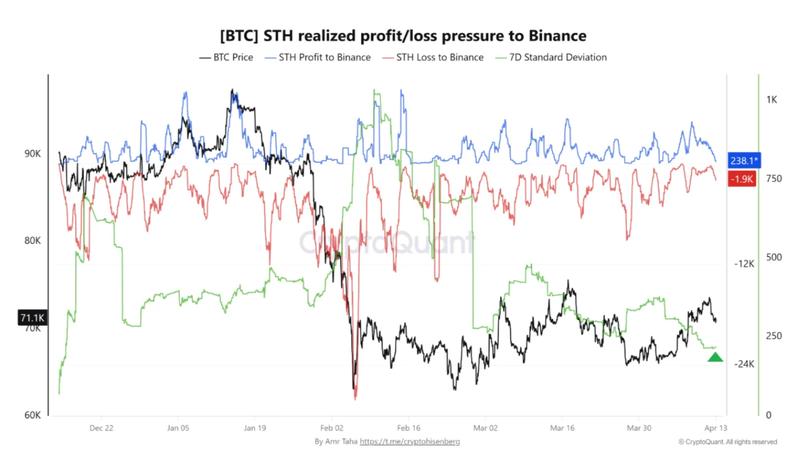
"Bitcoin's short-term holder pressure on Binance has entered a calmer phase," analyst Amr Taha stated in one of the platform's "Quicktake" blog entries published Monday.
Taha referenced more recent cohorts of Bitcoin investors holding coins for periods up to six months without executing sales.
"The 7-day standard deviation of realized profit/loss pressure fell to 217, marking its lowest reading since February, compared with the previous low of 277," he documented regarding their profit/loss metrics.
"The move signals that short-term holders are sending coins to Binance with less aggressive profit-taking and less panic-driven loss realization, reducing near-term distribution pressure on the market."
An additional analysis piece also uncovered increasing appetite for BTC on leading international exchange Binance.
"Bitcoin is showing a healthier holding structure as whale transfer pressure to Binance continues to ease while long-term holder demand strengthens," Taha continued.
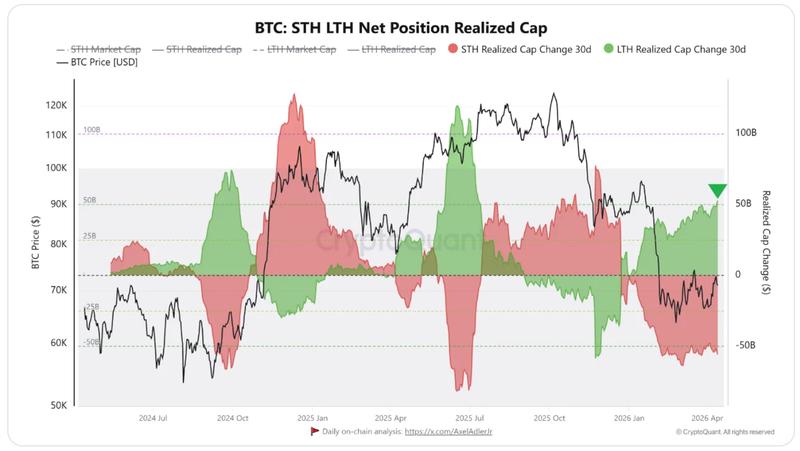
The growth in long-term holders' realized cap — representing the aggregate value of their BTC positions at the time they were last transferred — surpassed the $50 billion threshold for the first time in almost twelve months during the current week.