
How Bitcoin Mining Anticipated the Nuclear Renaissance Sparked by AI's Energy Demands
The surge in power requirements from AI data centers is breathing new life into America's nuclear energy sector, with Bitcoin mining operations having pioneered the use of nuclear power for energy-intensive computing well before the AI boom.

Across the United States, nuclear energy is experiencing a resurgence in interest as the expansion of artificial intelligence infrastructure and data centers creates unprecedented demand for dependable, high-capacity electrical power generation.
According to the publication, recent annual regulatory filings reveal that utility companies are attributing this renaissance to extended power purchase agreements with AI technology giants including Microsoft, Amazon and Meta Platforms.
Instead of depending exclusively on renewable energy credits as a mechanism to balance out carbon emissions, certain technology hyperscalers are now providing financial backing for complete nuclear power facilities to guarantee continuous access to carbon-neutral electricity supply, the publication noted.
Although prominent technology corporations are progressively adopting nuclear energy solutions to guarantee their long-term electrical power requirements, Bitcoin mining companies were actually pioneers in testing the colocation of high-performance computing infrastructure adjacent to substantial baseload power generation facilities.
An early illustration of this approach was TeraWulf, which established a joint venture partnership in 2021 with Talen Energy, a Pennsylvania-based energy company, to build the Nautilus Cryptomine facility positioned adjacent to the Susquehanna nuclear power plant. According to TheEnergyMag's coverage, the cryptocurrency mining operation was structured to obtain electrical power directly from the nuclear energy facility.
The expanding presence of nuclear power in Bitcoin mining operations
The connection between Bitcoin mining activities and nuclear energy sources is not a recent phenomenon.
Dating back to 2022, academic researchers at the Cambridge Centre for Alternative Finance — an academic research institution at the University of Cambridge focused on studying digital asset markets — documented that nuclear power had been steadily increasing its presence in Bitcoin mining operations over multiple years.
Based on the center's collected data, nuclear energy represented approximately 4% of Bitcoin mining energy sources in 2021, experiencing growth to nearly 9% in 2022.
This percentage has subsequently increased closer to 10%, while sustainable energy sources collectively, encompassing nuclear, hydropower and wind, currently represent approximately 52.4% of the total electricity consumption utilized in Bitcoin mining operations.
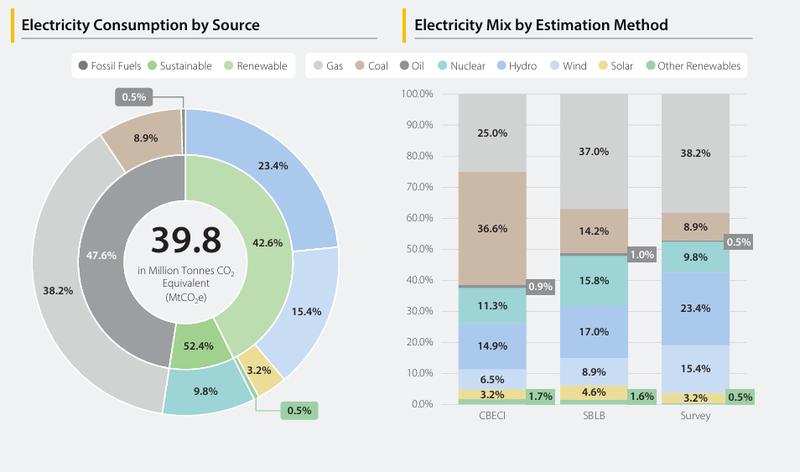
An additional innovation capturing the interest of both the AI and cryptocurrency sectors is the emergence of small modular reactors (SMRs). These nuclear reactors are engineered to be more compact and quicker to construct compared to conventional nuclear power plants, which makes them more practical to position alongside energy-demanding infrastructure such as data centers.
According to Cointelegraph's previous reporting, corporations such as Google have already executed agreements to develop SMRs to supply power to future computing infrastructure — a framework that could potentially be applied to large-scale Bitcoin mining operations in the future.