
Fireblocks Selected by European Banking Consortium for Euro Stablecoin Under MiCA Framework
Qivalis, leading a coalition of 12 European banks, has chosen Fireblocks as its infrastructure partner to build a euro-denominated stablecoin compliant with MiCA regulations, with plans to go live in late 2026.

Fireblocks has been chosen by a 12-member European banking consortium, with Qivalis at the helm, to deliver the technological infrastructure needed for a euro stablecoin that adheres to the Markets in Crypto Assets Regulation (MiCA), as stated in a Tuesday announcement provided to Cointelegraph.
According to the consortium, the anticipated launch date falls within the latter half of 2026, pending regulatory authorization from De Nederlandsche Bank, the Dutch central banking authority, in accordance with the European Union's MiCA compliance standards.
In the announcement, Qivalis, a Dutch enterprise supported by prominent financial institutions such as BBVA, BNP Paribas, ING and UniCredit, revealed its intention to launch a comprehensively regulated euro token with complete 1:1 reserve backing, operating as an electronic money institution under the jurisdiction of Dutch financial authorities.
The digital currency aims to facilitate institutional applications including settlement operations, treasury functions and tokenized asset management, while Fireblocks will supply tokenization capabilities, wallet infrastructure and comprehensive lifecycle management solutions, incorporating compliance-oriented functionalities like identity verification protocols and sanctions screening mechanisms.
This development emerges amid growing initiatives from European banking institutions and regulatory authorities to diminish dependency on stablecoins pegged to the US dollar for digital payment systems and settlement processes, while European financial institutions and corporations actively engage in selecting partners and infrastructure solutions to expedite euro stablecoin programs throughout the continent.
A Fireblocks representative informed Cointelegraph that the initiative has been conceived as a "regulated euro-native settlement instrument" tailored for European financial institutions, eliminating the need to depend on dollar-pegged alternatives or smaller euro-denominated tokens lacking equivalent institutional banking support.
The representative further explained that the infrastructure framework is designed to facilitate issuance operations, custody services, treasury administration and payment coordination capabilities, allowing member banks to provide their customers with a compliant digital payment asset denominated in euros spanning various business divisions.
European banks push euro stablecoin to counter dollar dominance
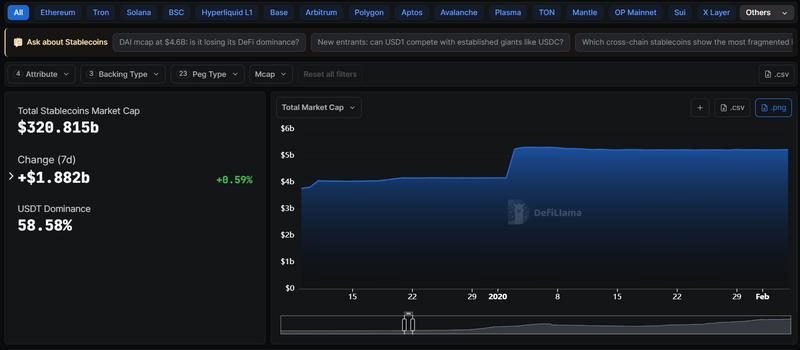
Data from DeFiLlama indicates that the worldwide stablecoin market capitalization stands at approximately $320 billion, with close to 99% of the total supply linked to the US dollar while only a minimal portion is denominated in euros.
This project additionally comes in the wake of cautionary statements from the Bank for International Settlements and additional regulatory bodies suggesting that certain dollar-backed stablecoins might operate more similarly to investment instruments rather than currency due to their dependence on short-term securities.
During remarks on Monday, BIS general manager Pablo Hernández de Cos reiterated that cautionary message, calling for enhanced international cooperation on stablecoin regulatory frameworks to address transnational risks and eliminate supervisory gaps.
In early April, Denis Beau, first deputy governor at the Bank of France, called upon the European Union to impose restrictions on the utilization of stablecoins not denominated in euros for routine payment transactions to minimize regulatory arbitrage during periods of financial stress.