
Cryptocurrency Leaders Boost Protection Measures Amid Rising Wrench Attack Threats
Prominent cryptocurrency executives gathered at Paris Blockchain Week with heightened focus on personal safety measures as incidents of kidnapping and extortion attempts surge dramatically.
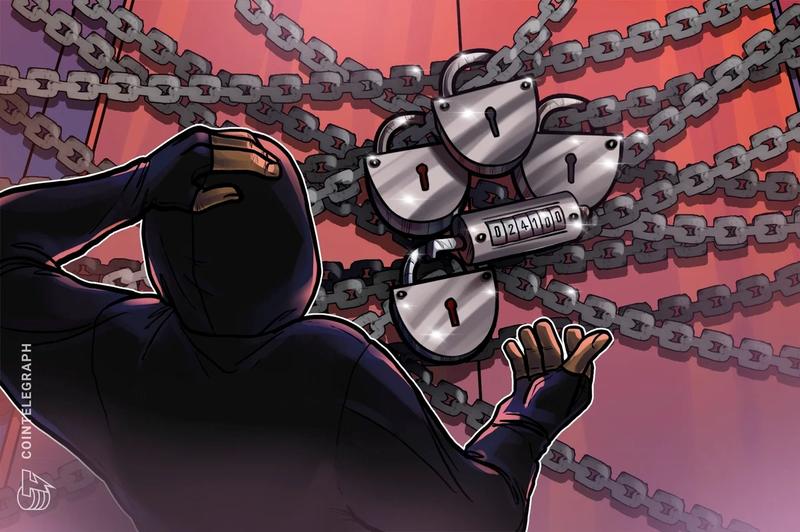
Incidents involving kidnapping and extortion targeting high-profile cryptocurrency industry leaders have experienced a dramatic surge over the past several years.
Known somewhat bluntly within cryptocurrency circles as a "$5 wrench attack," these criminal endeavors seeking to extract substantial sums from industry leaders have prompted governmental action to reduce potential risks.
French policymakers are actively developing protective measures, which include a prevention initiative unveiled during Paris Blockchain Week just yesterday. Meanwhile, within the private insurance industry, specialized firms are providing tailored protection packages for cryptocurrency executives that encompass both educational training and preventive strategies.
As kidnapping and extortion incidents continue their upward trend, those holding significant cryptocurrency wealth are implementing fresh approaches and security measures to ensure their safety.
Why are crypto execs targets?
The problem of extorting affluent cryptocurrency holders is far from novel. Early Bitcoin enthusiast and cypherpunk Jameson Lopp maintains a Github database documenting such criminal incidents. Though incomplete, his archive has catalogued a minimum of 316 cases dating back to 2014.
Software developer Rigel Walsh, who works at Swan Bitcoin, was already delivering presentations on this subject matter back in 2019, discussing various threat scenarios ranging from identity theft to violent home invasions and abductions.
Based on data from Lopp's database, 79 extortion incidents took place during 2025, and already within 2026, news outlets have documented 27 separate attacks targeting cryptocurrency asset holders.
While this category of criminal activity isn't unique to those wealthy in cryptocurrency, the characteristics of digital currencies and the sector's culture render cryptocurrency executives and investors especially susceptible to such threats.
Christian Ogden Davies, who serves as global head of distribution and innovation at Relm Insurance, explained to Cointelegraph that certain newly wealthy cryptocurrency individuals "don't have big risk infrastructure around them."
Typically, when a company expands, "you usually then have more people come into your organization like a CEO that's experienced and maybe a chief risk officer or a chief legal officer, and then they start to look at insurances and how that kind of impacts them."
When revenue expands, "you might have asset managers and wealth managers who turn around and go, 'have you talked about or looked at your own personal security?'"
"Instead, in crypto, some people go from zero to hundreds of billions of net worth in weeks or months."
This insufficient attention, or possibly disregard, toward personal protection carries over into the highly social and welcoming environment characteristic of the cryptocurrency sector. Davies noted that crypto represents one of the few industries where "you'll have five CEOs of competing firms go and sit down for dinner and [...] see how things are going."
Cryptocurrency assets are also remarkably liquid. Despite growing scrutiny on cryptocurrency activities, whether through governmental oversight and sanctions or through private security and investigative services, cryptocurrency criminals maintain relatively easy pathways to convert stolen assets into cash.
Davies pointed out that, despite nations like North Korea and Iran facing extensive sanctions, government-linked entities such as the Lazarus hacking collective have still managed to successfully launder stolen cryptocurrency. "If you have the right avenue and exit venue for it, you can still make it liquid."
Regulatory and social factors may contribute to the prevalence of criminal attacks targeting cryptocurrency holders. France, with Paris specifically, has emerged as a concentrated area for extortion attacks against the cryptocurrency-wealthy. It "eclipses every other region by a country mile" when measuring crypto extortion incidents, according to Davies.
Among the most widely publicized incidents was the 2025 abduction and extortion of David Balland, co-founder of Ledger wallet. His business partner and fellow co-founder, Eric Larchevêque, has allegedly stated that French legislation, specifically a mandate requiring business owners to publicly register their personal names and physical addresses, bears at least partial responsibility.
Additionally, there's the cultural attraction factor. Davies observed, "everyone loves Paris [...] It's a beautiful city and it just attracts lots of visitors as well. Whether you're an A-list celebrity, musician, actor, film star, you want to go out and hang in Paris and go and eat [at] the restaurants and stuff. If you're a crypto exec, you do the same thing. If you're an investment banker, you do the same thing. So you do have a lot of high concentration of visiting wealth to that area."
Ultimately, the historical absence of adequate security has generated a new situation where "everyone has kind of had to wake up to very violently."
Crypto execs spend more on personal security
And awakened they certainly have. Expenditures on personal protection among cryptocurrency industry executives have risen dramatically.
During 2024, United States-based cryptocurrency exchange Coinbase allocated $6.2 million toward executive protection services for its chief executive Brian Armstrong. As reported by TechCrunch, this amount exceeded the total combined security expenditures for top executives at JP Morgan, Goldman Sachs and Nvidia.
Larchevêque spends in excess of $50,000 monthly on protective services for both himself and his family members. He maintains surveillance systems and defensive weapons within his residence and has purportedly advocated for cryptocurrency executives to receive authorization to carry firearms for self-defense purposes.
Government-sponsored initiatives have also emerged to tackle this growing problem. During yesterday's Paris Blockchain Week, Jean-Didier Berger, minister delegate to the interior minister of France, announced his department had introduced a prevention platform that has already attracted thousands of registered users. The platform aims to enhance security coordination efforts, which Berger indicated he would be advancing alongside Interior Minister Laurent Nuñez throughout the upcoming weeks.
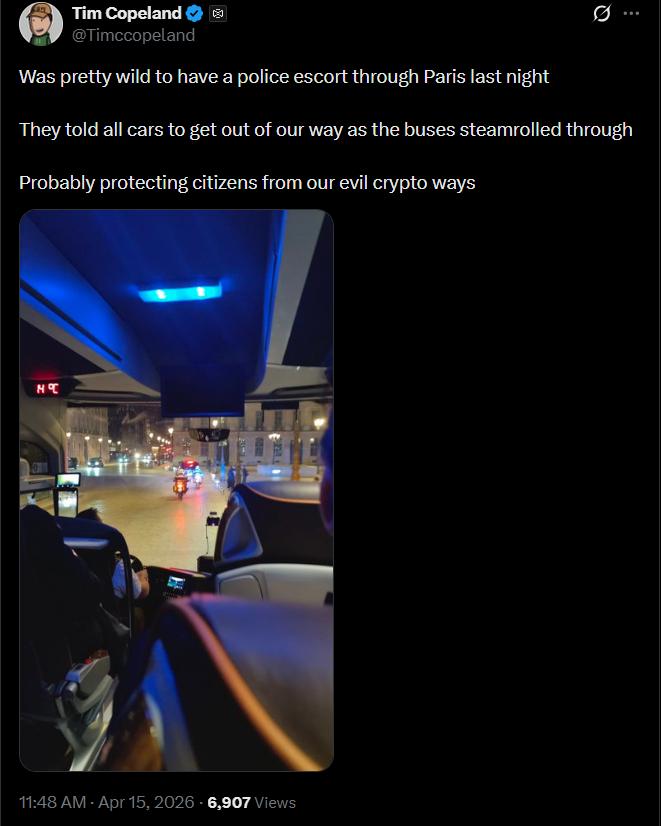
During Paris Blockchain Week, law enforcement maintained a substantial visible presence. In a message posted on X, Tim Copeland, The Block's head of growth, mentioned that certain conference participants received police escort services while traveling through Paris.
Insurance providers have likewise experienced a significant spike in demand. Ben Davis, who operates a cryptocurrency-focused insurance brokerage firm in the UK called Native Broking, shared with Reuters last year, "Two years ago, kidnap and ransom wasn't really a big problem. No one really wanted to talk about it. Now 100% of our clients are talking about it."
Christian Ogden Davies informed Cointelegraph that Relm began providing a K&R (kidnap and ransom) insurance policy following overwhelming client demand. "The reason we launched it is because we're being asked by so many people for it."
The insurance product provides access to security professionals and financial reimbursement for clients who find themselves in circumstances requiring ransom payment. However, a substantial portion of the policy, and of reducing potential extortion threats generally, focuses on ensuring clients understand how to prevent such situations from occurring in the first place.
"There's initial training and education of the people first. Try not to get yourself in that situation. This is what you say. This is what you don't say. This is who you speak to, how you speak, how you engage."
"Don't turn left down that dark alley. It might be a shortcut, but just take that normal route."