
BTC Slides Lower as Mining Companies Shift to AI Infrastructure, Crypto Bills Remain Stagnant
The cryptocurrency's lagging performance compared to equities intensifies as mining operations embrace AI technology and favorable digital asset regulations in the US face continued gridlock.

Key takeaways:
- The decline of Bitcoin beneath the $75,000 threshold signals a notable divergence from equity markets reaching record territory amid the artificial intelligence expansion.
- Digital asset trader confidence stays subdued as critical United States legislative initiatives encounter persistent postponements.
The rejection of Bitcoin's (BTC) price at the $78,000 level on Thursday signaled a departure from conventional market behavior following a two-month period of tight correlation. The slide beneath $75,000 on Wednesday occurred simultaneously as the technology-focused Nasdaq 100 Index surged to unprecedented heights.
The underlying causes of Bitcoin's lagging performance appear set to persist in the coming weeks, diminishing the probability of a positive price surge beyond the $82,000 resistance level.
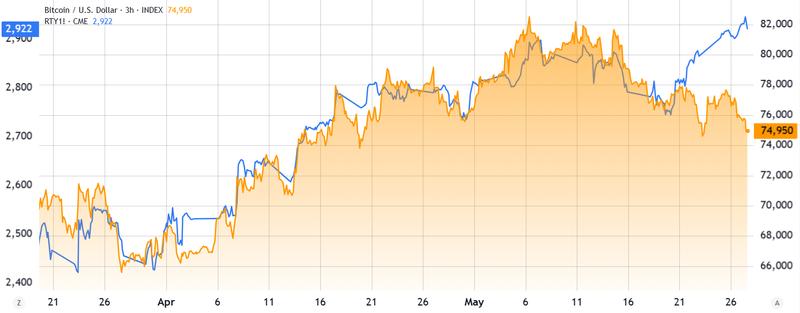
The United States small-capitalization Russell 2000 Index climbed to an unprecedented peak on Wednesday, demonstrating that market participants maintain confidence despite broader economic uncertainties. Even with the Iranian conflict approaching the 3-month milestone, robust profit growth within the artificial intelligence industry has fueled widespread bullish sentiment across equity markets.
The precise explanation for the diminished appetite for Bitcoin may remain elusive, though it appears to encompass recent BTC holdings liquidations by publicly traded mining companies and their ensuing transition toward AI-focused infrastructure. A recent illustration of this trend involves TeraWulf (WULF US) revealing plans to deploy a 1-gigawatt high-performance computing facility in Kentucky.
Pro-crypto regulation stalls
Additional negative sentiment developed following Trump Media & Technology Group's (DJT US) movement of 2,650 BTC, valued at $205 million during the transaction, to a digital currency exchange wallet on Friday, as reported by Lookonchain analytics. The media company under the control of President Donald Trump's relatives had previously acquired 11,542 BTC with an average purchase price exceeding $118,500.
The absence of legislative advancement in Congress has additionally dampened market participant enthusiasm. The Digital Asset PARITY Act restructures digital currency taxation through the elimination of tax obligations on mining and staking rewards until the point of sale. The legislation received its formal introduction in May, though hearings or voting procedures have yet to be scheduled.
In a similar vein, the Digital Asset Market CLARITY Act remains pending for a complete Senate floor vote, with no confirmed date established. This legislation establishes a thorough market structure blueprint for digital assets, allocating supervisory responsibilities between the Commodity Futures Trading Commission (CFTC) and the US Securities and Exchange Commission (SEC), while working in conjunction with the previously approved GENIUS Act governing stablecoins.
Fed policy trajectory puzzles investors
Market participants had presumably expected more aggressive balance sheet growth from the US Federal Reserve (Fed), anticipating ongoing US Treasury purchases and enhanced market liquidity provisions. Nevertheless, the dominant pattern from prior months diminished in April as the Fed's aggregate assets reached a plateau.
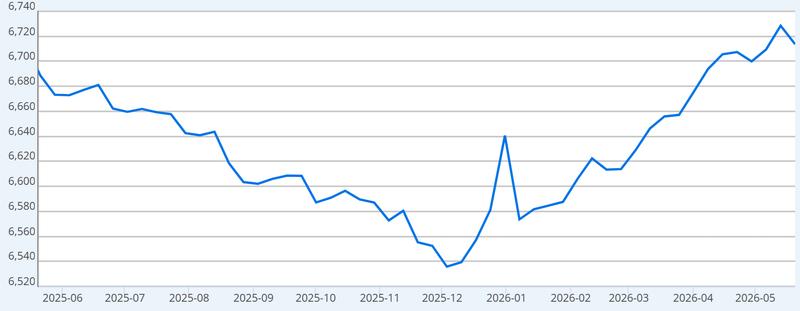
The Fed's choice to pursue a more conservative approach was presumably influenced by escalating crude oil valuations, which elevate inflationary pressures. Expansionary monetary policies risk amplifying these concerns and adversely affecting economic expansion. The Fed's aggregate assets have remained relatively unchanged around $6.7 trillion since April 15.
Bitcoin's underwhelming price action also stands in stark opposition to an extraordinary increase in appetite for AI infrastructure-related enterprises.
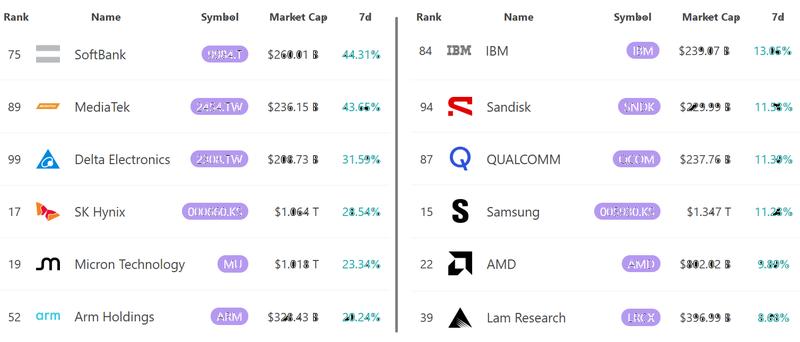
Semiconductor memory manufacturers SK Hynix (000660 KS) and Micron (MU US) pushed beyond a $1 trillion market capitalization milestone for the first time in their corporate histories, alongside numerous equities that posted gains of 20% or greater during just the previous seven-day period.