
BTC Falls Toward $68K as Disappointing Employment Numbers Provide No Support for Bulls
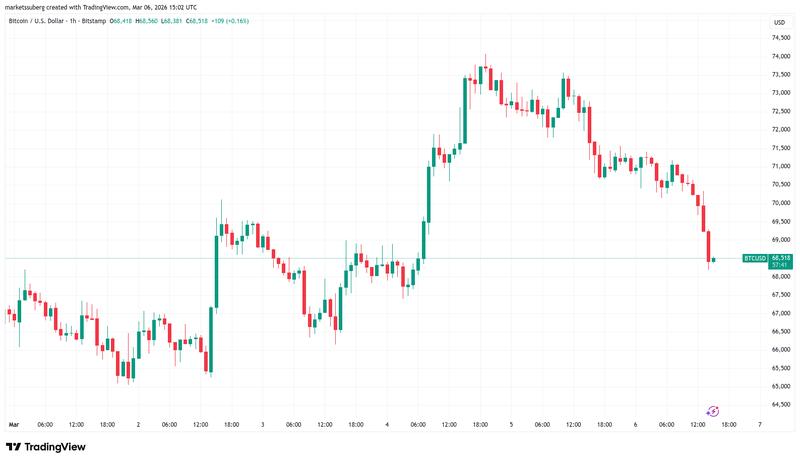
The leading cryptocurrency reversed its recent rally from $74,000 following unexpectedly poor jobs data that failed to provide support for digital assets or broader risk markets.

The price of Bitcoin (BTC) fell below the $70,000 threshold as Friday's Wall Street trading session commenced, with disappointing United States employment figures providing no uplift for risk-oriented assets.
Key points:
- Cryptocurrency markets and equities decline following an unexpected deterioration in US nonfarm payrolls data.
- Federal Reserve rate-cut expectations remain limited, with market participants anticipating only a single reduction this year.
- The BTC price movement "round trips" its most recent attempt to break higher, maintaining a pattern observed throughout 2026.
Bitcoin disregards "clearly weakening" employment situation
Information from TradingView indicated that BTC price losses on a daily basis exceeded 3%, reaching $68,176 on the Bitstamp exchange.
Nonfarm payrolls figures from the United States fell short of expectations on all fronts, revealing that employment conditions faced greater pressure than market forecasters had anticipated.
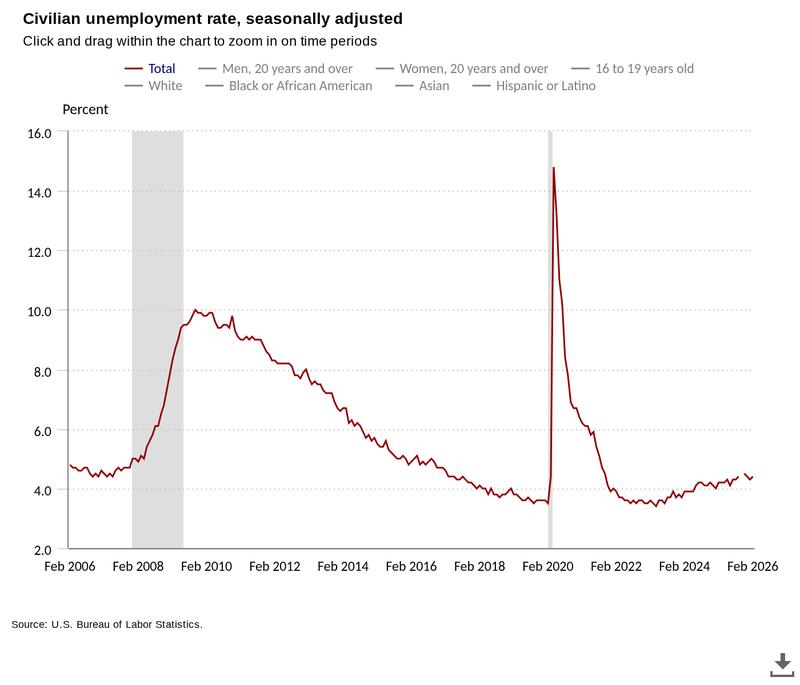
According to information released by the Bureau of Labor Statistics (BLS), the economy shed 92,000 positions in February, a stark contrast to the anticipated gain of 58,000 jobs. Additionally, the unemployment rate registered at a higher-than-expected 4.4%.
This reading stood in sharp contrast to January's figures, which had shown surprisingly robust employment growth.
Trading resource The Kobeissi Letter noted in an X post that this development represented "just the 2nd monthly job loss since the 2020 pandemic."
"The US labor market is clearly weakening."
Historically, deteriorating labor-market conditions have served as a positive catalyst for cryptocurrency and risk-oriented assets, as such weakness suggests an increased likelihood of monetary policy easing through interest-rate reductions.
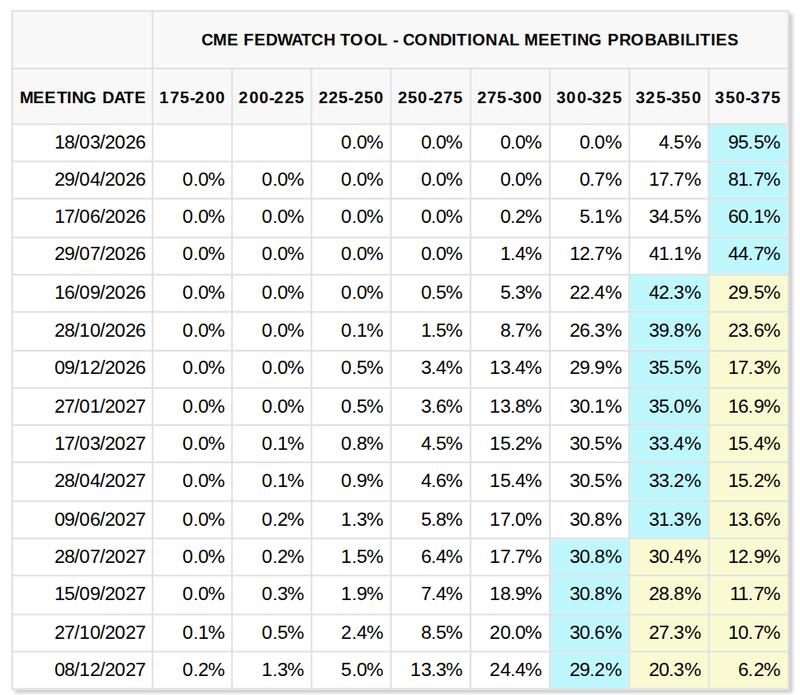
However, the most recent information from CME Group's FedWatch Tool indicated minimal probability of the Federal Reserve implementing a rate cut at its upcoming March 18 meeting. Market expectations also pointed to only a single rate reduction occurring throughout 2026.
As a result, the employment data failed to deliver any positive momentum for risk assets, with cryptocurrency markets tracking US equity indices lower. As of press time, the S&P 500 registered a decline of 1.5% while the Nasdaq Composite Index retreated 1.3%.
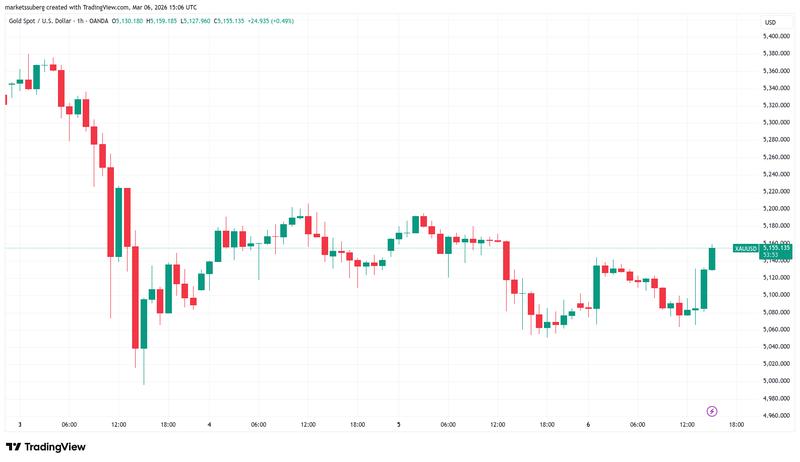
Gold emerged as the sole gainer, with the precious metal advancing 1.5% to reach $5,155 per ounce.
Bitcoin price completes full reversal from monthly peak levels
Within the Bitcoin trading community, disappointment was evident as the BTC/USD pair proved unable to confirm a sustained breakout above its confined local price range.
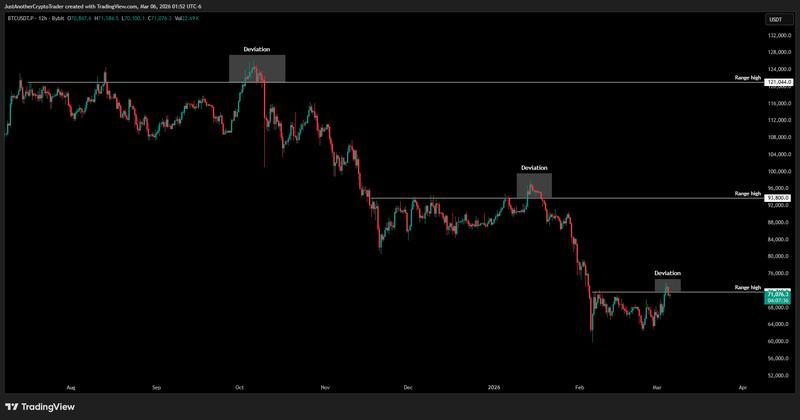
J. A. Maartunn, a contributor to the onchain analytics platform CryptoQuant, observed that "Deviations above the Range High keep getting sold."
Maartunn identified three such unsuccessful breakout attempts over recent months, with each instance resulting in a deviation followed by a subsequent decline.
"The latest deviation just occurred around $71K. If history repeats, this level may again act as a trap for late longs," he cautioned.
The price action brought Bitcoin back into contact with critical long-term technical levels, particularly the 200-week exponential moving average (EMA) alongside the previous all-time high established in 2021.
Keith Alan, cofounder of trading resource Material Indicators, noted, "Looks like $BTC is round tripping the range…again."
Previously, Cointelegraph had reported on prevailing market expectations calling for Bitcoin to test fresh lows in the near term, notwithstanding its recent advance to monthly highs.