
Ethereum Could Gain Edge Over Bitcoin Due to Quantum Defense Delays, Says Nic Carter
Cryptocurrency veteran Nic Carter argues that Bitcoin's development team remains willfully ignorant about quantum-resistance preparations, while Ethereum forges ahead with concrete plans.

Cryptocurrency industry veteran Nic Carter has called on Bitcoin's development community to accelerate quantum resistance efforts or face the possibility of Ethereum gaining a competitive advantage, given that Ethereum has already established a comprehensive post-quantum strategy.
The mathematical foundation securing Bitcoin (BTC) relies on elliptic curve cryptography (ECC). This system works by allowing users to select a confidential number serving as their private key, which through mathematical operations on a special curve using straightforward multiplication principles, generates a publicly visible address that anyone can observe.
Concerns are mounting that quantum computing technology could potentially crack this cryptographic protection. Within the Bitcoin ecosystem, opinions are divided regarding the appropriate response, with one faction pushing for cryptographic upgrades while another group maintains that such changes would compromise Bitcoin's foundational values.
"Elliptic curve cryptography is on the brink of obsolescence," said the founding partner at Castle Island Ventures on X on Thursday. "Whether it's 3 or 10 years; it's over and we need to accept that."
"The only thing that matters is how quickly blockchain developers recognize that they need to bake in cryptographic mutability into their networks."
According to Carter's assessment, blockchain systems will require a comprehensive "entire reimagining" of their operational frameworks, noting that current implementations have cryptography permanently embedded in their code. "That will have to change," he added.
In a research document published on March 11, ARK Invest estimated that roughly one-third of all BTC faces potential vulnerability from quantum computing capabilities, though the firm characterized this as a "long-term risk."
Carter asserts Ethereum holds the upper hand
According to Carter, Ethereum's development team has already initiated action on this challenge by establishing a dedicated security task force, referencing a comprehensive post-quantum strategy targeting completion by 2029 that has been designated as a "top strategic priority."
"ETH people have already figured this out. Everyone else seems to be petrified in fear. Unless something changes quickly, ETHBTC will start to reflect the divergence in prioritization."
In statements made toward the end of February, Ethereum co-founder Vitalik Buterin outlined that modifications to validator signatures, data storage systems, user accounts, and cryptographic proofs are essential for quantum threat preparedness, simultaneously introducing a quantum resistance roadmap.
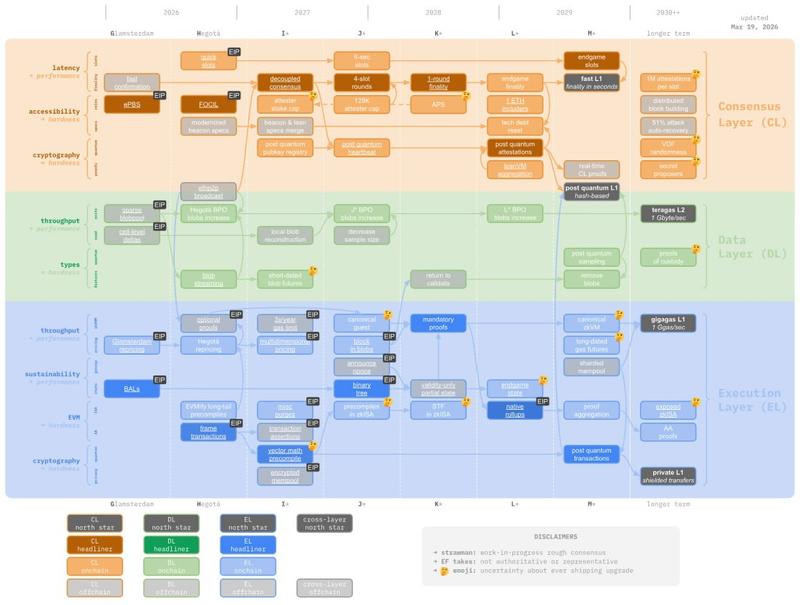
Concurrently, Carter has voiced concerns on X in the past that Bitcoin Core's development team has been dismissing quantum-focused proposals including BIP-360.
In his latest X thread, Carter delivered sharp criticism of Bitcoin's development community, alleging they demonstrate a "worst in class approach," characterized by their tendency to "deny, gaslight, gatekeep, bury heads in sand, say 'the community will decide' and then refuse to take feedback from the community when offered."
In a February response, Ethan Heilman, who co-authored BIP-360, countered that Core contributors have actively participated in discussions surrounding the Bitcoin improvement proposal, noting that BIP-360 has received "more comments than any other BIP in the history of BIPs."
Google issues warning about quantum danger to digital signatures
In related developments, Google escalated concerns on Wednesday by establishing a 2029 target date for completing its post-quantum cryptography transition.
The technology corporation cautioned that quantum computing systems will "pose a significant threat" to existing cryptographic frameworks, with particular vulnerability "specifically to encryption and digital signatures."