
Bitcoin Set to Welcome Private, High-Speed USDT: A Challenge to Ethereum and Tron Dominance?
Through RGB protocol and Lightning Network integration, Utexo plans to reintroduce USDT to Bitcoin, wagering that enhanced privacy features and Bitcoin's settlement infrastructure will attract enterprises currently relying on Ethereum and Tron platforms.
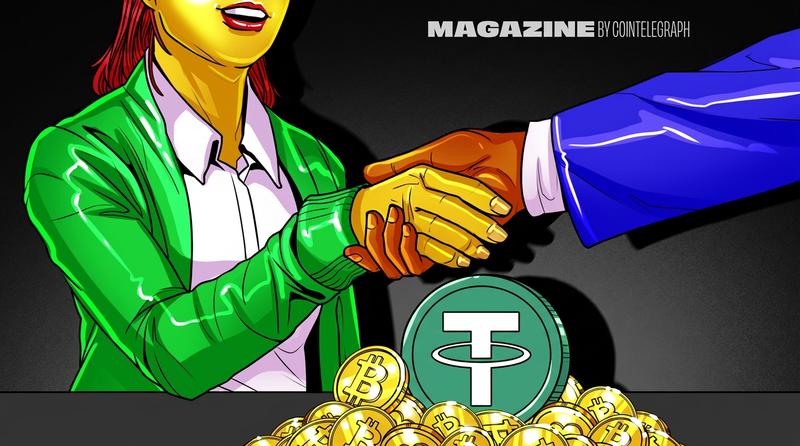
Following a three-year absence, Tether's dollar-pegged stablecoin is poised to make its return to Bitcoin, courtesy of Utexo's forthcoming integration.
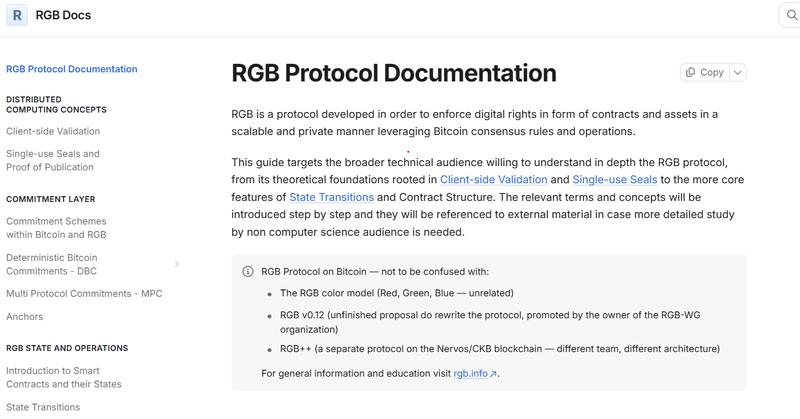
According to the blockchain startup based in Dubai, the integration will be accomplished via RGB, a protocol designed to maintain asset transaction information in an off-chain environment.
The official rollout is set for Nov. 28, while Lightning Network integration is slated for Q1 2027, offering the promise of confidential transfers and rapid payment processing through Bitcoin's established payment infrastructure.
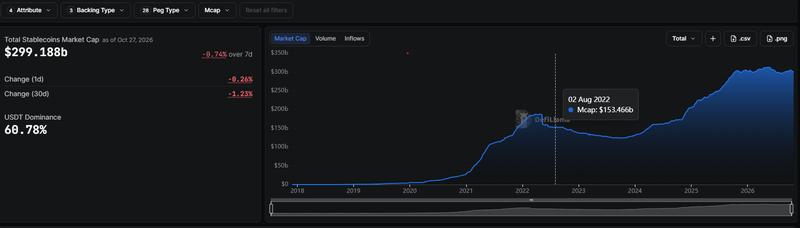
However, given that networks such as Ethereum and Tron already host approximately $300 billion in stablecoin circulation, what incentive exists for users to migrate to a network with slower speeds, no smart contract functionality, and no DeFi capabilities? Is there a realistic path for Bitcoin to challenge the established stablecoin platforms?
The rationale behind returning USDT to Bitcoin
USDT's presence on Bitcoin isn't unprecedented. The stablecoin originally launched on Bitcoin back in 2014 via the Omni protocol, though Tether ultimately discontinued issuance in August 2023, pointing to diminishing user engagement.
Following that decision, Tether revealed intentions to introduce USDT on RGB in August 2025. While those plans didn't materialize, Tether subsequently became the lead investor in Utexo's $7.5 million seed round in March, with the emerging company now tasked with deploying the Bitcoin iteration of the stablecoin through Tether's USDT0 protocol.
According to Viktor Ihnatiuk, Utexo's co-founder and chief executive, the motivation centers on two primary factors: Speed and privacy. By leveraging Bitcoin as the settlement foundation and utilizing RGB to maintain transaction information away from the public blockchain, the platform enables both confidential and rapid transaction execution.
You can actually achieve any speed you want to achieve. Bitcoin is the best blockchain. Lightning is the best technology to scale payments.
The genesis of Utexo stemmed from initiatives to enable dollar-based payment systems on Bitcoin, with Ihnatiuk noting that the concept crystallized following discussions with Tether at Bitcoin Prague in 2023.
Additionally, the company leverages RGB and Lightning infrastructure originally created by ThunderStack, which was established by Renat Skitsan, Utexo's fellow co-founder.
Understanding RGB and its operational mechanics
Development of RGB commenced in 2016, with the objective of enabling users to create and transfer digital assets via contracts linked to Bitcoin, while avoiding the necessity to publish every transaction detail on Bitcoin's public ledger.
Instead of attempting to transform Bitcoin into an Ethereum-like platform, RGB allows transaction participants to validate asset movements independently, with cryptographic commitments anchored to Bitcoin providing security guarantees. This architecture makes RGB a protocol native to Bitcoin rather than a sidechain or rollup solution.
RGB's compatibility extends to the Lightning Network, facilitating USDT movement through payment channels without requiring each individual transfer to be recorded on the base layer.
Lightning allows you to do transactions with a dynamic of 100 milliseconds. It's faster than Solana, it's faster than Monad, it's faster than Sui or Aptos. The limitation is only in the brain of people who don't understand how to scale Bitcoin.
The transparent nature of Bitcoin has historically created obstacles for business adoption, given that numerous companies prefer maintaining confidentiality regarding their purchases and transaction partners.
According to Ihnatiuk, instead of attempting to match networks like Tron in retail transaction throughput or Ethereum in decentralized finance applications, the company's strategy relies on the premise that combining robust Bitcoin-based settlement with enhanced transaction privacy will provide sufficient motivation for businesses to transition.
Additionally, Utexo possesses the capability to selectively reveal pertinent transaction details for regulatory compliance, Ihnatiuk explains, and maintains established protocols for addressing law enforcement inquiries.
Navigating bridge-related challenges
Early access to Utexo's USDT Mint offering began on Oct. 22, enabling verified professional participants, including exchanges, wallet providers and market makers, to experiment with minting, confidential transfer capabilities and redemption functionality on Bitcoin's Signet test network.
This testing environment provides participants with an opportunity to validate transaction workflows and complete integration preparations in advance of the public debut scheduled for late November, at which point Ihnatiuk anticipates "everything will become so big."
However, transferring existing USDT to Bitcoin through Utexo Mint requires an intermediary process. The service secures USDT0 on Arbitrum prior to creating an equivalent quantity of USDT on Bitcoin. Token redemption occurs when users destroy the RGB asset, which then initiates the release of corresponding funds on the originating network.
This design means that Mint's security profile extends beyond Bitcoin and RGB alone, encompassing the mechanisms that interconnect the various networks.
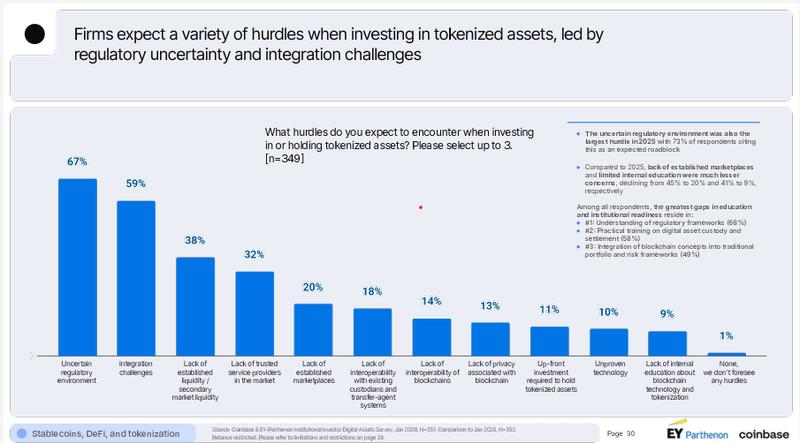
Participants must have confidence that the USDT0 secured on Arbitrum remains accessible and can be unlocked when they redeem their Bitcoin-based USDT. Given that bridges have traditionally served as attractive targets for malicious actors, this architectural approach introduces supplementary risk factors, despite the design's built-in mitigation strategies.
According to Utexo, Mint has undergone security assessment by Oxorio, though the complete audit documentation has not been made publicly accessible.
Defining the parameters of success
UniSat has been designated as a launch partner by Utexo, with intentions to enable USDT transfers and swap functionality within its wallet application, while Ihnatiuk reports that Utexo maintains relationships with 12 over-the-counter network partners and has an additional 40 prospects in development.
While Ihnatiuk identifies potential opportunities in Bitcoin-native trading and lending activities, he emphasizes that Bitcoin's trajectory won't mirror Ethereum's DeFi landscape; instead, its competitive advantages center on payment processing and more straightforward financial mechanisms such as escrow-based exchange systems.
People who think that it's possible to replicate Ethereum DeFi on Bitcoin make a huge mistake. Bitcoin was never built for DeFi. Bitcoin was always built for payments.
An additional prospective application involves supporting Bitcoin miners by enabling them to exchange BTC for USDT directly on Bitcoin rather than requiring fund transfers to centralized exchange platforms. This approach would minimize their exposure to custodial risks and streamline the automation of hedging tactics. "So, for miners, it's quite beneficial," he says.
For the inaugural year, Ihnatiuk has established aggressive performance targets.
I would love to achieve our minimum milestone of $1 billion USDT on the Bitcoin network in the next 12 months. My initial goal is $10 billion. My median goal is $5 billion.
Questions also arise regarding the advantages this development brings to Bitcoin itself. According to Ihnatiuk, expanded USDT adoption will boost miner revenue from transaction fees.
Once USDT comes back to Bitcoin, you will get meaningful adoption; all the transactions will come to Bitcoin. So, yeah, miners will be able to make much more.
The question remains: Can Bitcoin effectively compete with Ethereum, Tron and alternative networks as a viable platform for USDT? The potential exists; what's required is demonstrating market demand this time around.