
Bitcoin faces potential $80K breakdown as FOMC decision and tech earnings loom
The battle for $80,000 Bitcoin support intensified during the weekend as markets brace for a critical week featuring major US technology earnings releases and key inflation metrics.
As October draws to a close, Bitcoin (BTC) enters the week struggling to maintain the critical $80,000 support level while markets prepare for an action-packed period of US macroeconomic releases and corporate earnings announcements.
Key points:
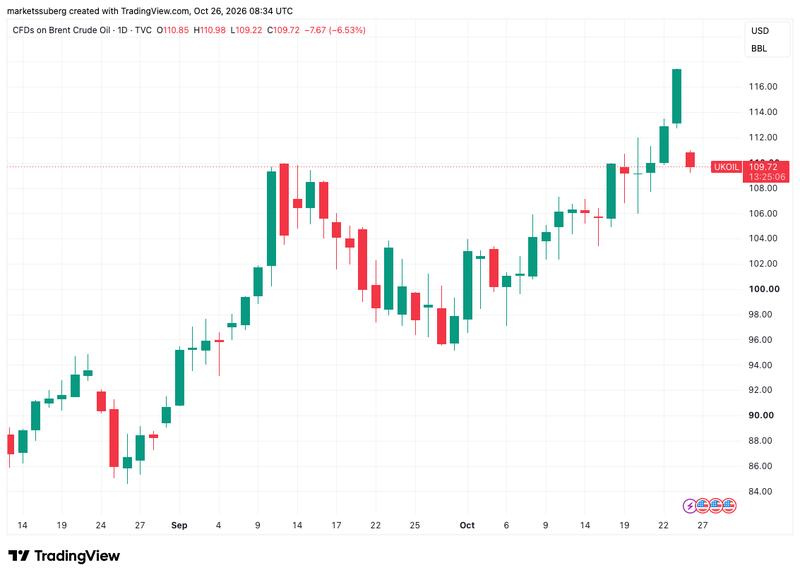
- Wednesday's Federal Reserve meeting is expected to keep interest rates unchanged within the 3.75-4% band as Brent crude retreats to $110 per barrel.
- The KOSPI Composite Index in South Korea continues its decline in anticipation of significant US technology company earnings disclosures.
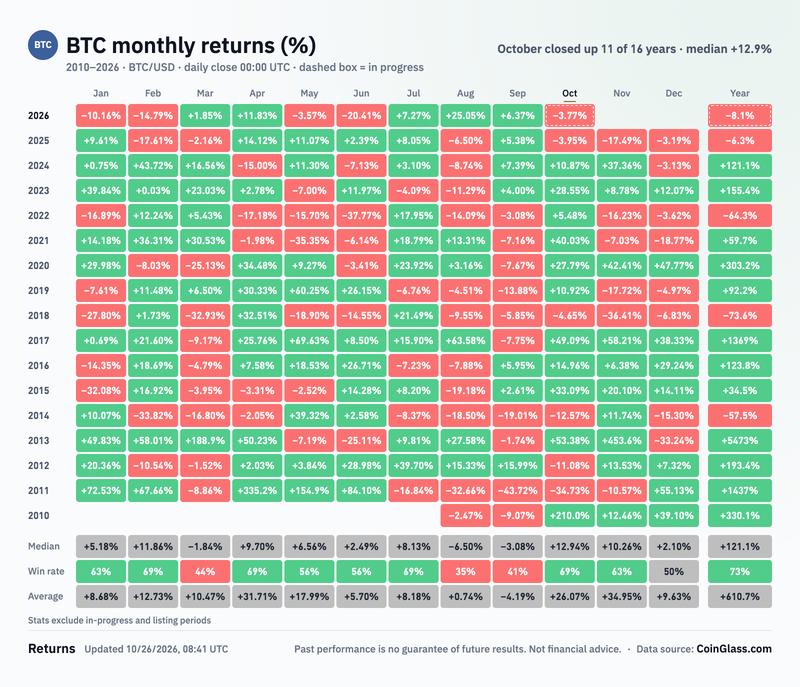
- October looks set to close 4% lower for Bitcoin, mirroring 2025's performance, while the $80,000 level shows signs of fragility.
Fed expected to maintain rates despite oil trading above $100 threshold
This week places the US Federal Reserve under the microscope as macro market watchers await Wednesday's interest rate determination. Attention will center on both the Federal Open Market Committee (FOMC) rate verdict and the messaging delivered by Fed chair Kevin Warsh during the subsequent press briefing.
Market participants show overwhelming conviction regarding the outcome, pricing in more than 90% probability that the federal funds rate will remain within its existing 3.75-4% corridor. According to FedWatch data, market consensus anticipates a 0.25% increase at December's FOMC gathering.
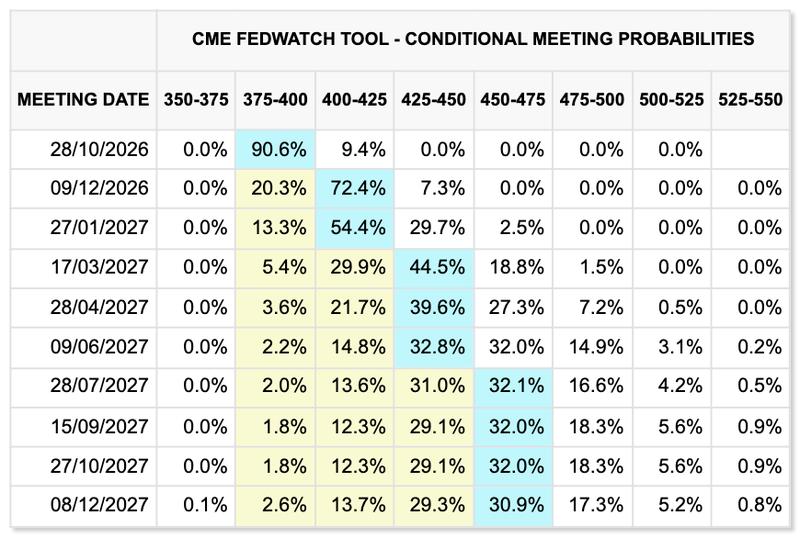
In his commentary, economist Robin Brooks suggested that these expectations represented a fortunate scenario for Warsh, eliminating the need to resist external pressure for policy adjustments.
After very contentious Fed meetings earlier in 2026, this week's meeting gets zero interest in markets, which price only 12% odds of a hike. That's nothing versus how markets tried to push Warsh into hiking back in July. A temporary reprieve for Warsh.
During previous analysis last week, Brooks characterized a rate hold as essentially guaranteed, despite climbing oil valuations and heightened worries regarding military tensions in the Middle East. Brent crude touched $117 per barrel on Friday, marking its peak since March 19, before sliding back to approximately $110 on Monday. Even if prices climbed to $125, the Fed would maintain its current stance, he added.
The debt crisis in France would escalate sharply, anxiety around all the AI and data center debt would increase and the S&P 500 would tumble. That just isn't a setting where the Fed is itching to hike. If anything, financial conditions would be tightening sharply, so the last thing you'd want to do is hike.
Thursday brings fresh US macroeconomic information via the Personal Consumption Expenditures (PCE) index, widely recognized as the Federal Reserve's "preferred" measure of inflation. The previous month saw PCE register below forecasts at 3.4% on an annual basis, though analysts noted the decline reflected modifications to calculation methodology for specific index components.
Tech earnings anticipation weighs on KOSPI as it extends decline
Anxiety surrounding the artificial intelligence sector's outlook maintained downward pressure on stock markets Monday before Wall Street's opening bell.
Following an effort to recover portions of recent losses toward the end of last week, South Korea's KOSPI Composite Index concluded Monday's session with a 1.5% decline at 5,469 points. The technology-focused index dropped as low as 5,308 points on Friday — a depth unseen since the final days of July.
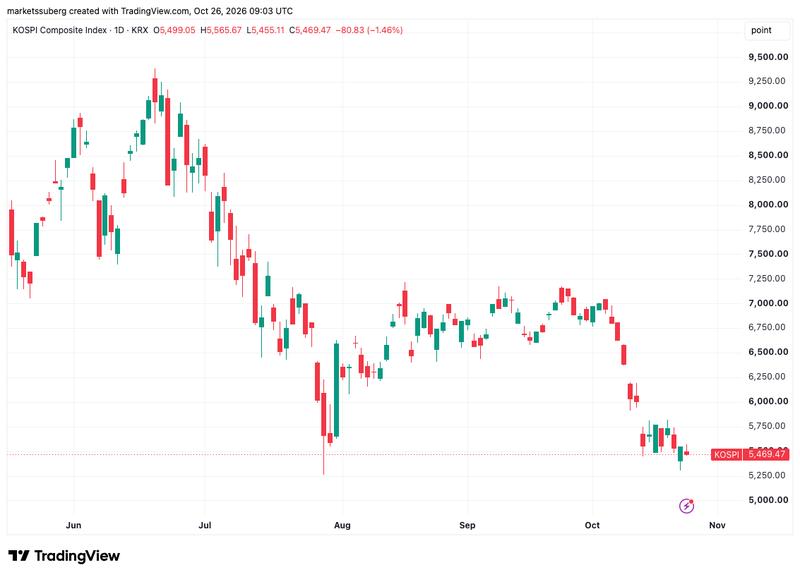
This trough resulted from substantial technology stock liquidation as international capital pursued safer havens. During the previous week, better-than-anticipated US corporate earnings ultimately couldn't improve market sentiment, with focus instead shifting to Tesla's decreased Q3 capital expenditure figures. Friday's close saw the Nasdaq Composite Index settle at 25,955 points, representing its weakest daily closing value since Aug. 3.
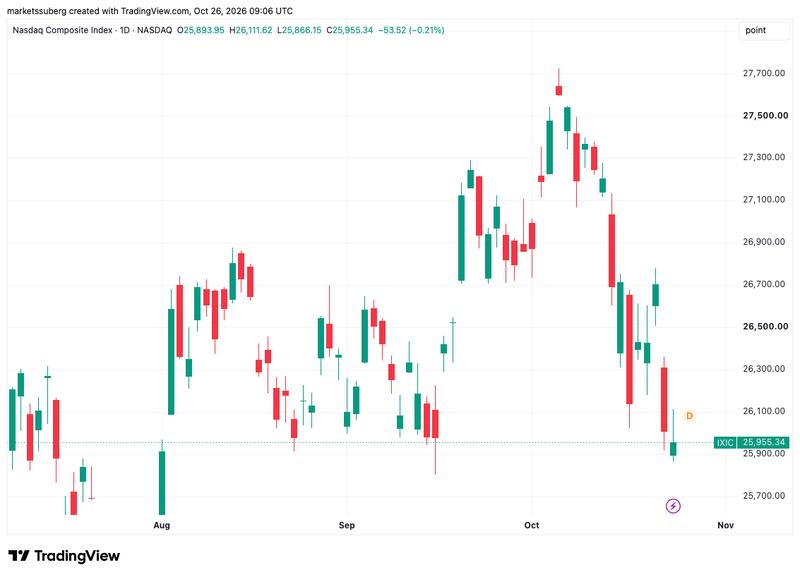
In an interview with CNBC on Monday, JPMorgan Asset Management's Raisah Rasid expressed confidence about the AI investment thesis despite recent turbulence.
It's really about investors thinking, 'Look, we're not rewarding capex anymore; what we are rewarding is return on capital. I think that's what's happening with AI.'
Additional third-quarter earnings announcements arrive throughout the week, with both Microsoft and Alphabet scheduled to report following Wednesday's market closure, and Amazon and Intel set for Thursday. Collectively, approximately 20% of S&P 500 constituent companies will deliver results during this period, while Thursday additionally features the publication of US third-quarter GDP figures.
October's "Uptober" reputation challenged by 4% decline month-to-date
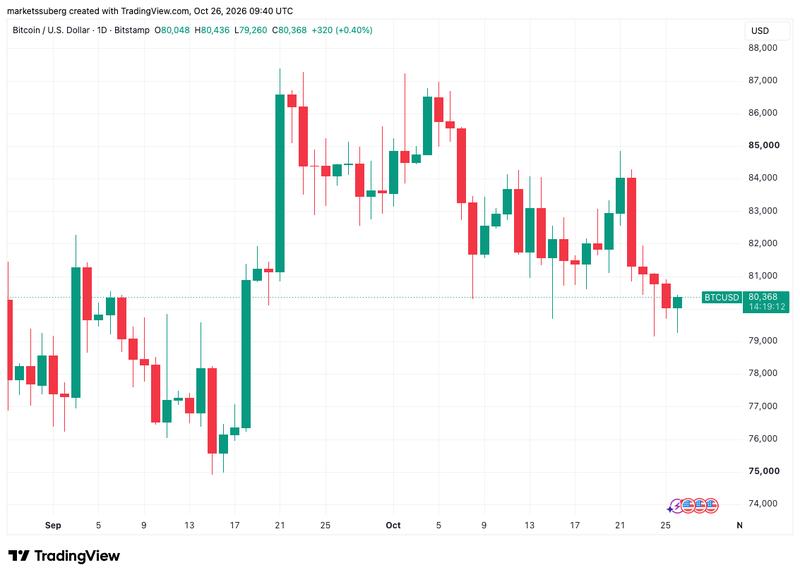
Should the monthly candle close near present levels around $80,000, Bitcoin faces a 4% decline for October.
Information from CoinGlass reveals that while October has historically delivered average gains of 26.1% for BTC/USD dating back to 2010, thereby earning the moniker 'Uptober', the current year and previous year have both defied this pattern. Following a 3.9% drop during October 2025, Bitcoin proceeded to shed an additional 17.5% throughout November, again contradicting historical trends showing November's average returns of 35%.
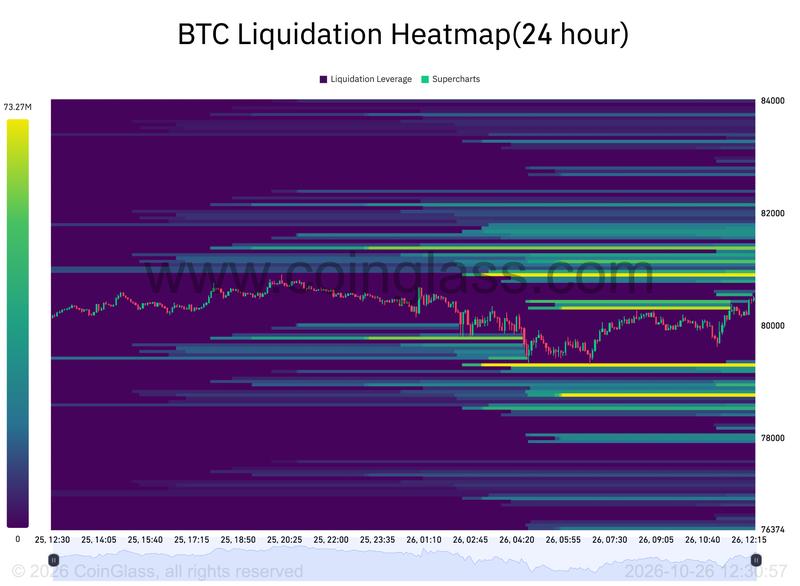
During a two-hour window on Saturday, nearly $150 million in long positions underwent liquidation as Bitcoin descended to $79,145. Despite its significance as a psychological threshold, the $80,000 mark proved unable to provide support across shorter timeframes. Data from CoinGlass indicates a $73 million barrier of bid orders maintaining price above $79,300, while sell orders concentrate near $81,000.
Growing caution characterizes market participants' outlook for a price recovery given prevailing macroeconomic circumstances. Benjamin Cowen, founder of crypto analytics platform Into the Cryptoverse, characterized Bitcoin's rallies to $87,000 during late September and early October as a "fakeout."
In Monday comments to X followers, he projected continued BTC/USD weakness extending through year-end, referencing historical patterns and pointing to downside tendencies surrounding US midterm election years.
According to Cointelegraph's previous coverage, the resistance area near $87,000 encompasses crucial price levels: the 2026 yearly opening price at $87,490 and the 20-month moving average positioned at $87,165.