
Kalshi's Legal Battle Over Prediction Markets May Escalate to Supreme Court
Following oral arguments presented by Kalshi and Nevada state attorneys, an appellate court will soon deliver its ruling on the contentious matter.
Legal analysts have begun to suggest that the jurisdictional clash between state and federal authorities concerning the regulation of prediction markets platforms may ultimately land before the United States Supreme Court in the near future.
During Thursday's proceedings, the US Court of Appeals for the Ninth Circuit listened to oral presentations from attorneys representing the prediction markets operator Kalshi alongside legal counsel for Nevada officials regarding the state's prohibition on the platform's event contracts. This appellate hearing challenged an earlier court ruling that blocked Kalshi from providing specific event-based contracts within Nevada's borders, with the state asserting that the platform required a gaming license to operate.
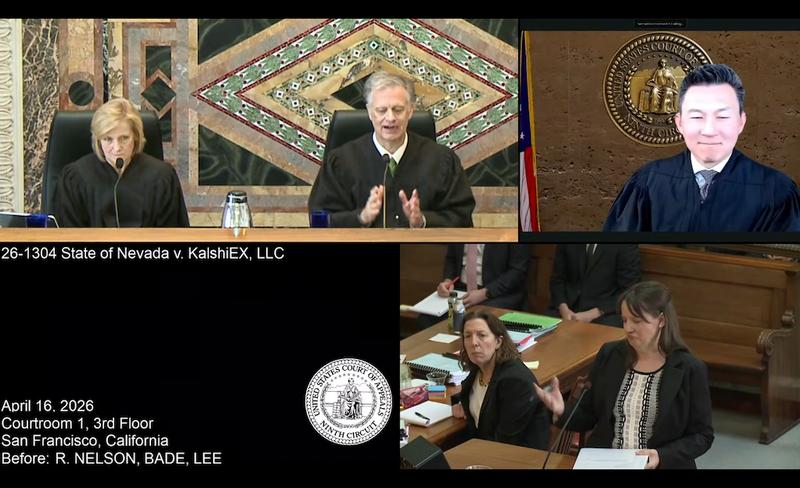
During Thursday's oral proceedings, both the presiding appellate judge and Kalshi's legal representative recognized that multiple state-level enforcement measures had been initiated against the company along with other prediction market operators, which included criminal prosecutions brought forward in Arizona. Nevertheless, federal court intervention occurred last week when Arizona state authorities were prohibited from applying the state's gambling regulations to Kalshi's event contracts.
I think the body of case law does demonstrate that what we really need to avoid here is having a state and a federal court considering exactly the same issue at exactly the same time and potentially reaching different outcomes.
Colleen Sinzdak, representing Kalshi
At the heart of Kalshi's legal position was the contention that the platform's event contracts should be classified as "swaps" that fall within the regulatory jurisdiction of the Commodity Futures Trading Commission (CFTC) instead of state gaming regulatory bodies. CFTC Chair Michael Selig has expressed support for this interpretation in the dispute involving Crypto.com's prediction markets operations against Nevada state authorities.
Following the conclusion of oral arguments, the appellate court refrained from issuing an immediate ruling. Whatever decision ultimately emerges could have significant implications for how state judicial systems handle prediction market operators such as Kalshi and Polymarket as lawmakers grapple with understanding the rapidly expanding market, which is projected to achieve a valuation of $1 trillion by 2030.
Coinbase's top lawyer weighs in on prediction market arguments
Paul Grewal, the chief legal officer at Coinbase, whose organization was not directly involved in the Kalshi legal proceedings but maintains an interest in the broader prediction markets dispute, offered his theory that the matter could eventually reach the US Supreme Court.
The questions at oral argument are an unreliable signal in predicting the leanings of a court. Either way, I stand by my longstanding prediction— the Supreme Court will resolve whether sports [contracts] on [Designated Contract Markets] are swaps subject to the exclusive jurisdiction of the CFTC.
Paul Grewal, Coinbase chief legal officer, in a Thursday X post
In its 2018 ruling on Murphy v. National Collegiate Athletic Association, the US Supreme Court granted states the power to establish regulations governing sports gambling activities.