
Federal Reserve Grapples with AI-Driven Inflation as Rate Decision Looms
June meeting minutes from the Federal Reserve reveal artificial intelligence demand is pushing inflation upward, creating disagreement among officials about upcoming interest-rate decisions.
Discord emerged among Federal Reserve policymakers during last month's deliberations regarding whether interest rates should rise or remain unchanged, with numerous officials identifying surging artificial intelligence demand as a significant contributor to inflationary pressures, based on the meeting minutes published Wednesday.
The minutes documented the initial monetary policy session under Federal Reserve Chair Kevin Warsh's leadership. Multiple members of the Federal Open Market Committee indicated that "ongoing strong demand for AI infrastructure would likely sustain upward pressure on prices for technology products and electricity," the minutes revealed.
The inflationary effects tied to AI development, informally referred to as "chipflation," originate from increasing semiconductor costs required by data center operations. This heightened demand, combined with data centers competing for electrical power resources, has elevated consumer prices across a broad spectrum of electronic goods, computing devices and energy costs, with expectations for continued increases as artificial intelligence demand expands.
Elevated inflation typically presents challenges for risk assets including crypto, as it leads to reduced liquidity and diminished spending power alongside higher interest rates, which makes borrowing costs increase while making cash-based investments more appealing.
Inflation will remain elevated in the near term
Committee members projected that inflation would "remain elevated in the near term" though it may decrease as tensions in the Middle East conflict subside. Nevertheless, they determined that the "risks to the inflation outlook were still tilted to the upside."
Artificial intelligence expansion continued as a prominent topic, simultaneously driving economic growth forward while adding to inflationary concerns.
"Most participants remarked that growth in economic activity that exceeded that of potential output, owing in part to strong AI business investment, could contribute to more persistent inflationary pressures."
The Federal Reserve's "dot plot" indicates potential hikes rather than cuts, showing nine out of 18 voting members forecasting a minimum of one rate increase prior to the conclusion of 2026, while six anticipate two increases of 25-basis-points each. The central bank's PCE inflation forecast for year-end also climbed from 2.7% to 3.6%.
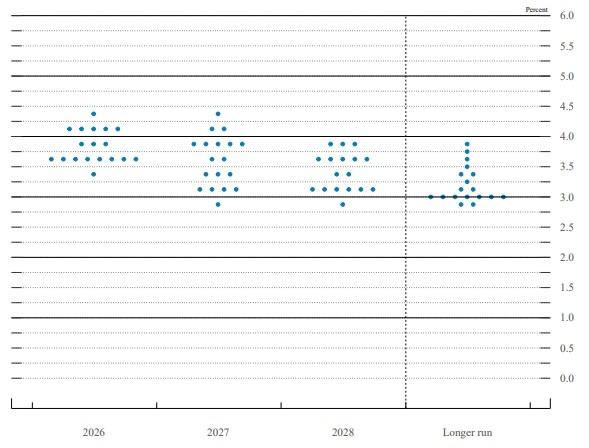
The Federal Reserve maintained rates at the 3.5% to 3.75% range during its June policy meeting, whereas CME futures markets presently indicate a 70% likelihood that rates will stay at current levels during the upcoming meeting scheduled for July 29.
AI infra buildout driving higher inflation
Nick Ruck, director of LVRG Research, shared with Cointelegraph that the Federal Reserve's latest meeting emphasizes how the extensive AI infrastructure expansion is "driving higher inflation through surging demand for semiconductors, energy and data centers, even as it promises future productivity gains."
"While this short-term pressure complicates monetary policy, it also underscores the need for innovative solutions in decentralized technologies to optimize resource allocation and ease bottlenecks in the digital economy," he said.
Market analysts indicated this week that cryptocurrency markets might gain from any Federal Reserve action to support the thriving US equity market during a potential downturn.