
Data suggests Bitcoin's quick climb to $76K could signal a bull trap
While Bitcoin surged in tandem with equities amid expectations of rate reductions, the pushback at the $76,000 level raises questions about a potential bull trap.

Key takeaways:
- The transition by the US Federal Reserve toward expanding its balance sheet could deliver the necessary liquidity to propel Bitcoin and wider risk asset markets higher.
- Ongoing conflict in Iran combined with elevated oil prices could be pushing investors toward assets with limited supply as an inflation hedge.
Bitcoin (BTC) price climbed beyond $76,000 on Tuesday for the first time in more than two months, resulting in $285 million worth of leveraged short position liquidations. The upward movement mirrored the trajectory of the S&P 500, suggesting a strong likelihood of a macro-driven catalyst. Does the Iranian conflict represent the sole driver of Bitcoin's appreciation, and how likely is a bull trap scenario?
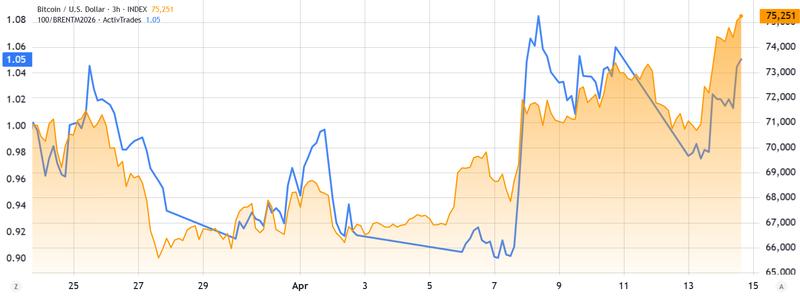
Pricing for crude oil found stability around $95 following a weekend spike to $104, a development that numerous market participants interpret favorably. The inverted crude oil price chart illustrates an environment of strong intraday correlation.
The Iranian conflict has emerged as a significant worry point given its influence on US inflation metrics and supply chain operations, which constrains the capacity of central banks worldwide to reduce interest rates and creates downward pressure on economic expansion.
At the same time, upward movements in both the S&P 500 and gold valuations appear to signal an increased likelihood of stimulus interventions, prompting investors to pursue refuge in assets with limited availability.
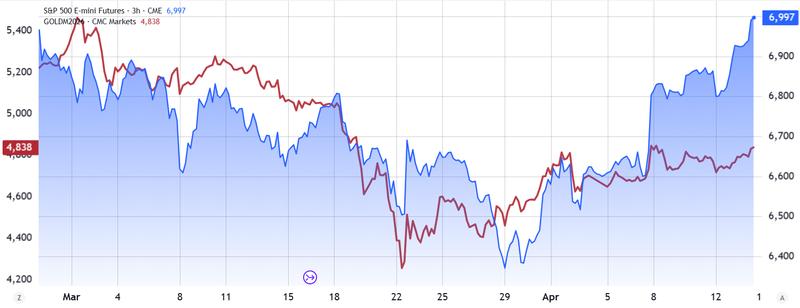
The latest advances in the S&P 500 following unsuccessful talks to reopen the Strait of Hormuz might appear counterintuitive, but the increased threat of economic contraction creates the most compelling reason for authorities to deploy expansionary policies. Whether or not the US Federal Reserve chooses a conservative path, the US Congress alongside the Trump administration retain the authority to greenlight direct spending on infrastructure initiatives and social welfare programs, or to grant tax relief.
Inflationary worries line up with investors' Fed policy expectations
Bitcoin doesn't require outperforming stocks or even gold to attract the capital presently sitting in money market funds and short-duration bonds. The more extended the period of oil prices staying above $90, the greater the upward force on anticipated inflation.
Declining anticipated yields on fixed-income instruments could serve as the principal driver behind Bitcoin's push past $75,000, and governmental bodies have limited options beyond expanding the monetary supply.
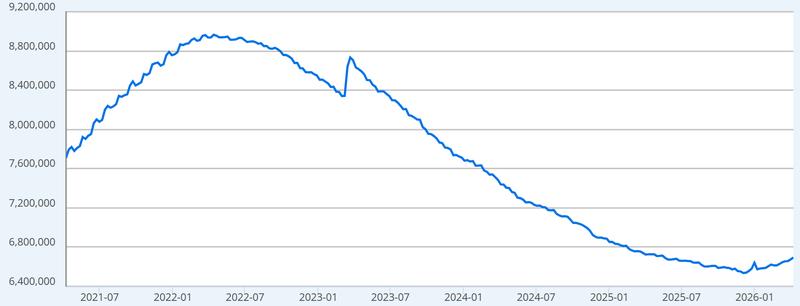
The US Fed modified its approach to grow the balance sheet in January, reversing the direction from the prior two years. This shift strongly supports risk asset markets, as near-term anxieties surrounding the bond market are easing. Banking institutions and hedge funds enjoy improved access to liquidity and encounter reduced pressure to dump US Treasuries, offering temporary support to equity markets.
Whether or not Bitcoin maintains levels above $75,000, there exist minimal reasons for traders to realize gains following two months of price action around $68,000, considering the modest 10% appreciation. Even should Bitcoin ultimately climb to $80,000, that would constitute only a moderate 20% profit for those who entered at $66,500. Absent trader perception of immediate threats to oil pricing, the probabilities don't support sustained selling pressure on Bitcoin.
In the final analysis, considering the probability of expansionary monetary strategies and inflationary forces, Bitcoin bears will face considerable challenges demonstrating strength, rendering the likelihood of a successful bull trap exceedingly minimal.