
Bitcoin's trajectory under threat if crude oil surges to $180 a barrel
Should oil prices jump 70%, American inflation could potentially double, eliminate prospects for interest rate reductions, and intensify bearish pressure on Bitcoin valuations over the next several months.
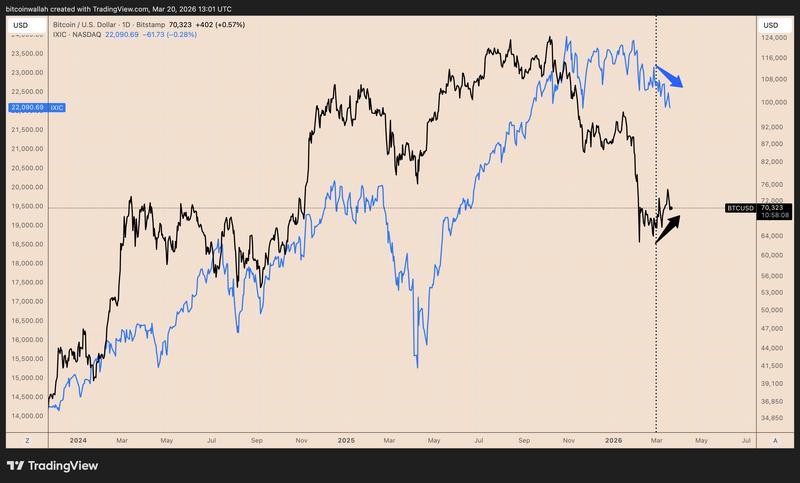
Since the February 28 military strikes on Iran conducted by the United States and Israel, Bitcoin (BTC) has delivered superior returns compared to American stock markets and gold, demonstrating remarkable resilience during what stands as one of 2026's most significant geopolitical disruptions.
That said, the current BTC upswing could encounter substantial headwinds should crude oil costs climb toward the $180 per barrel mark—a possibility that certain officials from Saudi Arabia now consider realistic if production disruptions across the Middle East continue through April and beyond.
Key takeaways:
- US headline inflation may rise to 5% if oil supply shock persists, lowering rate cut odds in 2026.
- Such macro headwinds risk sending the Bitcoin price to $51,000 in the coming months.
Surging crude prices could elevate US inflation and pressure Bitcoin valuations
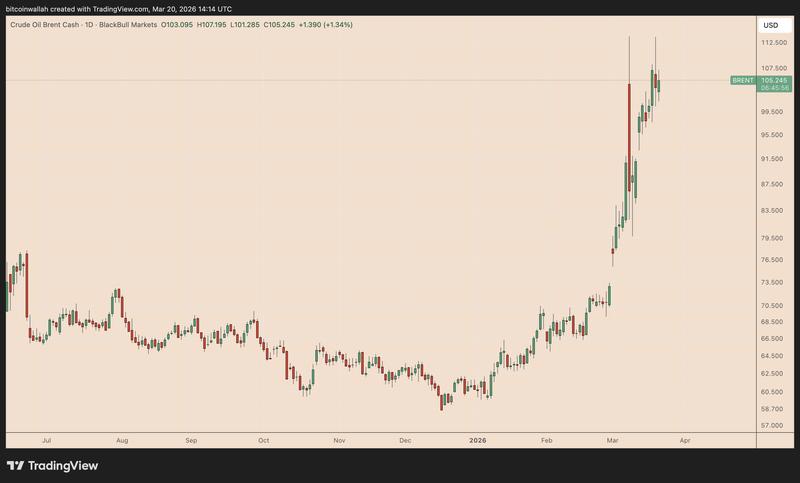
By Friday's close, Brent crude oil was exchanging hands at approximately $105 per barrel, representing an increase of about 50% since hostilities between the US-Israel coalition and Iran commenced.
According to data compiled by Kpler, petroleum shipments passing through Iran's strategically critical Strait of Hormuz declined sharply to 9.71 million barrels per day by the middle of March, down from 25.13 million barrels recorded in February.
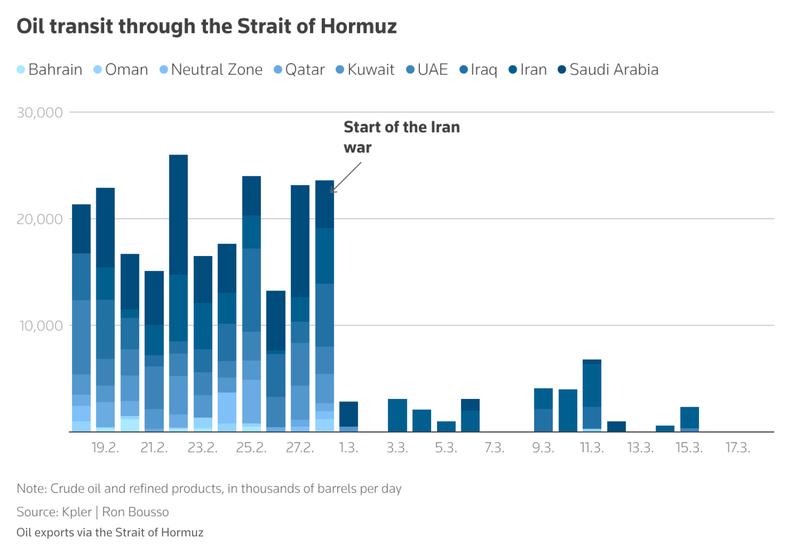
Vortexa, a platform specializing in energy sector analytics, projects an even more dramatic decline to 7.5 million barrels per day, underscoring the severity of Middle Eastern supply constraints and explaining why market analysts forecast another 70% increase in crude prices.
Research published by the US Federal Reserve in 2023 indicated that each 10% increase in crude oil pricing can contribute approximately 0.35–0.40 percentage points to the US Consumer Price Index.
Using that calculation framework, a sustained rally in petroleum markets could elevate inflation by approximately 2.5–2.8 percentage points, sufficient to drive CPI significantly beyond its present 2.4% reading and even further from the Federal Reserve's 2% benchmark target.
Financial markets have already begun recalibrating expectations in response to this emerging threat.
Monetary policy loosening forecasts have adopted a decidedly more hawkish tone, with market participants no longer anticipating a second interest rate reduction in 2026, while the probability of an initial cut has been delayed until October 2027.
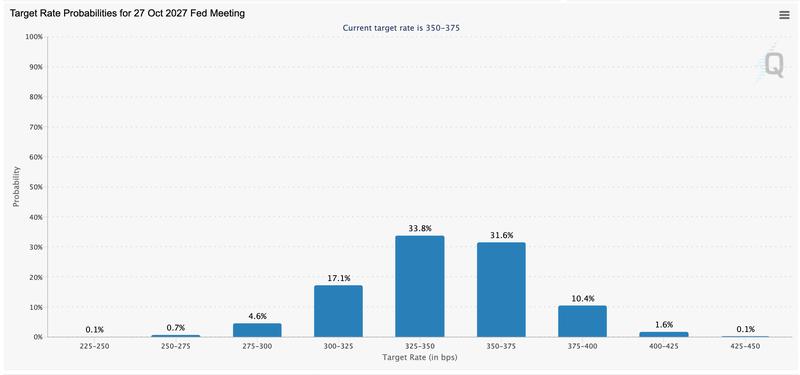
Elevated interest rates generally maintain elevated borrowing expenses, constrict available liquidity, and diminish investor enthusiasm for speculative assets including Bitcoin and equity securities.
Should any indications emerge of reduced tensions in the regional conflict, the oil price rally could rapidly lose momentum.
Looking at historical patterns, these types of price surges have typically proven temporary, with valuations returning to normalized levels over time and Bitcoin recovering its bullish momentum as market anxieties dissipate.
Petroleum supply disruption increases Bitcoin's probability of reaching $51,000
The cautionary forecast regarding $180 oil arrives at a moment when Bitcoin's bullish trajectory exhibits indications of weakening momentum.
The BTC price has retreated 9.50% from its recent peak of approximately $76,000, settling below the $70,000 threshold as of Thursday. This corrective movement has formed a bear flag chart formation with a technical downside projection targeting the $51,000–$52,000 range.
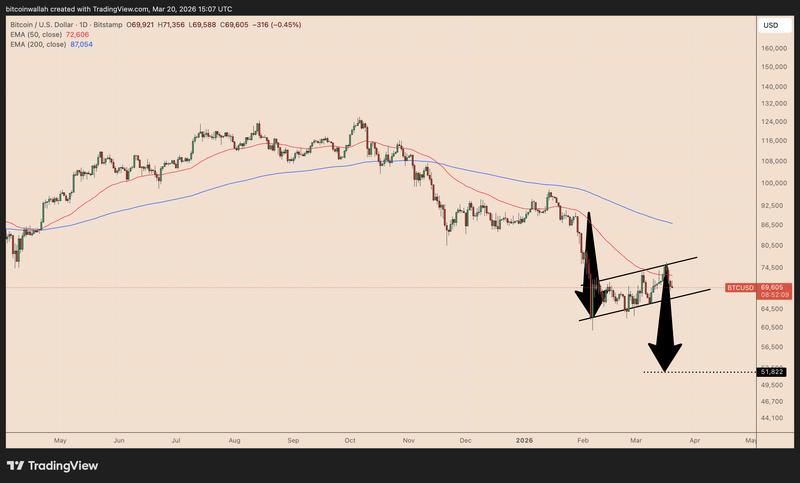
The Bitcoin price retracement is occurring simultaneously with a complete suspension of STRC-facilitated BTC acquisitions by Michael Saylor's Strategy corporation.
The company made no Bitcoin purchases during the current week, following acquisitions of 22,337 BTC in the week concluding March 15 and 17,994 BTC in the preceding week.
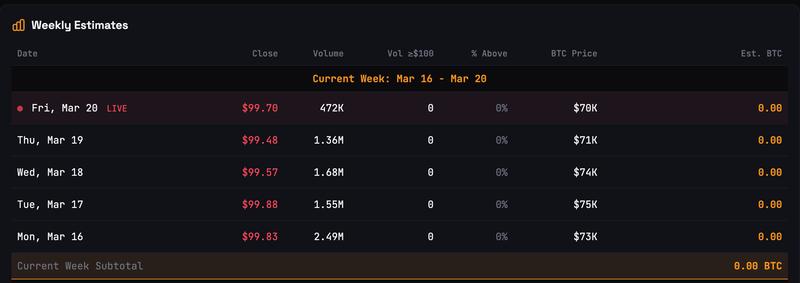
This development carries significance because Strategy had been consuming available supply at a rate equivalent to several weeks' worth of worldwide mining production. The company's withdrawal eliminates a critical demand driver precisely as macroeconomic risk factors intensify.
Additionally, the Coinbase premium indicator has shifted into negative territory, reflecting diminished demand from US-based investors amid the ongoing petroleum supply crisis.